
Unbiased headlines. Facts, not spin.
Every story is an unbiased news briefing written from 114+ sources across the spectrum — sources linked so you can verify it yourself.
 politics
Major Story (8/10)
Event date: September 22, 2026
politics
Major Story (8/10)
Event date: September 22, 2026
Trump Hosts Xi in Washington This Week With Trade Truce Set to Expire Nov. 10
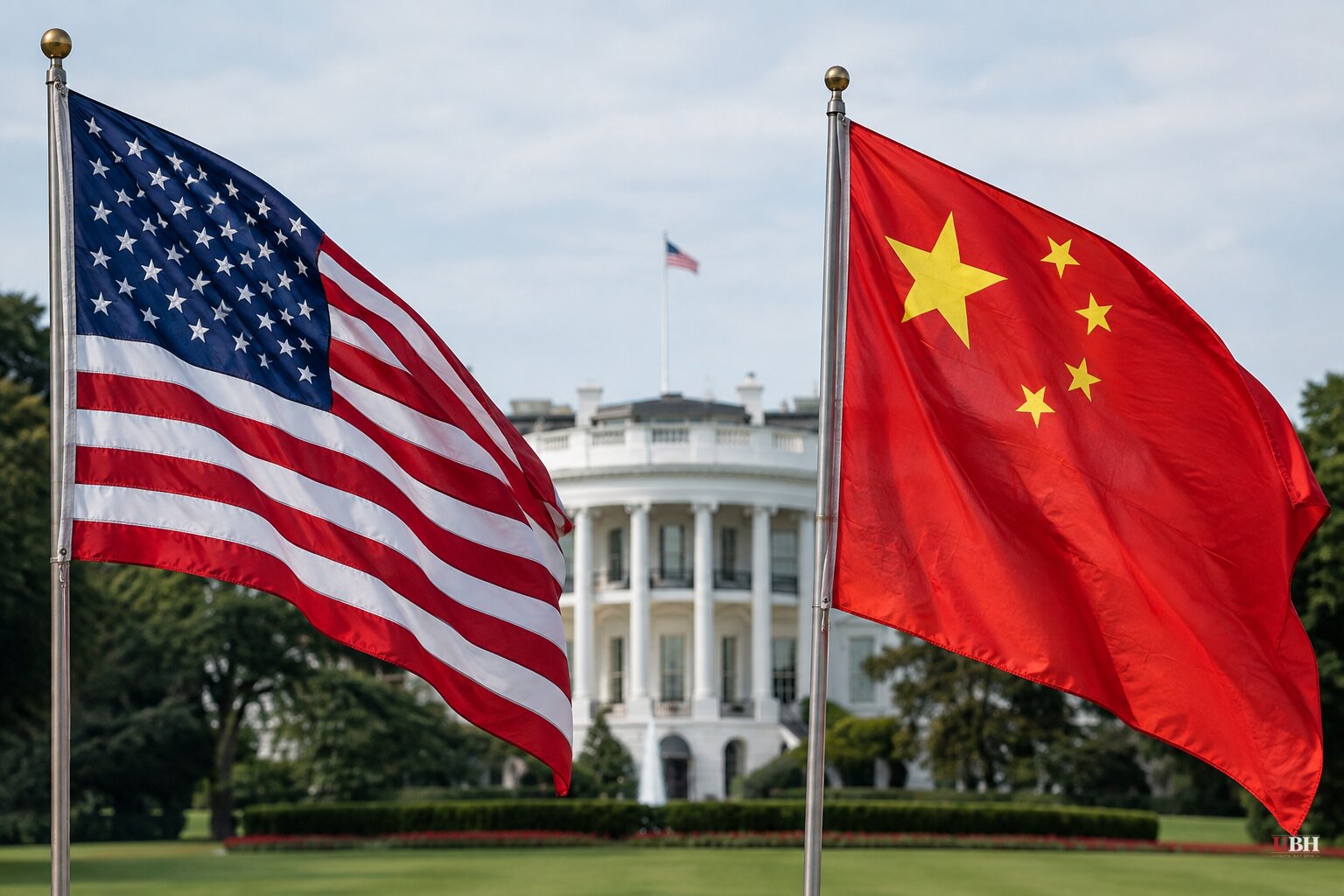
President Trump is set to meet Chinese President Xi Jinping in Washington, D.C., this week, according to Fox News. Expectations are low. The best realistic outcome, per Fox News reporting, is an extension of the trade truce the two leaders struck in South Korea last October, which is set to expire Nov. 10.
Treasury Secretary Scott Bessent has been negotiating that extension with a Chinese delegation, Fox News reported. Chinese Foreign Minister Wang Yi told Secretary of State Marco Rubio last week that relations have "generally moved along the path toward a constructive relationship of strategic stability," according to China's state-run Global Times, as cited by Fox News.
This is not the first meeting of the year. Trump traveled to Beijing for a summit with Xi in May 2026, and Fox News reports that summit produced little discernible progress on the issues dividing the two countries.
The case for walking away
A Fox News opinion piece argues the U.S. should treat this week's meeting as a last chance for Beijing. The column lays out a list of grievances it attributes to Chinese conduct: fentanyl trafficking into the U.S., theft of American intellectual property, "predatory trade practices," support for Russia's war in Ukraine, and secret Chinese police stations operating on U.S. soil.
The piece also raises a more serious and less independently verified claim, that China made satellite targeting data available to Iran, which Iran then used in strikes that killed American service members, in Kuwait on March 1 and in Jordan in July. The column states Iran "almost certainly" relied on Chinese data in both incidents. That causal claim comes from the Fox News opinion writer's own characterization and is not corroborated by an on-record military or intelligence source in the available reporting. No Pentagon or CENTCOM attribution of Chinese satellite involvement in those strikes appears in the sourcing reviewed here.
The column frames this history, dating back to the 1970s dialogue effort between Nixon and Mao, as evidence that engagement itself has coincided with worsening Chinese behavior, and argues Washington has run out of patience to extend.
The case for pragmatic bargaining
A counter-argument comes from Jianlu Bi, a senior fellow at the Foreign Policy in Focus think tank at the Institute for Policy Studies in Washington and a research fellow at the Charhar Institute in Beijing, writing in the South China Morning Post. Bi argues that Washington's older posture of dealing with China "from a position of strength" reflected a unipolar mindset, one assuming the U.S. could unilaterally dictate terms and demand compliance.
Bi's column argues that years of decoupling proved economic independence from China to be "an economically ruinous illusion," while pragmatic bargaining has produced far better returns for both sides. The underlying concern is that a confrontational posture risks real economic damage to American businesses and consumers without necessarily changing Beijing's calculus, given how intertwined the two economies remain after decades of trade. U.S. manufacturing and retail still depends significantly on Chinese supply chains, making this an important economic consideration.
Bi's piece, published by a writer also affiliated with a Beijing-based institute, does not engage the specific grievances Fox News catalogs: fentanyl precursor exports, IP theft, or the alleged military dimension involving Iran. Those are separate questions from whether tariffs and decoupling make economic sense.
What's actually at stake this week
No breakthrough is expected. The main deliverable on the table is whether Bessent and his Chinese counterparts extend the trade truce past its Nov. 10 deadline, or let it lapse with tariffs and retaliatory measures snapping back into place.
Neither side has announced new sanctions, charges, or formal diplomatic breaks tied to this meeting. Whether Trump uses the summit to press Beijing on fentanyl enforcement or satellite-sharing allegations, and whether Xi offers anything beyond rhetorical commitments to "stability," remains to be seen when the two leaders actually sit down this week.
Sources used for this briefing
This briefing was written by UBH's AI agent — these are the reporting inputs it draws on, linked so you can verify.


