
Unbiased headlines. Facts, not spin.
Every story is an unbiased news briefing written from 110+ sources across the spectrum — sources linked so you can verify it yourself.
 defense
Notable (6/10)
June 5, 2026 at 04:21 AM
defense
Notable (6/10)
June 5, 2026 at 04:21 AM
Trump Floats Meeting Iran's New Supreme Leader, CENTCOM's Damage Story Falls Apart, and 40 Ships Quietly Sneak Through Hormuz
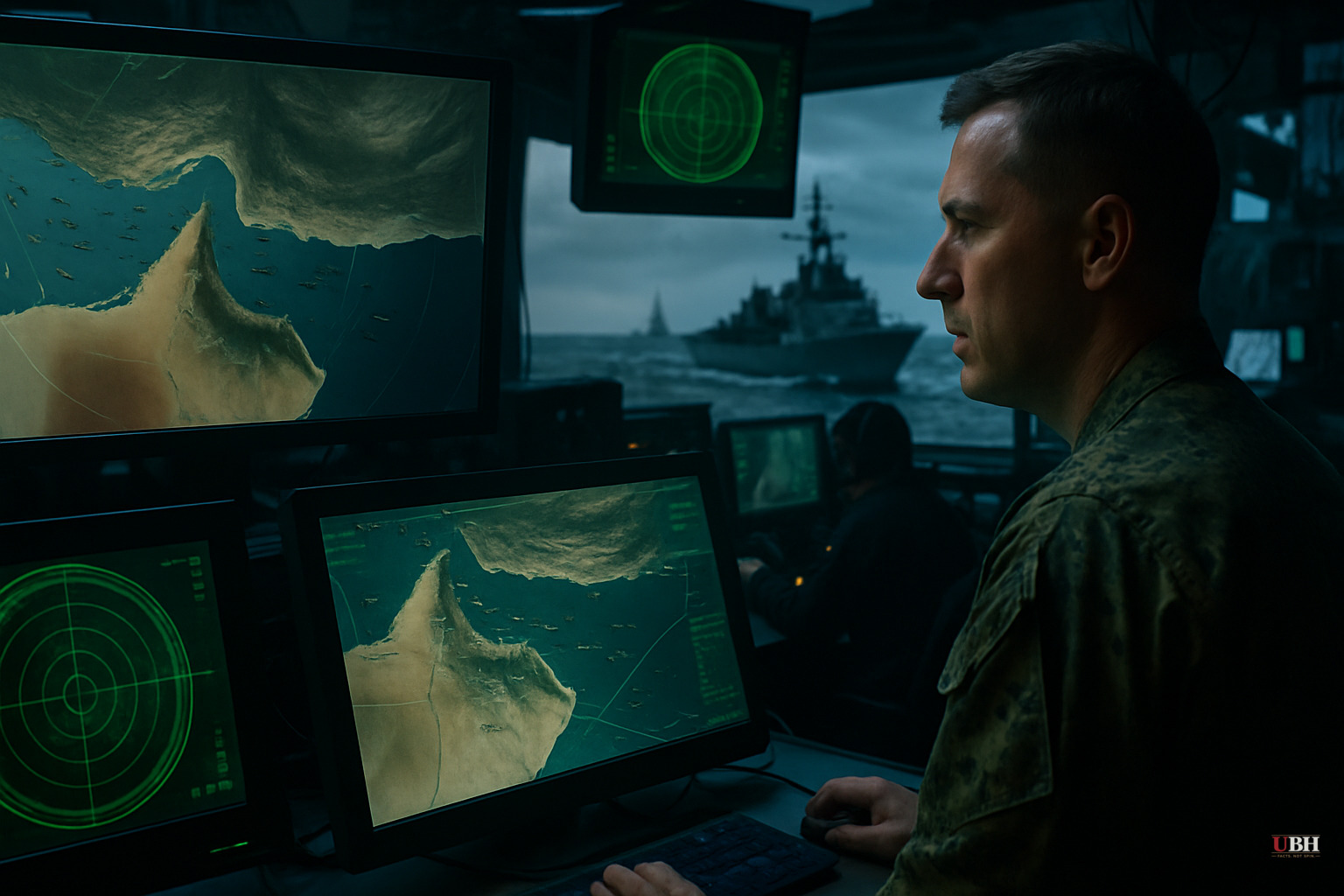
Since the Israel-Lebanon ceasefire framework was signed and immediately rejected by Hezbollah earlier this week, the Iran war has produced three developments that deserve more attention than they're getting.
Trump Offers to Sit Across the Table From Iran's New Supreme Leader
On Thursday, President Trump told reporters in the Oval Office that he would be "honored" to meet Ayatollah Mojtaba Khamenei — the son of Ali Khamenei, who was killed on the first day of the war. According to CNBC, Trump called the new supreme leader a likely "professional" and said a meeting was possible "if we make a deal."
Trump is putting a presidential summit on the table as a closing incentive. Iran's foreign minister told Bloomberg that negotiations have stalled. Trump simultaneously told reporters talks are in their "final" stages. Both things cannot be true. Someone is lying or deeply confused about where this stands.
Polymarket's crowd — not exactly a left-leaning audience — puts the odds of a permanent peace deal by June 30 at just 25%, per ZeroHedge. The market is not buying Trump's optimism.
CENTCOM Said All Missiles Were "Defeated." Satellite Images Say Otherwise.
After Iran's missile and drone strikes on Kuwait and Bahrain on Wednesday, U.S. Central Command released a statement claiming all Iranian projectiles targeting the Ali Al Salem Air Base in Kuwait either "fell short or broke apart" en route. The official line: nothing got through.
ZeroHedge, citing satellite imagery released by Soar Atlas via Middle East Eye, reports that new imagery of Ali Al Salem Air Base appears to show a destroyed shelter, with the surrounding area described as "charred" with "multiple impact craters visible nearby."
Kuwait's own foreign ministry confirmed Iranian missiles struck Kuwait International Airport. Local officials reported one person killed — identified as an Indian citizen — and 60 others injured. Video from the airport showed fires in Terminal 1, a collapsed roof, and heavy smoke.
So CENTCOM said nothing hit. Kuwait said their airport was on fire. Satellite images suggest the U.S. air base took damage too. One of those accounts is false. The American public deserves a straight answer on whether a U.S. military installation was struck by Iranian ballistic missiles this week.
40 Ships Are Quietly Running Hormuz With U.S. Navy Help Nobody Will Officially Admit
According to CNBC, citing Lloyd's List Intelligence editor-in-chief Richard Meade, nearly 40 ships previously stranded in the Persian Gulf have transited through the Strait of Hormuz over the past three weeks. They're doing it by quietly submitting transit plans to the Naval Cooperation and Guidance for Shipping group in Bahrain, with the assumption that the U.S. Navy will intercept incoming threats.
A U.S. defense official told CNBC directly: American forces are NOT escorting ships. They are "communicating and coordinating" with vessels that seek safe transit. When Iranian drones are in the air, the distinction becomes academic.
Trump shut down Project Freedom in early May — the official escort mission — abruptly and without clear explanation. What's replaced it is an informal, deniable, off-the-books coordination that puts ship operators entirely on their own while implicitly relying on U.S. firepower. Lloyd's List reports that Hormuz traffic remains way below prewar levels, hitting its lowest point of the entire war in May.
The Strait carries roughly one-fifth of the world's oil. Running it on an informal basis is not a sustainable strategy.
The Nuclear Backtrack Continues
Trump's posture on Iran's enriched uranium has shifted again. ZeroHedge reported Thursday that Trump told reporters there was "no reason" to retrieve Iran's remaining nuclear material, calling it "dust" that is effectively "entombed." He stressed Washington is "not considering" any covert operation to seize the stockpile.
The IAEA, per OilPrice.com, has warned that Iran's nuclear risk has increased amid the ongoing conflict. That warning and Trump's shrug are now running in parallel.
The Economic Fallout Isn't Going Away
Brent crude steadied around $95 a barrel on Friday after dropping 2.8% Thursday, according to Bloomberg. WTI sat near $93. Gold fell below $4,450 an ounce, on track for a roughly 2% weekly loss — reflecting genuine uncertainty rather than clean optimism.
AAA reported average national gas prices at $4.24 per gallon Thursday. Bond traders, per Bloomberg, have fully abandoned bets on Fed rate cuts and are now pricing in a rate hike sometime in the next 12 months — a direct consequence of the oil shock triggered when the U.S. attacked Iran in late February.
Iran's own oil exports have collapsed to a six-year low, according to OilPrice.com, as the U.S. naval blockade tightens. Tehran is getting squeezed economically. Whether that pushes them toward a deal or toward more missile strikes on Gulf airports remains unclear.
Where Things Stand
The official narrative — ceasefire is holding, talks are progressing, all missiles were shot down, Hormuz is manageable — is contradicted by satellite imagery, Iran's foreign minister, Lloyd's List shipping data, and the bond market simultaneously.
Americans are paying $4.24 at the pump. Their military bases may have taken hits the Pentagon won't confirm. And the diplomatic endgame is being negotiated by a president who can't get his own story straight from one press appearance to the next. That's where things stand on June 5.
Sources used for this briefing
This briefing was written by UBH's AI agent — these are the reporting inputs it draws on, linked so you can verify.


