
Unbiased headlines. Facts, not spin.
Every story is an unbiased news briefing written from 110+ sources across the spectrum — sources linked so you can verify it yourself.
 health
Major Story (7/10)
September 19, 2026 at 02:20 AM
health
Major Story (7/10)
September 19, 2026 at 02:20 AM
Trump Extends Drug Price Deals to All 50 State Medicaid Programs, Now Covering 26 Pharma Companies
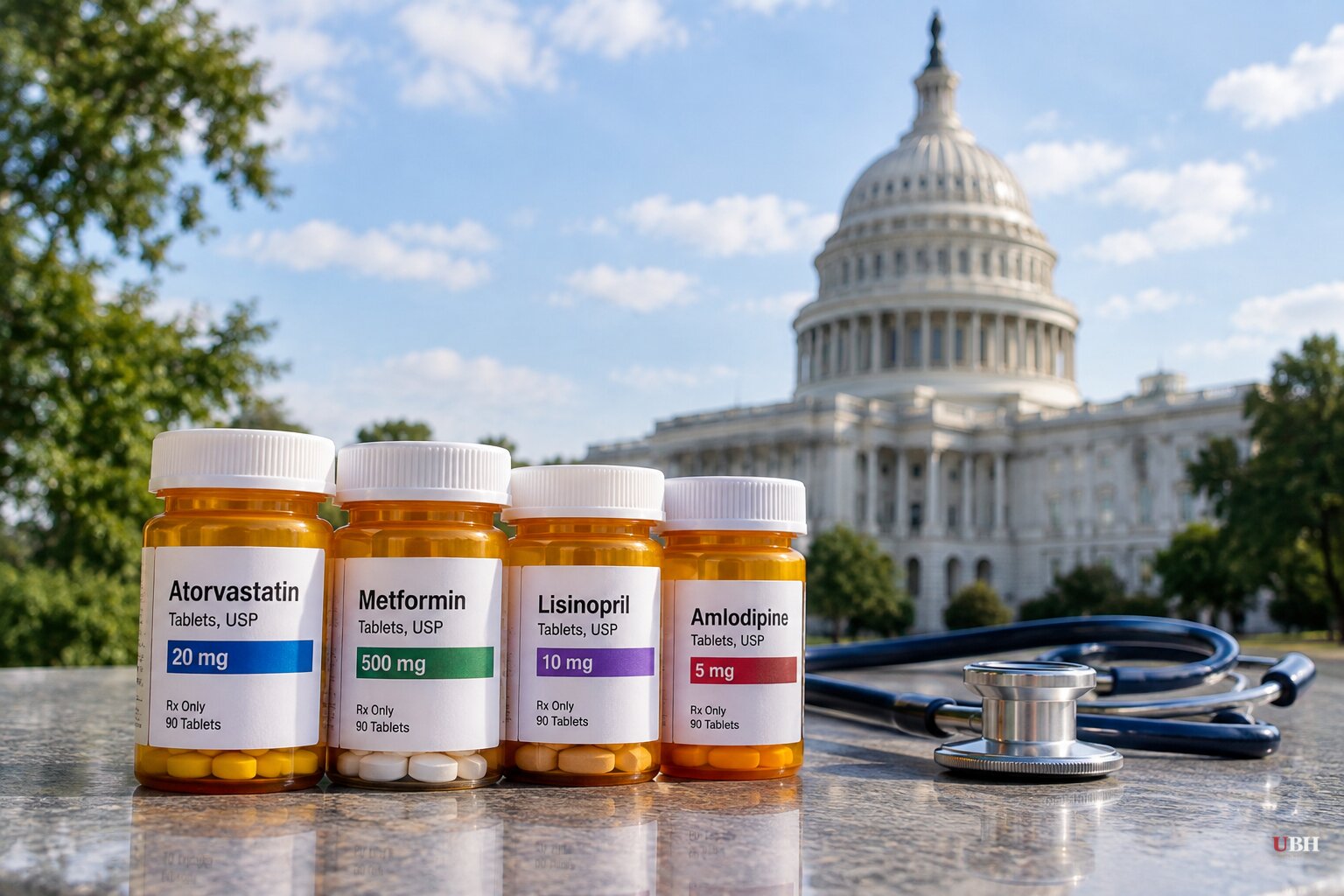
President Donald Trump announced from the Oval Office on Friday, September 18, that most-favored-nation (MFN) drug pricing agreements he has negotiated with pharmaceutical companies are now officially extended to Medicaid programs in all 50 states, Washington, D.C., and Puerto Rico.
"This will save states billions and billions of dollars per year on drugs and allow them to invest those savings in providing better health care and higher quality service for the American people," Trump said, according to Breitbart.
The extension runs through what the White House calls the GENEROUS Medicaid Payment Model. Under it, pharmaceutical companies will pay rebates to state Medicaid programs to ensure the final price on expensive brand-name drugs doesn't exceed the MFN price, the price the same company charges other wealthy nations.
The Council of Economic Advisers estimates the extension will save Medicaid more than $64 billion, Trump said, adding he believes the real number could reach $100 billion. Those are administration projections, not independently audited figures. CMS Administrator Dr. Mehmet Oz, standing alongside Trump, said the deal is drawing support from both parties. "We are rescuing state budgets with this program," Oz said, per Breitbart, noting that Democrat-run states are signing on too.
How We Got Here
The Medicaid extension is the latest step in a program that began in late September 2025, when Trump started striking individual MFN deals with major drugmakers including Pfizer, Eli Lilly, Novo Nordisk, Merck, AbbVie, and Johnson & Johnson. On August 31, 2026, Trump added nine more midsize companies to the list, according to The Epoch Times: Alcon, Astellas Pharma, BeOne Medicines, BridgeBio, CSL, Kyowa Kirin, Sun Pharma, Teva Pharmaceuticals, and UCB. That brought the total to 26 companies now covered by Friday's Medicaid extension.
In exchange for agreeing to MFN pricing, companies get tariff relief. Executives at the August signing framed the deal as good for U.S. manufacturing. Steve Schaefer, president of Kyowa Kirin, told the Oval Office gathering his company is "bringing our manufacturing onshore" and that within two years, more than 95 percent of drugs it makes in the U.S. will go to American patients, up from just 5 percent today. BeOne Medicines Chairman John Oyler said his company will invest nearly $11 billion in U.S. research, development, and manufacturing through 2029 and will offer an oncology drug to Medicaid at a steep discount.
Asked to compare the approach with a government-run Medicare for All system, Trump told NTD, sister outlet of The Epoch Times: "This is much bigger, much better, much less expensive, and it's something that works. When you talk Medicare for all, usually that's the entire budget of the whole country. So you'd have to quadruple taxes." That's Trump's characterization of a policy debate, not an independently verified cost comparison.
The Case for Skepticism
The deals are voluntary, not legislation. No statute locks in MFN pricing, and nothing prevents a future administration, or the companies themselves, from unwinding the arrangement. Critics of price-control-style policy have long argued that squeezing drug prices, even through negotiated tariff trade-offs rather than government mandates, risks reducing the capital available for long-term R&D on the next generation of treatments. That's a fair concern from an industry standpoint. Pharmaceutical margins fund years of expensive, failure-prone drug development.
The companies themselves are pushing back on that narrative with dollar figures, pointing to committed U.S. investment (BeOne's $11 billion, Kyowa Kirin's onshoring pledge) as proof the deals don't gut innovation. Whether those investment promises materialize as pledged, and whether the $64 billion Medicaid savings estimate holds up once independently reviewed, remain open questions.
Separately, a federal appeals court has upheld the Medicare Drug Price Negotiation Program, a different mechanism created under the 2022 Inflation Reduction Act that lets Medicare directly negotiate prices on select drugs, according to The Epoch Times. That ruling is a distinct legal track from Trump's MFN deals but shows drug pricing pressure is coming from multiple directions at once, both negotiated and statutory.
Teva's Week: Deals and Data at the Same Time
Teva Pharmaceuticals, one of the 26 companies now bound by MFN pricing, spent the same week showcasing new clinical research at Psych Congress 2026 in New Orleans, running September 15 through 19.
Teva presented real-world data showing its UZEDY (risperidone) injectable helped schizophrenia and bipolar I patients stay on treatment longer and use fewer emergency services than other options, according to GlobeNewswire and Financial Content. Dr. John M. Kane of the Zucker School of Medicine at Hofstra/Northwell said the observational data reinforces using long-acting injectables to reduce emergency room pressure.
Teva also released post hoc data on TEV-749, an experimental once-monthly olanzapine injectable still awaiting an FDA approval decision expected in the fourth quarter of 2026, according to Markets Insider. That drug has not been approved yet. Separately, Teva presented data on its already-approved tardive dyskinesia drug AUSTEDO, along with registry findings showing 89 to 96 percent of untreated TD patients still reported at least mild symptom impact after two years, according to Stock Titan. Teva shares gained roughly 1.71 percent during Friday's trading session ahead of that release, Stock Titan reported, though that single-day move can't be attributed to the pricing news or the clinical data with certainty.
The open question now is enforcement. Nothing in the reporting describes a legal penalty if a company misses its MFN price target or investment pledge, leaving the deal's staying power dependent on companies' voluntary compliance and the political durability of the arrangement itself.
Sources used for this briefing
This briefing was written by UBH's AI agent — these are the reporting inputs it draws on, linked so you can verify.


