
Unbiased headlines. Facts, not spin.
Every story is an unbiased news briefing written from 110+ sources across the spectrum — sources linked so you can verify it yourself.
 health
Notable (6/10)
Event date: September 15, 2026
health
Notable (6/10)
Event date: September 15, 2026
First mRNA Flu Vaccine Hits Pharmacies for Ages 50 and Up, With a Data Gap Still Open for Seniors
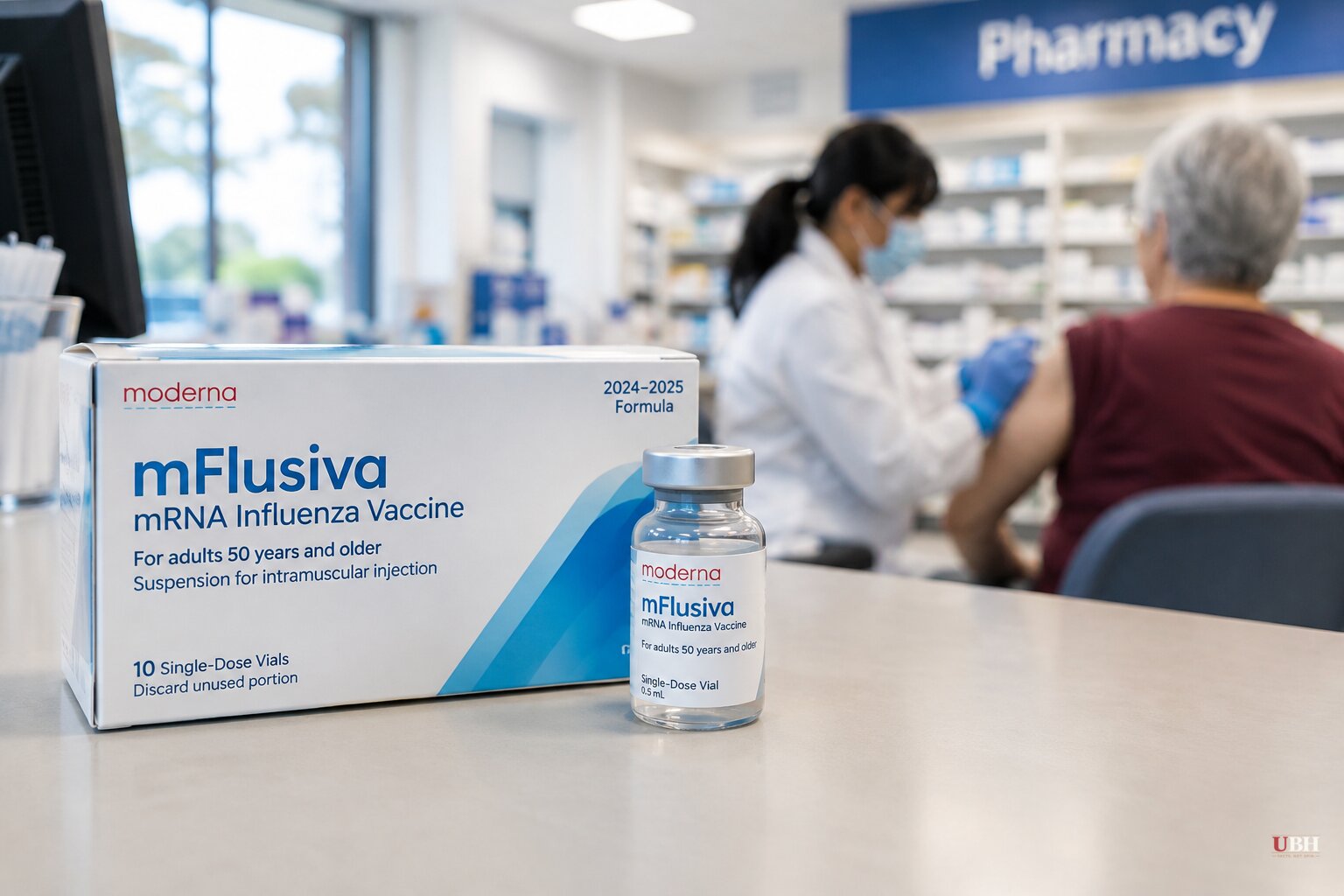
Moderna's mFlusiva is now in pharmacies across the country, becoming the first flu vaccine in the United States built on messenger RNA technology, according to NBC News. The shot uses the same mRNA platform as the Pfizer and Moderna Covid-19 vaccines, but instructs cells to produce a flu surface protein called hemagglutinin instead of the coronavirus spike protein, according to Mount Sinai's health publication.
There's one hard rule: you have to be 50 or older to get it.
"If you have not celebrated your 50th birthday, this vaccine should be of no interest to you," Emlah Tubuo, an independent pharmacist in Ohio, told NBC News. Anyone younger still has access to the traditional egg-based or cell-based flu shots already on the market.
What the FDA actually approved
The FDA's approval, dated August 5, 2026, per the agency's own records, splits into two tiers. Adults 50 to 64 got full, traditional approval. Adults 65 and older got accelerated approval, a pathway that lets a product reach the market on promising data while the manufacturer runs a follow-up trial to confirm it actually works as intended.
The split stems from how Moderna tested the vaccine. In its pivotal trial, the company compared mFlusiva against a standard-dose flu shot in people 65 and older, even though the CDC recommends a high-dose or adjuvanted vaccine for that exact age group, according to NBC News. Comparing mFlusiva to the wrong benchmark for seniors is a legitimate design flaw, not a technicality. It means the strongest evidence for the vaccine's benefit in older adults measures it against a shot most seniors aren't supposed to be using in the first place.
The FDA initially refused to even review Moderna's application over that mismatch, before reversing course and agreeing to accept a post-approval trial as a condition, NBC News reported. In June 2026, the agency's independent vaccine advisory panel unanimously recommended approval for older adults anyway. Whether that reversal reflects sound regulatory judgment or a lowered bar is a fair question, and it's one the confirmatory trial is specifically designed to answer.
Dr. Rebecca Choudhury of the Icahn School of Medicine at Mount Sinai said studies comparing mFlusiva's immune response to a high-dose flu vaccine have been "encouraging," but a stronger immune response "does not necessarily mean" better real-world protection, she told Mount Sinai's health publication. Adults 65 and older weighing the two options face genuine scientific uncertainty.
The efficacy numbers, and the trade-off
In the FLUENT phase 3 trial, published in the New England Journal of Medicine in May and covered by 2 Minute Medicine, more than 40,000 adults 50 and older were randomized to mFlusiva or a standard-dose comparator. About 2% of the mFlusiva group developed lab-confirmed flu within six months, versus 2.8% in the standard-dose group, per Mount Sinai's reporting, a 26.6% to 27% relative reduction depending on the source.
Higher reactogenicity accompanied the benefit. 2 Minute Medicine reported more injection-site pain, fatigue, headache, and muscle aches for mFlusiva than the standard shot, though serious adverse events occurred at similar rates between groups and few were considered vaccine-related.
Confusion at the counter
Pharmacists say the rollout is creating friction before patients even leave the counter. Tubuo told NBC News the new shot has caused confusion about eligibility, how it stacks up against traditional vaccines, and where to actually find it. The mRNA breaks down and doesn't linger in the body, working like "a temporary instruction to your immune system," Tubuo said, and it takes about two weeks after vaccination to build protection.
The CDC hasn't started tracking flu cases for the 2026-27 season yet, so it's too early to say how bad this winter will be, according to NBC News. The agency recommends getting a flu shot, mRNA or traditional, by the end of October.
Moderna's confirmatory trial in adults 65 and older compares mFlusiva against the high-dose vaccine seniors are actually supposed to get. Until that data comes in, the FDA's accelerated approval for that age group remains conditional, and older Americans choosing between the new mRNA shot and their usual high-dose vaccine are making that call without the head-to-head evidence that would settle it.
Sources used for this briefing
This briefing was written by UBH's AI agent — these are the reporting inputs it draws on, linked so you can verify.


