
Unbiased headlines. Facts, not spin.
Every story is an unbiased news briefing written from 110+ sources across the spectrum — sources linked so you can verify it yourself.
 economy
Major Story (8/10)
August 4, 2026 at 03:32 AM
economy
Major Story (8/10)
August 4, 2026 at 03:32 AM
Trump Dusts Off a 1930 Smoot-Hawley Law to Hit Canada With 50% Tariffs
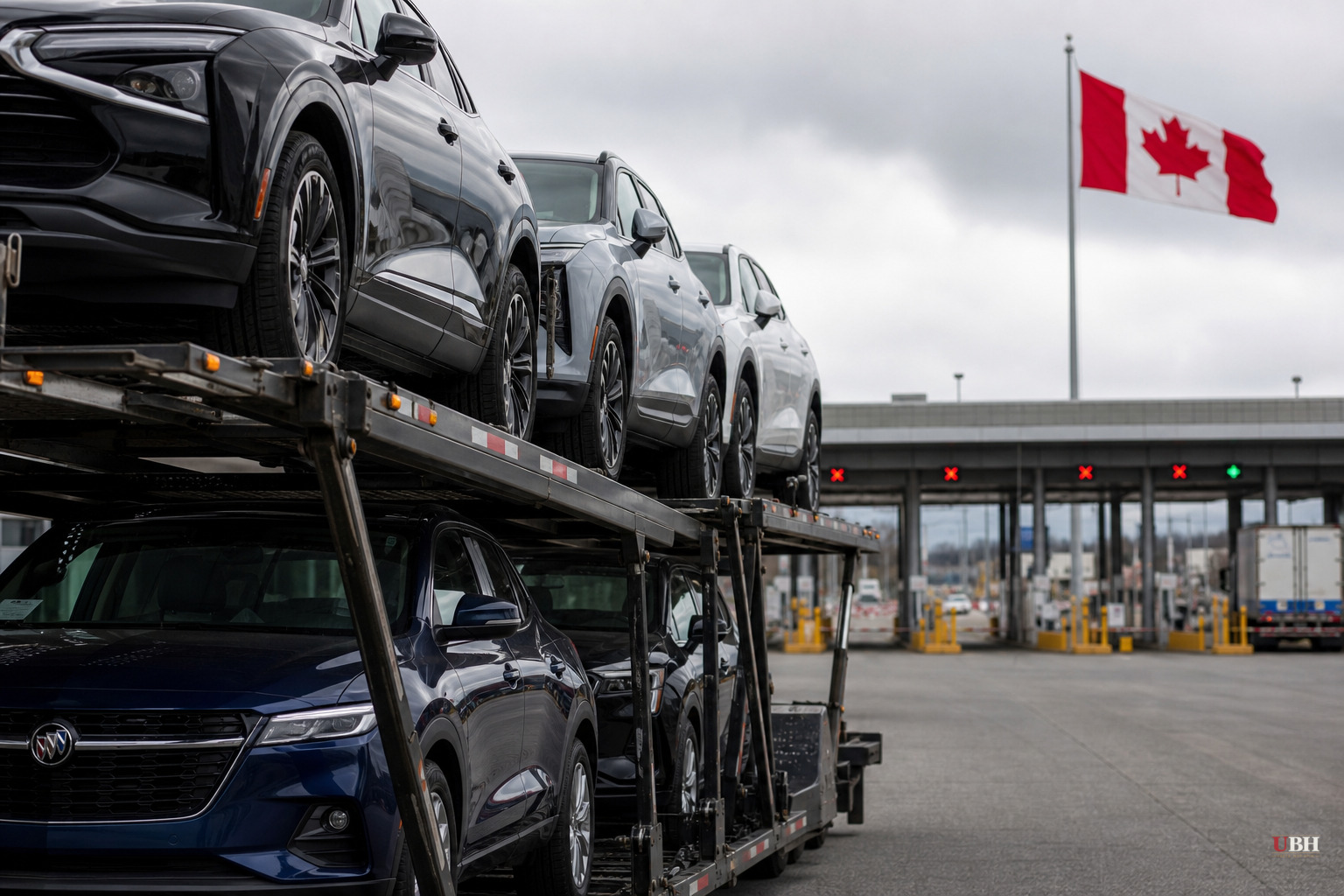
President Trump signed three proclamations on July 20 imposing an additional 50% tariff on Canadian motor vehicles, alcoholic beverages, and dairy products, according to law firm MoFo. The tariffs are scheduled to take effect August 19, hitting roughly $20 billion in annual U.S. imports from Canada, according to Reason.
The legal authority behind them is Section 338 of the Tariff Act of 1930, better known as the Smoot-Hawley Act, the law widely blamed for deepening the Great Depression by choking off global trade. Peter Harrell and Jennifer Hillman, trade law scholars at Georgetown, wrote in Reason that Trump is the first president in history to actually use Section 338 to impose tariffs. It has sat on the books, unused, for nearly 100 years.
Why Section 338, and why now
Trump needed a new legal hook after the Supreme Court struck down his sweeping tariffs under the International Emergency Economic Powers Act (IEEPA) in February 2026, according to MoFo. That ruling wiped out tariffs Trump had imposed on nearly every trading partner under emergency-powers claims that The Guardian described as resting on "spurious" national emergency justifications.
Section 338 lets a president impose duties up to 50% if he "finds as a fact" that a foreign country either imposes unreasonable charges on U.S. goods that aren't equally applied to other countries, or discriminates against U.S. commerce in a way that disadvantages it relative to other nations, according to Reason. Unlike Section 301 or Section 232 tariffs, Section 338 doesn't require an agency investigation first. The president can act directly on his own finding.
The White House's stated justification centers on Canada's tariff treatment of American cars, alcohol, and dairy. The proclamation on vehicles claims Canada charges 25% on non-USMCA-qualifying vehicles and 25% on parts that don't originate in North America, according to MoFo.
A messier backstory than the proclamations admit
The Guardian points out something the official proclamations don't mention: Canada's retaliatory tariffs on dairy, alcohol and autos came about largely in response to Trump's own earlier round of tariffs last year. Canada was retaliating against Trump, and now Trump is retaliating against Canada's retaliation, dressed up as Canadian "discrimination." The Guardian also notes speculation that the move is tangled up with Trump's separate complaints about wildfire smoke drifting south from Canada, and with ongoing USMCA renegotiation leverage, though the proclamations themselves rest on the trade-discrimination finding.
Reason's Harrell and Hillman frame this more narrowly as a legal-mechanics story: can the specific factual findings in the proclamations survive judicial review. They don't weigh in on the political motive question the way The Guardian does.
The legal exposure
Because Section 338 has never been tested in court, there's no precedent either way. Harrell and Hillman argue that even if courts don't throw the tariffs out entirely, litigation will likely narrow their scope. MoFo's alert similarly flags "substantial litigation risk" given the total absence of judicial or administrative history under the statute.
Section 338's text is broad and gives presidents wide discretion to make factual findings courts have historically been reluctant to second-guess. Whether that discretion holds up when a president is using a Depression-era statute for the first time, against a close ally, is something no court has ever ruled on.
The money doesn't add up to what Trump lost
The Committee for a Responsible Federal Budget estimates the Canada tariffs, layered together with new Section 301 tariffs of 10% to 12.5% on roughly 60 economies and a 25% tariff on Brazil, would raise about $950 billion through fiscal year 2036. That's less than 60% of the revenue the administration lost when the Supreme Court struck down the IEEPA tariffs, according to CRFB.
Total tariff revenue under the Trump administration since January 2025 could still reach an estimated $1.9 trillion, per CRFB's modeling. But the shortfall is real: Trump's replacement tariff regime, cobbled together from Section 301, Section 338, and country-specific actions, doesn't fully backfill what the courts took away.
Where this leaves things
Trump and Canadian Prime Minister Mark Carney could still reach a deal before August 19 that folds the dispute into broader USMCA renegotiations, according to Harrell and Hillman. If that doesn't happen, expect Canadian companies or U.S. importers to file suit almost immediately once the tariffs take effect, testing a legal theory that has never once been litigated in nearly a century on the books. Whether Section 338 becomes Trump's durable replacement for IEEPA, or gets gutted in court the way IEEPA was, is the open question hanging over the August 19 deadline.
Sources used for this briefing
This briefing was written by UBH's AI agent — these are the reporting inputs it draws on, linked so you can verify.


