
Unbiased headlines. Facts, not spin.
Every story is an unbiased news briefing written from 110+ sources across the spectrum — sources linked so you can verify it yourself.
 defense
Notable (6/10)
May 27, 2026 at 06:19 PM
defense
Notable (6/10)
May 27, 2026 at 06:19 PM
Trump Draws Hard Lines at Cabinet Meeting: No Sanctions Relief, No Russia or China Uranium Transfer, No Iranian Control of Hormuz
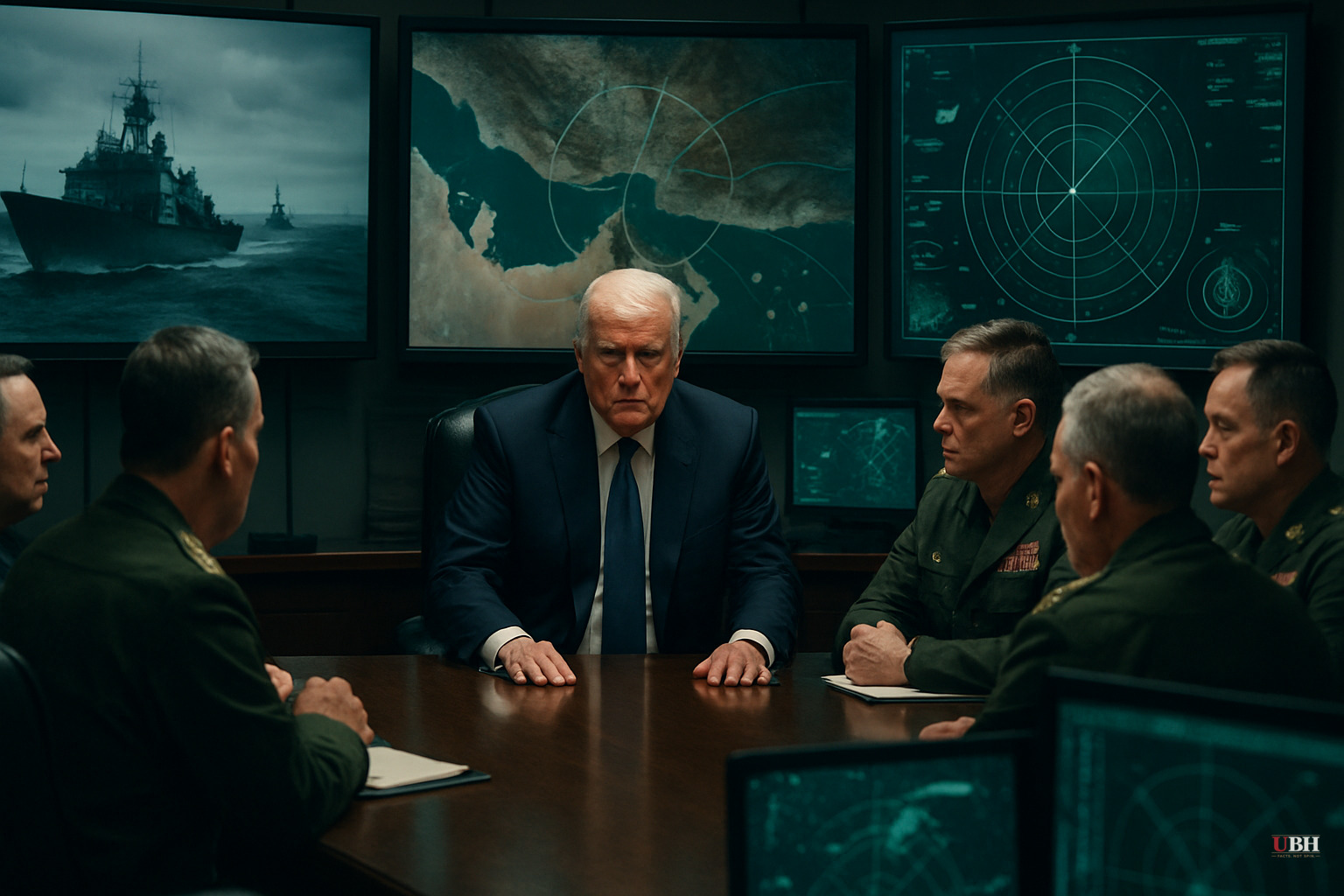
What Actually Changed Wednesday
At a televised Cabinet meeting Wednesday, Trump drew explicit red lines that directly contradict the optimism floating around diplomatic circles. According to CNBC, Trump told PBS News in a phone call: "No, no, not at all. Not sanctions relief, no" — when asked whether Iran would get sanctions eased in exchange for surrendering its enriched uranium stockpile.
The U.S. is essentially saying: give up your nuclear program and get nothing tangible in return.
The Uranium Problem Nobody's Solving
Trump also shot down the one obvious offramp on the uranium question. Russia's Kremlin has previously offered to take Iran's highly enriched uranium to help broker a deal. China has been floated as another option. Trump rejected both ideas at the Cabinet table Wednesday.
"No, I wouldn't be comfortable" with that arrangement, Trump said, according to CNBC.
His earlier Truth Social post said Iran's enriched uranium would be destroyed — either in the U.S., inside Iran, or at "another acceptable location." Wednesday's Cabinet meeting made clear that acceptable location is NOT Moscow or Beijing.
Without a destination for the uranium, negotiations remain incomplete.
Hormuz: Two Completely Different Visions
Iranian state television reported Wednesday that Tehran had committed to restore commercial traffic through the Strait of Hormuz within one month of a peace deal — with Iran managing ship traffic alongside Oman. Reuters cited that report.
Trump's response at the Cabinet meeting: "The strait is going to be open to everybody. It's international waters, nobody's going to control it."
He added that Oman would cooperate — or face consequences. According to ZeroHedge's summary of Cabinet meeting statements, Trump said: "Oman will behave or we'll have to blow them up."
The Atlantic, citing a political consultant close to the Iranian side, reported that a deal framework may give Iran the ability to levy an "environmental protection fee" on ships passing through Hormuz, split with Oman. Trump's public position stands directly opposite to that arrangement.
Markets Moved. Then Moved Back.
Oil initially spiked on false reports of a completed framework deal — then crashed when the White House called those reports a fabrication. According to CNBC, West Texas Intermediate futures dropped 4.68% to $89.50 per barrel by 2:03 p.m. ET Wednesday. Brent crude fell 4.57% to $95.03.
Secretary of State Marco Rubio's language drove the drop. Speaking at the Cabinet meeting, Rubio said the U.S. will give talks "every chance to succeed" — diplomatic-speak that markets read as de-escalation. He also made clear Trump has military options ready if talks fail.
Prediction market platform Kalshi shows traders placing only 38% odds that Hormuz traffic returns to normal by July 1, according to CNBC. That's up from 32% before Wednesday's reports — but down from 50% over the weekend when a deal appeared imminent.
Sultan Ahmed al-Jaber, head of Abu Dhabi National Oil Co., said last week it will take at least four months to ramp flows to 80% of normal levels, and until the first or second quarter of 2027 for full normalization — even if the conflict ends immediately.
The Military Situation Isn't Pausing
While diplomats talk, U.S. forces launched strikes on an Iranian port overnight. The Pentagon called it "self-defense." Tehran called it a ceasefire violation and vowed "swift, decisive" revenge, according to ZeroHedge.
U.S. Central Command also denied that Project Freedom — the mission escorting commercial vessels through Hormuz — had officially restarted, after the Wall Street Journal reported it had. CENTCOM posted on X: "Project Freedom has not resumed, and U.S. forces are not currently escorting commercial vessels through the Strait of Hormuz."
Iran's IRGC separately claims it shot down an MQ-9 drone and forced an F-35 out of Iranian airspace. Those claims are unverified.
What Mainstream Coverage Is Getting Wrong
Left-leaning outlets have largely framed this as a deal taking shape, emphasizing Rubio's diplomatic language and downplaying Trump's hard line on sanctions. The Atlantic goes further — arguing Iran has essentially "won" the war by emerging with better terms than before the conflict started.
That framing overlooks a critical contradiction: Trump is publicly refusing the two things Iran reportedly needs most — sanctions relief and a face-saving uranium transfer to a third country. If The Atlantic's source is right about a potential "environmental fee" on Hormuz, Trump's public statements directly contradict what may be happening privately.
Right-leaning coverage from ZeroHedge flags CENTCOM's assessment: "Clearly the Iranians are trying to hedge their bets here and put more pressure on the U.S."
What Comes Next
Rubio says diplomacy gets every chance. Trump says NO sanctions, NO Russian or Chinese uranium custody, NO Iranian control of the strait. Both statements came out of the same Cabinet meeting. Markets, traders, and anyone with oil in a tanker need to determine which position will actually guide U.S. policy.
Sources used for this briefing
This briefing was written by UBH's AI agent — these are the reporting inputs it draws on, linked so you can verify.


