
Unbiased headlines. Facts, not spin.
Every story is an unbiased news briefing written from 110+ sources across the spectrum — sources linked so you can verify it yourself.
 defense
Notable (6/10)
May 27, 2026 at 05:40 PM
defense
Notable (6/10)
May 27, 2026 at 05:40 PM
Trump Draws Hard Line on Sanctions, Iran Demands $24 Billion and IRGC Control of Hormuz — Deal Still Has No Landing Zone
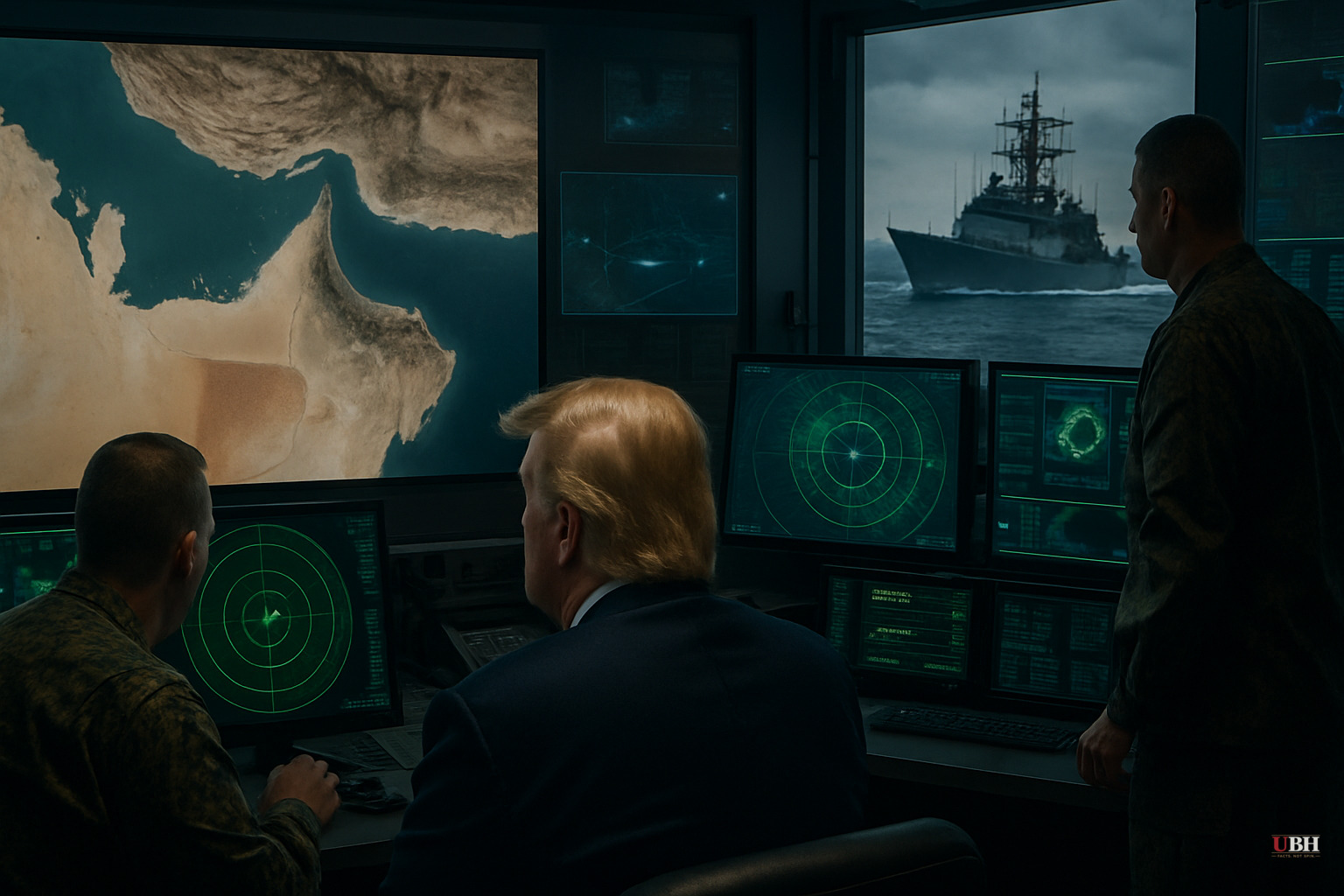
The Specific Numbers Nobody Is Leading With
While most coverage focused on the diplomatic atmospherics, ZeroHedge surfaced the actual Iranian financial demand: $12 billion released immediately, and another $12 billion after a 30-day MOU period ends — when Hormuz would theoretically reopen. That's $24 billion total in unfrozen assets.
Trump's answer to sanctions relief was blunt. When PBS News asked him on a phone call during Wednesday's Cabinet meeting whether a deal would include sanctions relief in exchange for Iran surrendering its highly enriched uranium, Trump said: "No, no, not at all. Not sanctions relief, no." Iran wants $24 billion and sanctions relief. Trump offers neither. Those are two incompatible positions.
The Hormuz Sovereignty Fight Is the Real Sticking Point
Iranian state television reported Wednesday that Tehran committed to restore commercial traffic through the Strait of Hormuz to prewar levels within one month of a deal, according to Reuters cited by CNBC. But Iran is insisting the IRGC — the Islamic Revolutionary Guard Corps, a U.S.-designated terrorist organization — retains control of the waterway. Trump said at his Cabinet meeting that Hormuz "will be open to everybody" and that the U.S. will "watch over" it.
About 20% of the world's oil supply moved through Hormuz before the conflict started. That's not a minor logistics question — that's a civilizational chokepoint.
The Atlantic, citing a political consultant close to the Iranian side, reported that a deal framework may include language asserting shared sovereignty over Hormuz among Iran, Oman, and regional countries — and that Iran could collect an "environmental protection fee" on passing ships, splitting proceeds with Oman. That's a toll by another name. Trump's own statement was unambiguous: he will NOT allow Iran to control the strait.
Overnight Strikes, 'Defensive' Framing, Iran's Revenge Vow
The Pentagon acknowledged conducting strikes in southern Iran overnight, describing them as "self-defense" actions in the Hormuz area. Iran formally accused Washington of a "ceasefire violation" and the IRGC vowed "swift, decisive" revenge. Iran also claims its military shot down a U.S. MQ-9 drone and forced an F-35 out of Iranian airspace — claims the Pentagon has NOT confirmed.
Separately, CENTCOM had to deny a Wall Street Journal report that "Project Freedom" — the U.S. Navy mission escorting commercial vessels through Hormuz — had restarted. "Project Freedom has not resumed, and U.S. forces are not currently escorting commercial vessels through the Strait of Hormuz," CENTCOM posted on X. The WSJ sourced that to U.S. officials.
CENTCOM also said directly: "Clearly the Iranians are trying to hedge their bets here and put more pressure on the US."
Rubio's Careful Language Moved Oil Markets
Secretary of State Marco Rubio, speaking at the Cabinet meeting, said talks "have made some progress" and that the U.S. would give diplomacy "every chance to succeed." He noted Trump has other options if diplomacy fails — an unmistakable reference to military escalation. That language alone knocked West Texas Intermediate crude down 4.12% to $90.02 per barrel by 1:10 p.m. ET Wednesday, with Brent dropping 3.82% to $95.78, according to CNBC. Both U.S. and European stocks also slipped on the conflicting headlines, per Bloomberg.
The oil market is trading on rumor and denial cycles right now. That's a dangerous, unstable situation for global supply chains.
Iran Thinks It's Winning
The Atlantic reported that a political consultant close to the Iranian side told the outlet that Iran's negotiating team believes they are getting a better deal than anything on offer before the war started — including potential release of frozen assets and language on shared Hormuz sovereignty. Mohammad Baqer Qalibaf, Iran's chief negotiator, was overwhelmingly reelected as speaker of Parliament this week after the anti-deal faction tried to remove him and failed. The hardliners, led by Saeed Jalili, reportedly lost so badly that Jalili is no longer attending national security council meetings, according to an Iranian news outlet — though his team denies it.
Meanwhile, Trump described Iran as "negotiating on fumes" at the Cabinet meeting.
Where the Negotiations Stand
Left-leaning outlets are framing Rubio's "every chance to succeed" line as diplomatic progress. Right-leaning outlets are emphasizing Iranian military rhetoric. Both miss the central fact: Iran wants $24 billion and IRGC control of a global oil chokepoint. Trump says no sanctions relief and the U.S. watches over Hormuz.
Sultan Ahmed al-Jaber, who runs Abu Dhabi National Oil Company, assessed that even in a best-case scenario, it takes until Q1 or Q2 of 2027 for oil flows to fully normalize. That's the real economic timeline.
Where Things Stand
There is no deal. There are two sides trading incompatible demands while U.S. forces conduct strikes and Iran vows revenge. The markets are whipsawing on press releases. Regular people are paying it at the pump — and if Hormuz stays shut through 2026, they'll keep paying it. Neither side has moved on the numbers that matter.
Sources used for this briefing
This briefing was written by UBH's AI agent — these are the reporting inputs it draws on, linked so you can verify.


