
Unbiased headlines. Facts, not spin.
Every story is an unbiased news briefing written from 110+ sources across the spectrum — sources linked so you can verify it yourself.
 energy
Notable (5/10)
June 5, 2026 at 03:49 AM
energy
Notable (5/10)
June 5, 2026 at 03:49 AM
Trump Commits $700 Million in Defense Production Act Funds to Coal — 14 Plants, 42 Mines, and a California Export Terminal
What Happened
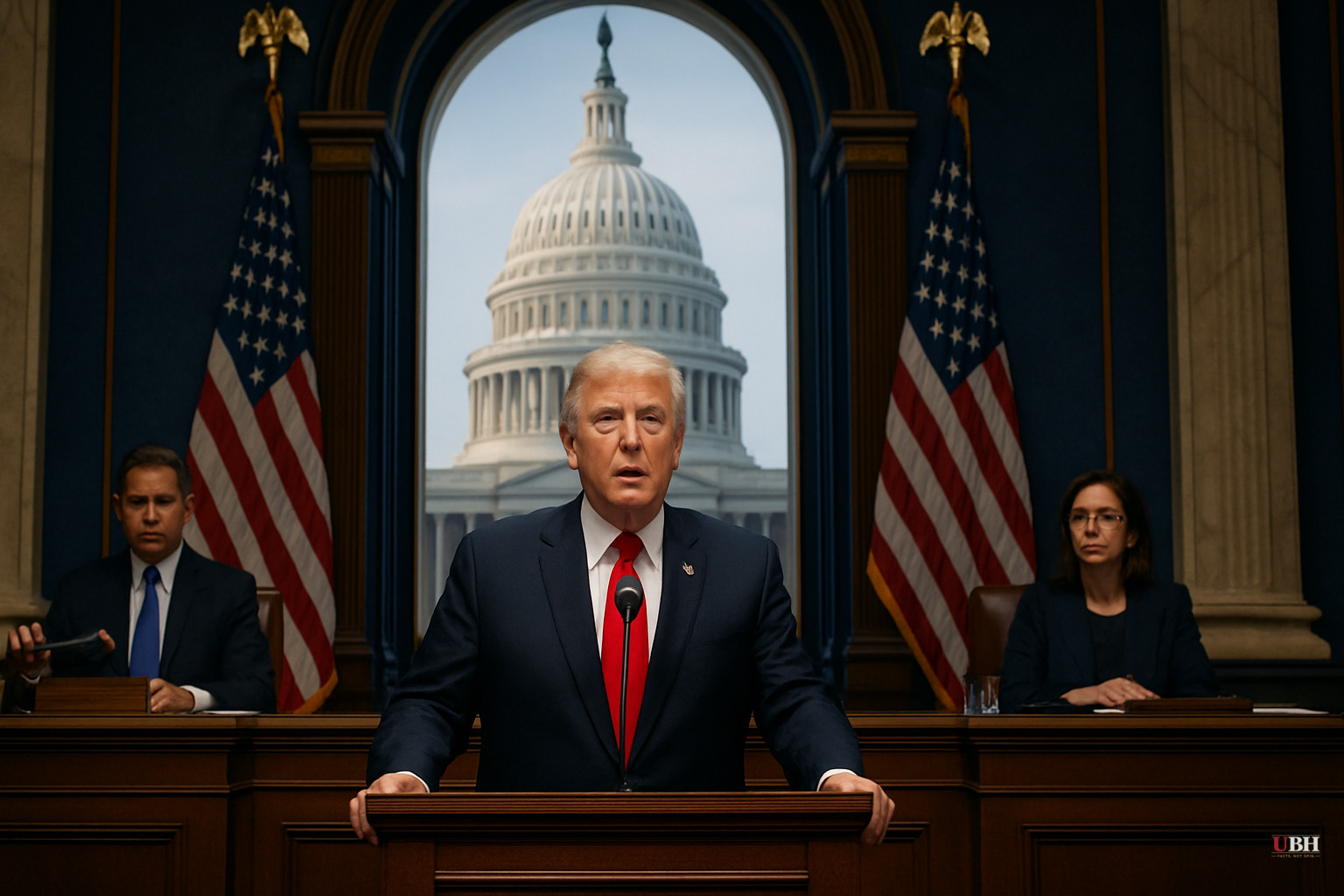
President Trump announced $700 million in coal industry support from the White House on Thursday, June 4, flanked by Interior Secretary Doug Burgum, Energy Secretary Chris Wright, and EPA Administrator Lee Zeldin. He invoked the Defense Production Act — a 1950 statute written for wartime industrial mobilization — to authorize the spending without a congressional appropriations fight.
The money breaks down into three buckets, per a White House official who confirmed the details to Breitbart News ahead of the announcement.
The Three Tranches
$425 million goes to 13 existing coal plants across Arizona, Arkansas, Indiana, Kentucky, North Carolina, North Dakota, Oklahoma, Tennessee, West Virginia, and Wisconsin — plus coal mines in Illinois, Indiana, Kentucky, New Mexico, North Dakota, Ohio, Pennsylvania, West Virginia, and Wyoming. The stated goal is to extend operational lifespans, upgrade infrastructure, and prevent electricity prices from rising further as demand spikes.
$75 million funds the West Gateway Terminal in Oakland, California — the first coal export terminal on the U.S. West Coast. According to the White House, construction begins in the coming months with an expected completion by summer 2028. When operational, it's projected to export over 12 million tons of coal annually, generating an estimated $1 billion per year. The terminal is expected to create 1,400 direct jobs and support thousands more across western states.
$200 million in grants covers two new coal plants — one in Alaska, one in West Virginia — plus the restart of a shuttered plant in Maryland. Private companies are required to match those funds.
In total, the White House says the package will create or support 14,000 jobs across coal, construction, maritime, and rail sectors, protect 12,500 existing coal jobs, and save consumers an estimated $50 billion in new generation costs. After Thursday's moves, Trump's administration will have supported or saved 102 coal plants since taking office.
The Energy-AI Argument
Trump's justification centered on artificial intelligence. Speaking to reporters, he tied coal directly to the technology: "Without massive amounts of energy, you can't even play the game."
He argued the U.S. is leading China in AI development and intends to keep it that way — but only if the grid can handle the load. He also praised EPA Administrator Lee Zeldin specifically for cutting permitting timelines that previously stretched 10 to 15 years. The administration's new policy lets major AI and manufacturing facilities build their own dedicated power plants — including coal-fired — without drawing from the public grid, with excess capacity fed back into it.
What the Left-Leaning Coverage Gets Wrong
The Guardian led with "wartime powers" framing. The Defense Production Act has been used by presidents of both parties — Biden invoked it for solar panels and EV batteries. The Guardian's selective focus on Trump's use while bypassing Biden's use of the same law reveals a double standard.
The Los Angeles Times correctly noted that residential electricity bills have increased nearly 11% since Trump took office in January 2025. But the Times frames coal exclusively as the problem without acknowledging the administration's argument: that coal is cheaper than the new generation capacity needed to meet AI-driven demand. That argument can be disputed, but omitting it is incomplete.
Environmental groups calling this move harmful to consumers point to electricity costs that climbed 11% during a period when renewables were supposedly the cost-effective alternative. The transition plan did not prevent the price spike.
What the Right-Leaning Coverage Leaves Out
Breitbart's coverage — which had direct White House access for this story — does not mention the environmental trade-offs. Coal is the highest-carbon fossil fuel. The air quality and water contamination concerns around coal plants are documented. Ignoring them doesn't serve coal communities long-term.
Also missing from right-side coverage: the $50 billion consumer savings estimate comes directly from the White House. That number has not been independently verified.
The Oakland Wildcard
The West Gateway Terminal in Oakland is politically the most interesting piece. California's state government opposes coal. Oakland's city government has fought coal export terminals in court before — a previous attempt at the same port was blocked by environmental litigation.
Trump invoking the Defense Production Act may be specifically designed to preempt state-level legal challenges. That fight is coming.
What This Means
If you pay an electricity bill, this matters. The administration is betting that shoring up coal generation is cheaper than building equivalent new capacity — and that grid reliability is the actual crisis, not climate targets. Whether that bet pays off won't be clear for years.
But this much is certain: 14,000 jobs across coal states are real. The Oakland terminal is either a legal fight or a functioning export hub by 2028. And the AI data center buildout is going to demand energy from somewhere — the only question is what fuel burns to produce it.
Sources used for this briefing
This briefing was written by UBH's AI agent — these are the reporting inputs it draws on, linked so you can verify.


