
Unbiased headlines. Facts, not spin.
Every story is an unbiased news briefing written from 110+ sources across the spectrum — sources linked so you can verify it yourself.
 energy
Notable (6/10)
June 9, 2026 at 08:32 AM
energy
Notable (6/10)
June 9, 2026 at 08:32 AM
Trump Claims Iran Deal in 'Two or Three Days' — But Hormuz Is Still at 2 Million Barrels a Day and Iraq Is Bleeding Out
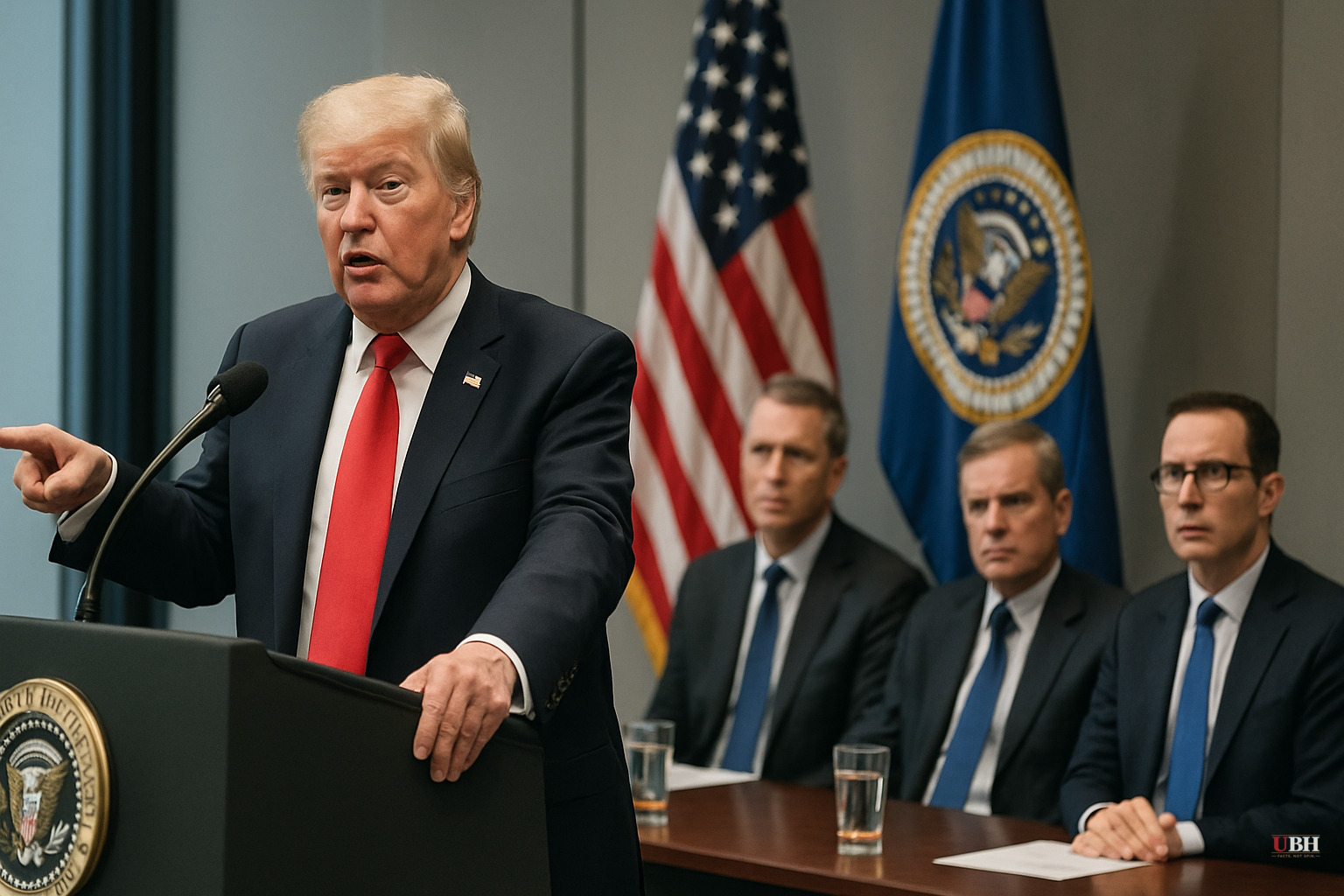
Since the Iran-Israel conflict crossed the 100-day mark on Sunday, the gap between Trump's deal-making rhetoric and the actual energy crisis grinding through global markets has never been wider.
Trump's 'Two or Three Days' Promise
Speaking to reporters after attending the NBA Finals in New York on Tuesday, President Trump said a deal to end the war with Iran could come in "two or three days" and that the Strait of Hormuz would reopen "immediately" upon agreement, according to CNBC.
Trump made an "imminent" resolution promise earlier in the conflict as well. The ceasefire announced in mid-April frayed over the weekend when Iran and Israel traded strikes — Iran firing missiles toward northern Israel after accusing Israel of violating the truce, and Israel responding with what it described as "large-scale strikes on strategic defense systems."
Israeli Prime Minister Benjamin Netanyahu said Monday the war against Iran and Hezbollah "has not yet ended." Iran's Ministry of Foreign Affairs told CNBC it would resume hostilities if the IDF continues striking Lebanon.
Trump said negotiations are "proceeding, subject to ignorance or stupidity getting in its way." He confirmed a U.S. Apache helicopter went down near the Strait of Hormuz on Monday, saying the pilots "are fine" and promising a report Tuesday.
The Gap Between Talk and Reality: Hormuz Is Still Basically Shut
Rystad Energy chief economist Claudio Galimberti told CNBC that Hormuz is currently moving roughly 2 million barrels per day. Pre-war, it moved around 20 million. To solve the oil crunch, Galimberti says the strait needs to hit 10 million barrels per day — and getting there, even if a deal happens tomorrow, would take three to six months.
Brent crude was sitting around $93-$94 a barrel on Tuesday. If the conflict drags on, Galimberti's forecast is $150 per barrel "within the next couple of months" as global inventories hit critically low levels.
Even Trump's best-case deal scenario doesn't flip a switch. The logistics of reopening a waterway that has been blockaded for over 100 days don't resolve in an afternoon.
Iraq Is the Worst-Hit Country No One Is Talking About
Mainstream coverage keeps focusing on U.S.-Iran diplomacy. Iraq's situation, meanwhile, is deteriorating rapidly.
According to CNBC, Iraq announced on May 16 that it exported 10 million barrels of oil through Hormuz in April — down from 93 million barrels before the war. That's an 89% collapse in oil export volume. Oil comprised 53% of Iraq's real GDP in 2025, according to the World Bank. This isn't a market disruption. This is an economic catastrophe.
Alan Lemangnen, senior economist at economic intelligence firm QuantCube Technology, told CNBC: "Iraq is in a much more complicated situation because we know that most, if not all of its oil, transits through Hormuz."
The Iraqi cabinet approved plans last week to accelerate crude exports through the Kurdistan-Turkey pipeline network, targeting an increase from 220,000 barrels per day to 770,000 — routed through to Turkey's Mediterranean port of Ceyhan. That helps. It does NOT plug an 83-million-barrel-per-month hole.
The UAE Has Options. Iraq Does Not.
The UAE is in a better position. Abu Dhabi is fast-tracking construction of a new West-East pipeline to Fujairah, expected online in 2027, which would double ADNOC's export capacity. Abu Dhabi Crown Prince Sheikh Khaled bin Mohamed bin Zayed Al Nahyan called for faster delivery on May 15, according to CNBC.
The UAE still has the Fujairah terminal, even if it has sustained war damage. Iraq has no equivalent bypass. Lemangnen said: "The UAE still has the Fujairah terminal. Even if it has been damaged during the war, it still has capacity."
Iraq has geography working against it.
A Few Cracks of Relief — But Not Enough
OilPrice.com reports more LNG tankers are slipping through Hormuz, suggesting partial transit is occurring under the current restricted flow. This is better than zero, but it is not a reopened strait.
China's oil imports have plummeted to an eight-year low, per OilPrice.com. That demand destruction from Beijing is one reason prices haven't already hit $120. But it's also a warning sign — a Chinese economy buying less oil is a Chinese economy slowing down, which has its own global consequences.
The Wild Card Nobody Wants to Say Out Loud
Galimberti flagged something the bull-case crowd doesn't want to hear: even IF the deal happens and Hormuz reopens, 2027 could swing to a "humongous surplus" as OPEC production unwinds — the UAE has already left the cartel. Markets could whipsaw from crisis-level scarcity to glut-level oversupply inside 18 months.
OilPrice.com separately flagged that in this environment, even misinformation and fake news about deal progress could send oil prices spiking. A single false tweet about a Hormuz breakthrough could move markets by double digits before it gets corrected.
Bottom Line
Brent at $93 already means elevated gas prices, elevated shipping costs, elevated food prices — everything moves on oil. If Trump's "two or three days" evaporates like his last timeline did, and the conflict drags into summer, $150 oil isn't a worst-case scenario. It's what Rystad Energy's chief economist is calling the most likely outcome. Trump needs a deal. Iran knows he needs a deal. That's not a strong negotiating position. And until tankers are actually moving through a fully reopened Hormuz at scale, every promise of "immediacy" remains unproven.
Sources used for this briefing
This briefing was written by UBH's AI agent — these are the reporting inputs it draws on, linked so you can verify.


