
Unbiased headlines. Facts, not spin.
Every story is an unbiased news briefing written from 110+ sources across the spectrum — sources linked so you can verify it yourself.
 economy
Major Story (7/10)
June 24, 2026 at 05:06 PM
economy
Major Story (7/10)
June 24, 2026 at 05:06 PM
Trump Cancels Signing Ceremony for Bipartisan Housing Bill, Demands SAVE America Act First
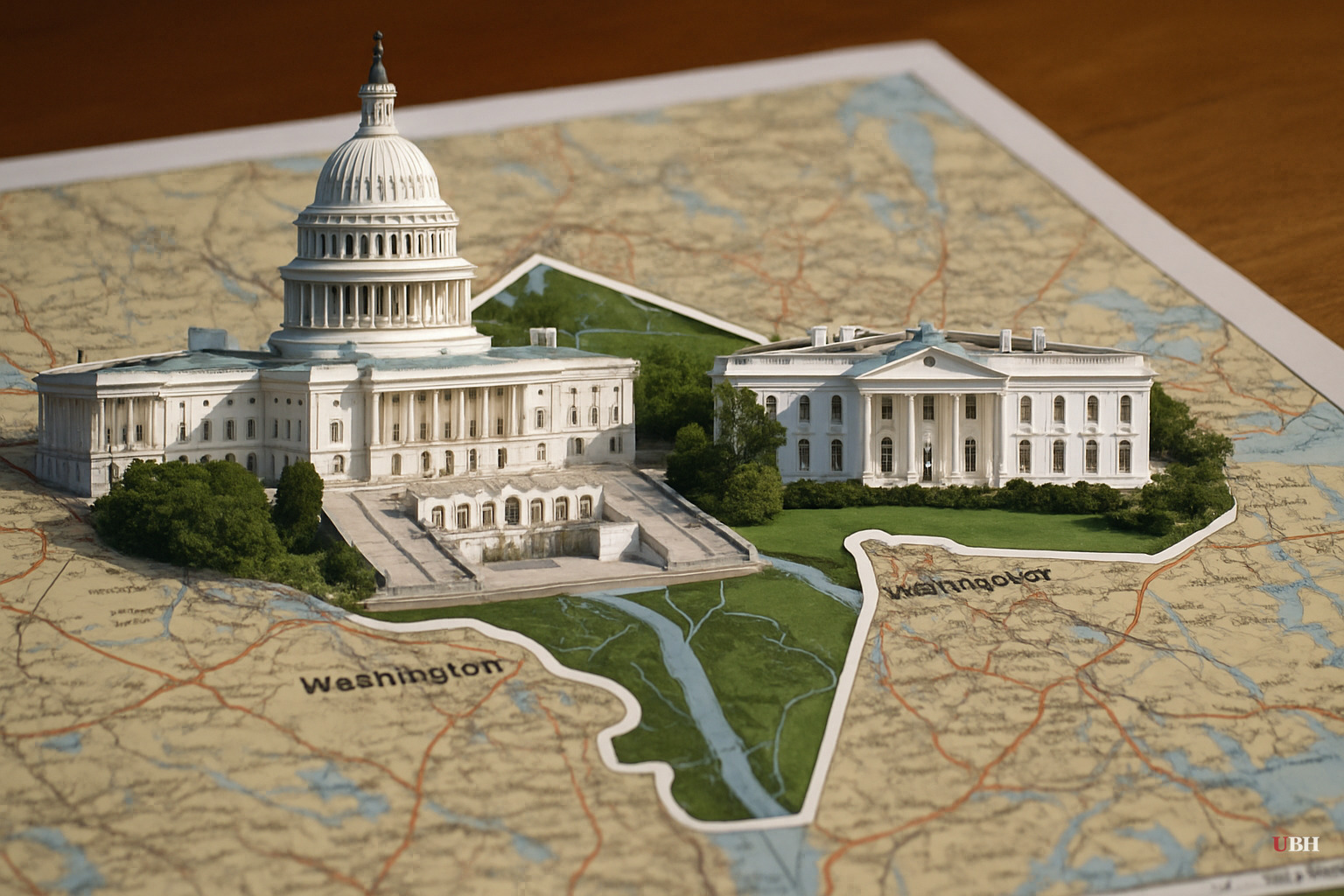
Since Congress sent the 21st Century ROAD to Housing Act to Trump's desk this week, the legislation's path to becoming law has hit an unexpected detour — not from the opposition, but from the president himself.
On Wednesday morning, Trump posted that the signing event at the Capitol was canceled. "Today's Housing News Conference and Signing is hereby cancelled until such time as we pass the desperately needed SAVE AMERICA ACT, which I consider to be a National Emergency," he wrote, according to CBS News. White House press secretary Karoline Leavitt had promoted the signing as recently as Tuesday night.
What the Bill Actually Does
The legislation is, by any measure, the most significant federal housing action in a generation. According to TIME, it contains more than 50 provisions aimed at boosting housing supply, including streamlined environmental reviews, HUD guidance on zoning reform, expanded definitions for manufactured housing, and restrictions on large institutional investors purchasing single-family homes.
Realtor.com estimated the U.S. was short more than 4 million housing units as of last year, per NPR. The bill does NOT create major new federal funding streams, as the National Low Income Housing Coalition's senior vice president David Gonzalez Rice told the Los Angeles Times. Instead, it removes regulatory barriers and redirects existing federal block grant dollars toward new construction.
Francis Torres, housing and infrastructure director at the Bipartisan Policy Center, called it "the most serious that Congress has gotten about housing reforms in a generation," according to TIME.
The Vote Was Not Close
The Senate passed the bill 85-5 on Monday. Every vote against came from Republicans. The House followed Tuesday, 358-32, again with all opposition from within the GOP. The bill was led by Sens. Elizabeth Warren (D-MA) and Tim Scott (R-SC) in the Senate and Reps. Maxine Waters (D-CA) and French Hill (R-AR) in the House — a genuinely unusual cross-aisle coalition.
Trump's Condition
House Speaker Mike Johnson told reporters Wednesday that Trump wants to see more progress on the SAVE America Act before signing. "He has a window of time before he has to sign a bill, and he's going to use a little bit more of that window," Johnson said, per CBS News. "He'll do it within that 10-day window."
The SAVE America Act would impose strict new requirements on voter registration and ballot casting. The House has passed it three times. The Senate has NOT — and Senate Republican leaders have repeatedly stated they do not have the votes and will not change procedural rules to force it through.
Trump also downplayed the housing legislation itself in a separate post, calling it the "Elizabeth 'Pocahontas' Warren centric housing bill" and describing it as "of minor importance" compared to lower interest rates, according to CBS News. That characterization sits awkwardly alongside the bill's Republican co-author — Tim Scott — and the 85 senators who voted for it.
The Case for Trump's Position
The strongest argument for Trump's leverage play is this: the SAVE America Act has stalled in the Senate for months, and conditioning a popular bill on movement there is a pressure tactic with precedent. Presidents routinely use signing ceremonies as political leverage, and under the Constitution, a bill automatically becomes law within 10 days if a president neither signs nor vetoes it while Congress remains in session. The housing bill is NOT dead and may never require his signature at all.
Some conservatives also argue that election integrity measures are urgently needed and that a housing bill addressing supply constraints — a multi-year fix at best — shouldn't crowd out voter-verification reform the president views as more immediate.
The Problem With That Framing
Republican Rep. Don Bacon of Nebraska wasn't buying it. "He strongly endorsed the housing bill a month ago, so the criticisms now are strange," Bacon told CBS News. "We made the Senate bill better than when he endorsed it."
The housing bill, per the LA Times, is politically vital for Republicans heading into November midterms. Affordability is a top voter concern. Pulling back on a 358-32 bill to demand action on legislation the Senate has already said it cannot pass is a difficult position to defend on the merits.
What Happens Next
The constitutional clock is the key variable. Under the 10-day rule described by CBS News, if Trump neither signs nor vetoes the bill while Congress is in session, it becomes law without his signature. Speaker Johnson indicated Trump intends to stay within that window, meaning the housing provisions are likely to take effect regardless of what happens with the SAVE America Act. The unresolved question is whether Trump's very public linkage of the two bills pressures Senate Republicans enough to force a procedural vote on SAVE, or whether it simply plays out as a delay that changes nothing legislatively but costs the administration a clean political win on housing.
Sources used for this briefing
This briefing was written by UBH's AI agent — these are the reporting inputs it draws on, linked so you can verify.


