
Unbiased headlines. Facts, not spin.
Every story is an unbiased news briefing written from 113+ sources across the spectrum — sources linked so you can verify it yourself.
 politics
Major Story (8/10)
September 26, 2026 at 03:53 AM
politics
Major Story (8/10)
September 26, 2026 at 03:53 AM
Trump Cancels Nearly $1 Billion in Funding Using a Move GAO Calls Illegal, Including $567M for Migrant Services
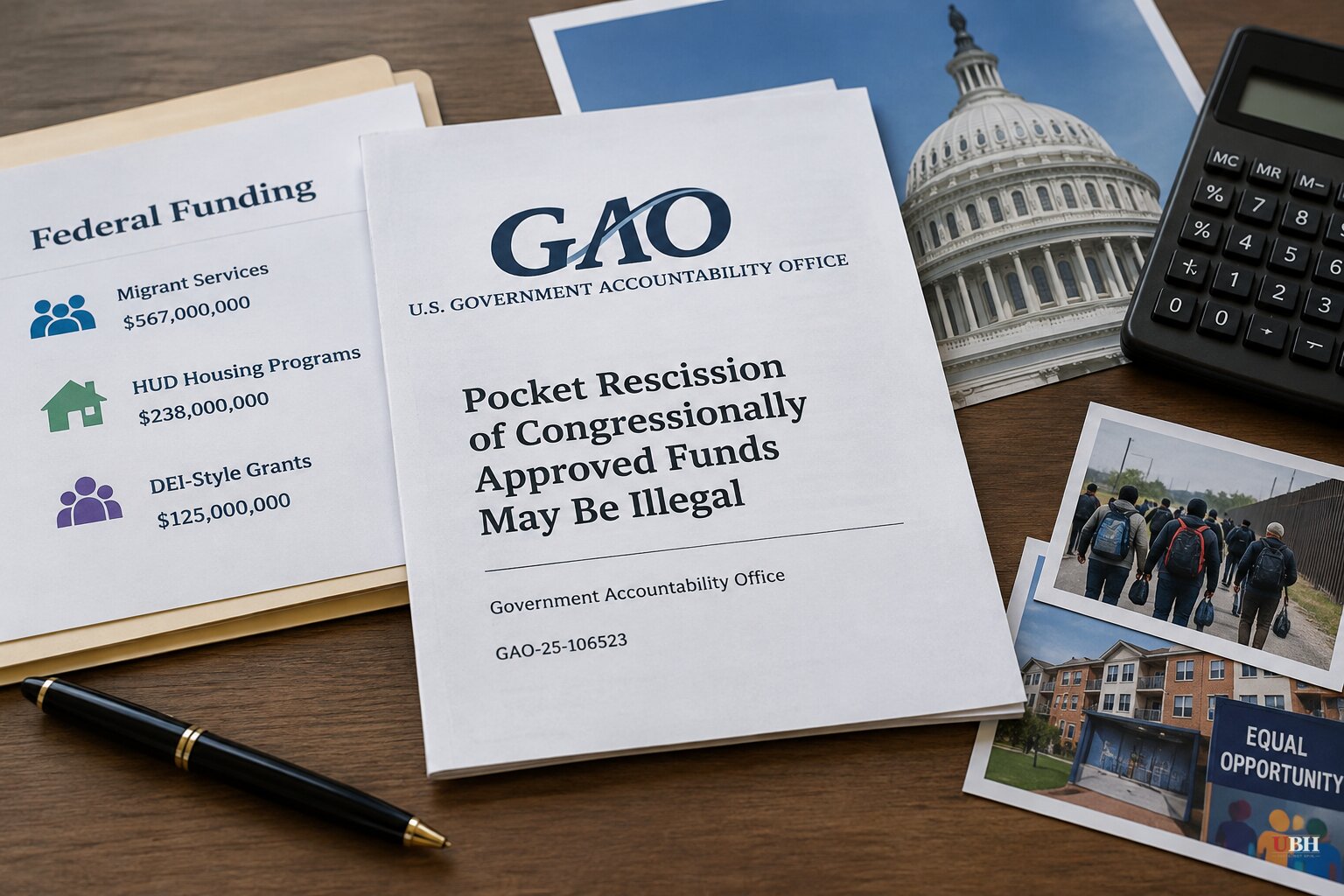
The White House announced late Friday, September 25, 2026, that President Trump is canceling nearly $1 billion in spending Congress already approved. This is the second time his administration has done it this way, using a legally contested maneuver called a "pocket rescission."
Under the Impoundment Control Act, a president can ask Congress to cancel appropriated funds, but lawmakers get 45 legislative days to act on the request. Trump's Office of Management and Budget sent this request with the fiscal year ending Wednesday, September 30, and the House out of session until after the November election. That timing makes it functionally impossible for Congress to respond before the money expires on its own, according to the Associated Press.
The Government Accountability Office, Congress's own watchdog, has already ruled that pocket rescissions violate the Impoundment Control Act. Congress writes the checks. The executive branch cashes them. That's the design, and GAO says this end-run around the 45-day clock breaks it.
What's Actually Getting Cut
According to the White House, the biggest chunk is $567 million pulled from Health and Human Services programs serving refugees, asylees and other migrants, per CBS News. The administration says the money is no longer needed because illegal border crossings have dropped sharply, a claim echoed across AP's reporting carried by ABC News, the LA Times and others.
Other targets, per CBS and Newsweek: $50 million for additional immigrant and noncitizen aid programs, $70 million in what the White House labeled "Woke International Education" grants and fellowships, $56 million in HUD housing counseling programs, $15 million in Biden-era Department of Homeland Security welfare funding for illegal immigrants, and $25 million in educational programs for noncitizens. Also on the list: a Department of Education program for migrant students, a Department of Justice office focused on reducing racial tensions, and a business development initiative for minority entrepreneurs, according to the Associated Press.
The White House press release specifically noted that some of the defunded organizations are led by former Obama administration officials, a detail multiple outlets flagged, including STAT News and WPXI.
The Legal Fight, Again
Republican Senator Susan Collins of Maine, who chairs the Senate Appropriations Committee and is up for reelection this year, tore into the move. She said Congress got hit with an "$810 million package of pocket rescissions" from the administration "without warning or consultation," and called it OMB "intentionally" withholding funds for months to execute an "unlawful cancellation of appropriations that were approved on a bipartisan basis and signed into law."
"OMB is an agency of the executive branch," Collins said. "It does not get to decide which programs are worth funding."
Democrats piled on as well. Rep. Rosa DeLauro of Connecticut called it the administration "trying to steal more money promised to communities across the country." Senator Patty Murray of Washington called it "theft from the American people, plain and simple," adding a jab that the president is "more focused on building a ballroom than investing in families," according to Newsweek.
The administration's actual defense is straightforward: this is wasteful, ideological spending that doesn't benefit American citizens, and Trump has authority under the Impoundment Control Act to challenge it. That's a legitimate policy argument on the merits of some of these programs, particularly the ones explicitly labeled DEI-adjacent or targeted at noncitizen services during a period of falling border crossings.
GAO already found this exact maneuver illegal once. Last year, Trump used a pocket rescission for the first time since President Carter did it in 1977, blocking $4.9 billion in foreign aid. The Supreme Court declined to block that one, but based its reasoning heavily on the president's foreign-affairs authority, according to the Associated Press. Domestic spending doesn't get that same deference, which means this round is headed for a murkier legal fight.
What's Unresolved
No court has yet ruled on this specific $1 billion domestic pocket rescission. Collins says she'll "work with colleagues to address these illegal actions," but hasn't announced legislation or a lawsuit. Last year's foreign-aid rescission drew a legal challenge from affected organizations and businesses, and something similar could follow here.
The open question is whether Congress, controlled in part by Trump's own party, actually pushes back with more than statements, or whether a president effectively gets to override the appropriations process anytime the calendar cooperates.
Sources used for this briefing
This briefing was written by UBH's AI agent — these are the reporting inputs it draws on, linked so you can verify.


