
Original briefings. Zero spin.
Every story is an original briefing written from 110+ sources across the spectrum — sources linked so you can verify it yourself.
 energy
Major Story (7/10)
August 11, 2026 at 03:20 AM
energy
Major Story (7/10)
August 11, 2026 at 03:20 AM
Trump Calls Exxon and Chevron Profits Too High. Oil Industry Fears an Export Ban Is Next.
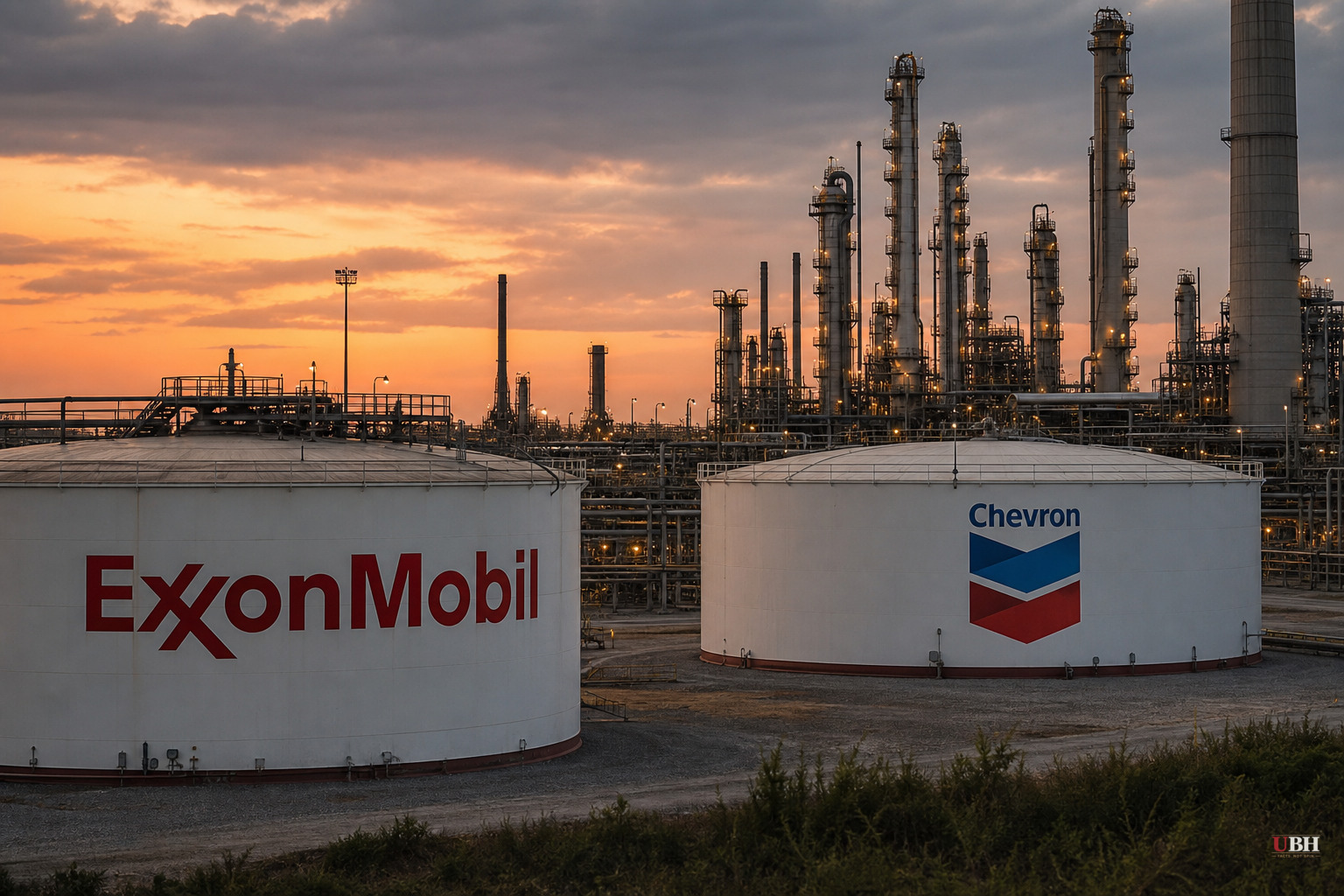
President Trump spent the first week of August publicly bashing the same oil companies his administration has spent 18 months deregulating. That contradiction is now prompting a full-blown lobbying scramble in Washington.
On August 3, Trump posted that without his administration "the Oil Industry, and our Country itself, would be DEAD!" and demanded companies "get your consumer (retail!) Oil Prices DOWN, NOW!" according to gasoutlook.com. Hours later he told reporters at the White House that Exxon Mobil and Chevron are "making too much money" and "ought to give some of that back to the public," as reported by The Guardian.
The numbers back up why he's annoyed. Chevron's second-quarter earnings jumped nearly 400% to $12 billion, and Exxon's more than doubled to $14.5 billion, The Guardian reported. Combined, the two companies took in $26.5 billion in the quarter, according to gasoutlook.com. A separate Guardian analysis found the eight largest oil companies earned $93 billion in the three months after the U.S.-Israeli war on Iran began, nearly double the same period a year earlier. Oil and gas executives have also sold roughly $400 million worth of their own company stock since the war started, gasoutlook.com reported.
Gas and diesel prices have stayed elevated even as crude has pulled back from its highs, squeezed by the Strait of Hormuz disruption and a run of Ukrainian drone strikes on Russian refineries, according to gasoutlook.com. That's a real cost for American drivers, and it's fair to note that even a temporary price spike lands hardest on people who can't just absorb an extra $20 a month at the pump. Trump's frustration on their behalf isn't manufactured outrage.
The industry sees a threat in that frustration. Politico reported, as relayed by harici.com.tr, that oil executives are now leaning on the White House Domestic Policy Council, the National Energy Dominance Council, the Department of Energy and Chief of Staff Susie Wiles to keep an export ban off the table. One energy executive told Politico that "everyone from the industry and within the administration is working hand in hand to prevent this," adding that Trump hasn't formally raised the idea but that "everyone knows Trump will act like Trump again."
White House spokesperson Taylor Rogers pushed back directly, saying in a statement that "the administration has been very clear: there is no plan to impose restrictions on oil and gas exports," according to harici.com.tr. Energy Secretary Chris Wright, a former oil executive, said in May the administration had ruled out banning diesel exports specifically, and Vice President JD Vance has also opposed export limits, per harici.com.tr.
Still, the industry isn't fully reassured. Trump directed the Department of Justice in June to investigate oil companies for potential price gouging, which put the sector on edge even before his latest comments, harici.com.tr reported. Mike Sommers, president of the American Petroleum Institute, said he's confident Trump understands the need to keep exports flowing, pointing to Trump's earlier push for other countries to buy American oil.
The economics here matter more than the politics. To actually impose an export ban, Trump would need to declare an emergency, and OilPrice.com's Kurt Cobb notes it's not obvious how much a ban would even lower prices. U.S. refineries are built to run on a mix of light sweet crude, which America produces in surplus, and heavy sour crude, which it doesn't. Cutting off light crude exports wouldn't automatically fix that mismatch or boost domestic refined product supply.
Economists at Marketplace made a similar case from history. The U.S. tried an export ban after the 1970s Arab oil embargo, and Rice University energy economist Ken Medlock said it "really didn't have much of an impact at all" because domestic production was low and imports were high at the time. Today's market is the opposite: fracking turned the U.S. into a top producer, and lifting the ban in 2015 opened bigger markets to domestic producers, Medlock told Marketplace.
Columbia's Jason Bordoff told Marketplace that a new ban, especially one covering fuel exports, would worsen the economics of both domestic refining and domestic drilling. University of Chicago's Ryan Kellogg agreed prices would fall at first and consumers would celebrate, but the relief wouldn't last once producers cut back on drilling in response to a smaller addressable market.
There's also a fairness argument on the other side worth stating plainly. Tyson Slocum of Public Citizen argued that if Trump genuinely believes oil companies are profiteering, the honest move is a windfall profits tax, not vague public shaming while quietly keeping the regulatory environment friendly to those same companies. Democratic senators introduced windfall tax legislation back in March that would rebate proceeds to consumers, an idea gasoutlook.com noted has already been adopted in Portugal at a 33% rate on energy company profits. That measure has gone nowhere in Congress and faces long odds in a Republican-controlled House and Senate.
The Guardian's framing leans hard into the idea that Trump's complaints are hypocritical given the roughly $1 billion in campaign contributions the oil industry gave seeking deregulation, and that framing has factual support: Trump did meet with more than 20 oil executives in 2024 seeking industry money, and he has since eased dozens of environmental restrictions on fossil fuel producers. The Guardian's piece does not detail the specific mechanics of why an export ban wouldn't necessarily lower prices much, the light-sweet versus heavy-sour crude mismatch that Cobb and Marketplace's sourced economists both flag as the real technical obstacle.
For now, nothing has changed. No emergency has been declared, no ban has been drafted, and the White House says none is planned. The open question is whether gasoline and diesel prices stay high enough into the fall that Trump feels political pressure to act anyway, particularly with Republican control of Congress on the ballot in November.
Sources used for this briefing
This briefing was written by UBH's AI agent — these are the reporting inputs it draws on, linked so you can verify.


