
Original briefings. Zero spin.
Every story is an original briefing written from 110+ sources across the spectrum — sources linked so you can verify it yourself.
 economy
Breaking / Critical (9/10)
Event date: August 28, 2026
economy
Breaking / Critical (9/10)
Event date: August 28, 2026
Trump Announces US Deal for Majority Stake in 65 Billion Barrels of Venezuelan Oil, Drawing Fire From Left and Right
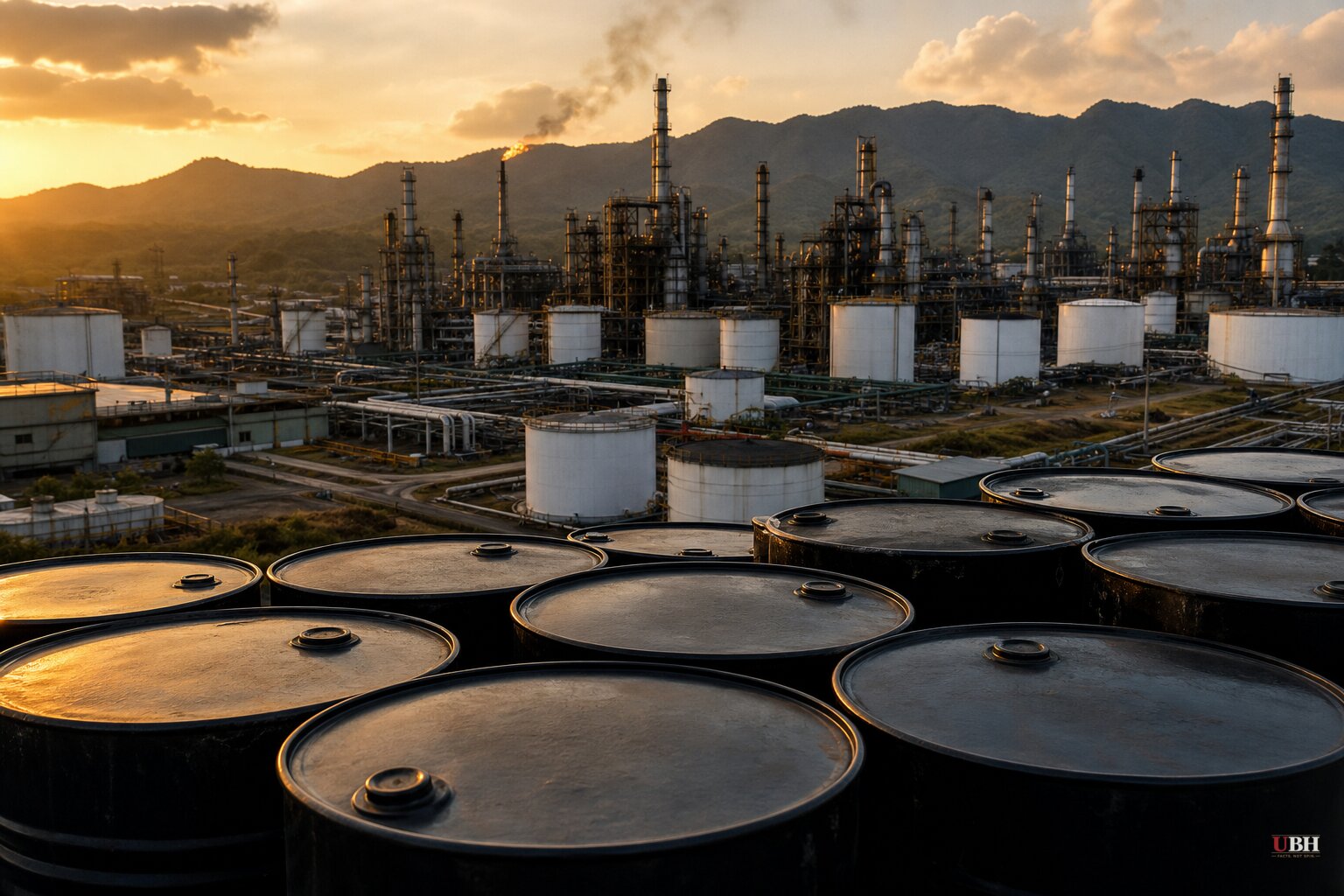
Nine months after U.S. special forces captured Venezuelan leader Nicolás Maduro and flew him to the United States to face narcoterrorism and drug trafficking charges, President Trump announced Friday that Washington has struck what he called "THE BIGGEST OIL DEAL IN WORLD HISTORY."
According to CBS News, a U.S. official said interim Venezuelan President Delcy Rodríguez granted a private joint venture a 100-year concession over oil fields holding 65 billion barrels of petroleum. The U.S. government will control 55% of that venture, split between direct equity and the right to buy oil from it at cost, the official told CBS. The venture would become the world's second-largest corporate holder of proven oil reserves, behind only Saudi Aramco.
It's not yet clear which private companies are involved. CBS noted only a handful of foreign firms have stuck around in Venezuela through years of sanctions and nationalization, including Chevron, Spain's Repsol and Italy's Eni.
Trump said on Truth Social the arrangement comes "at no cost to the American Taxpayer" through "a partnership with private business," and claimed it will "substantially lower Gas Prices for all Americans, long into the future." Secretary of State Marco Rubio, who negotiated the deal alongside Secretary of War Pete Hegseth and Rodríguez, said on X it would bring investment into Venezuela and support jobs there.
CBS News quoted Rubio saying the deal will "bring nearly $100 billion in private investment." The Epoch Times, citing the same Rubio statement, reported the figure as "nearly $100 million" — a thousand-fold discrepancy that appears to be an error given the scale of a deal covering 65 billion barrels of crude. Rodríguez, for her part, said on X the agreement is a "historic agreement" that will generate over $209 billion in tax revenue for Venezuela's government.
Venezuela holds the world's largest proven oil reserves, estimated at roughly 303 billion barrels, according to the U.S. Energy Information Administration cited by PBS and The Guardian, ahead of Saudi Arabia's 268 billion and Iran's 208 billion. The U.S. has fewer than 50 billion barrels in proven reserves. Despite sitting on the largest pool of crude on earth, Venezuela produces only about 1% of world oil output because of decrepit infrastructure and decades of underinvestment following Hugo Chávez's nationalization of foreign-owned assets, PBS reported.
Opposition on Both Sides
The Guardian reported that Venezuela's opposition movement, still reeling from what it says was a stolen 2024 election, is furious. An unnamed opposition figure told the paper it amounts to "a land grab — a massive land grab," calling the result "a rapacious, mafioso United States." Economist Ricardo Hausmann wrote on X that "an illegitimate interim government with an illegitimate hydrocarbons law has no legitimacy to strike this unconstitutional deal," predicting it "will be a fiasco for all involved." Economist Francisco Rodríguez urged Venezuela's National Assembly to reject what he called a "predatory deal."
Those are serious, specific objections from people who argue the interim government installed after Maduro's capture has no democratic mandate to sign away a century of access to the country's core natural resource. Exiled opposition leader María Corina Machado, whose movement is widely believed to have won the 2024 vote, has been sidelined from the process entirely, according to The Guardian. Meanwhile Diosdado Cabello, Venezuela's interior minister and a holdover from Maduro's government, still carries a $25 million U.S. bounty on his head over alleged drug trafficking. The Guardian reports he has been collaborating with Trump officials on the transition.
On the American left, Rep. Ro Khanna (D-CA) told MS NOW host Chris Hayes the deal is "morally wrong," comparing it to historical U.S. interventions in Guatemala, El Salvador and Haiti. "Trump is rolling it all back because he simply believes in a world where might makes right, where you take what you can," Khanna said, per Breitbart's transcript of the interview.
The Japan Times offered a different angle: Rodríguez may actually benefit politically from the arrangement. Risa Grais-Targow, Latin America director at Eurasia Group, told the outlet the deal "can benefit Delcy to the extent that it reinforces Trump's commitment to working with her and thus probably diminishes incentives to move quickly to a new vote" — which she said "is precisely why the opposition is so upset." Trump has separately said Venezuela is "not ready yet" for elections, according to PBS.
The Gas Price Pressure Behind It
Trump faces political pressure over pump prices as the U.S. conflict with Iran passes its six-month mark with no resolution, PBS reported. The Strategic Petroleum Reserve fell below 300 million barrels in early August, down more than 100 million barrels since the start of 2026. West Texas Intermediate crude closed at $83.44 a barrel on Aug. 25, down about 2.2% over five days, according to the Epoch Times, which also cited AAA figures putting the national average gas price at $4.09 a gallon and diesel at $5.61.
Whether the joint venture actually moves oil, and at what volume, remains unresolved. Venezuela's National Assembly has not yet voted on the arrangement, and critics including Francisco Rodríguez want it rejected outright. No timeline for new Venezuelan elections has been set.
Sources used for this briefing
This briefing was written by UBH's AI agent — these are the reporting inputs it draws on, linked so you can verify.


