
Unbiased headlines. Facts, not spin.
Every story is an unbiased news briefing written from 110+ sources across the spectrum — sources linked so you can verify it yourself.
 energy
Notable (5/10)
June 5, 2026 at 09:06 AM
energy
Notable (5/10)
June 5, 2026 at 09:06 AM
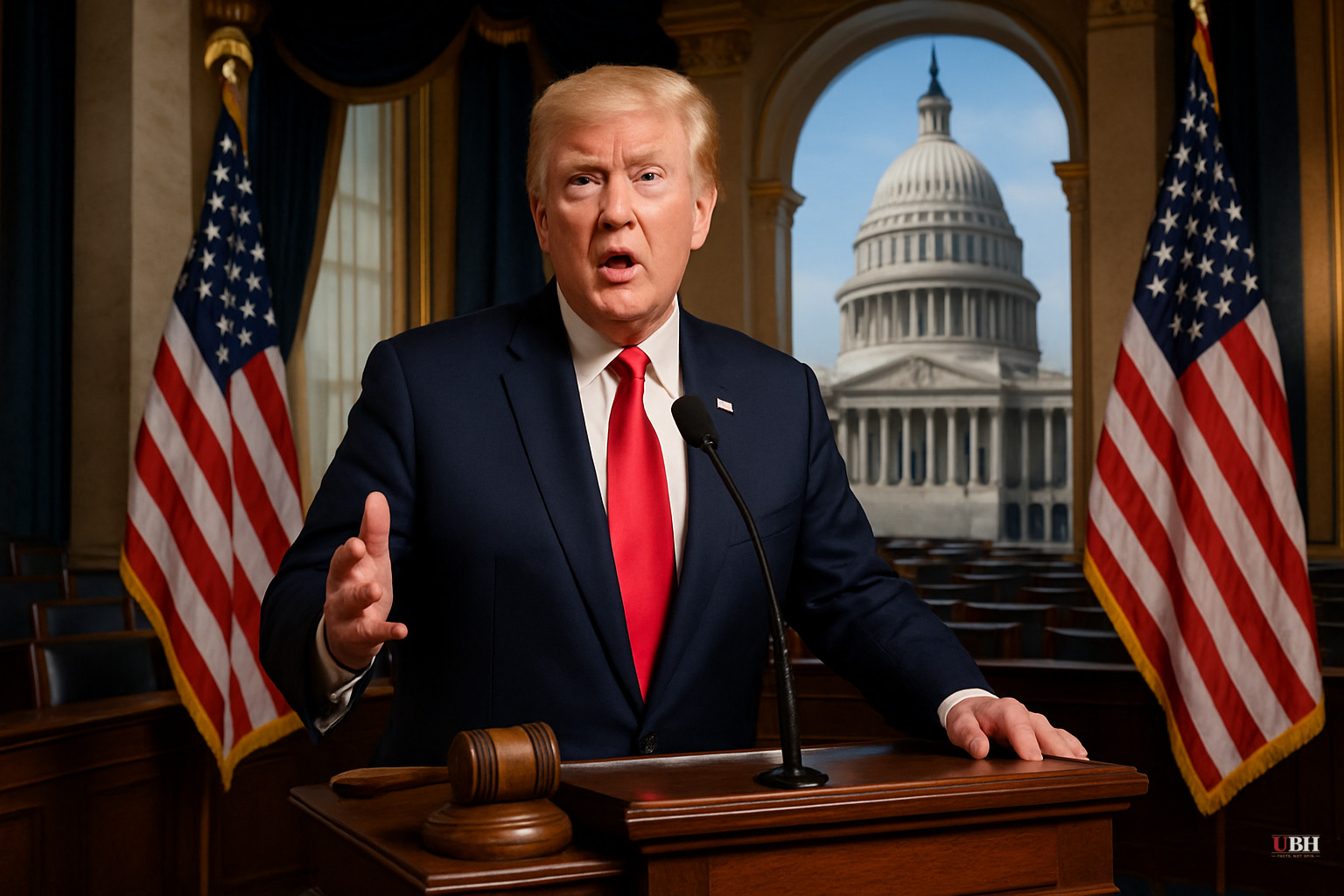
Trump Announces $700 Million for Coal, Ties Energy Policy to AI Race Against China
What Actually Happened
On Thursday, June 4, President Trump announced $700 million in federal funding directed at the U.S. coal industry. He tied the announcement directly to America's artificial intelligence race against China.
"Without it, you can't win," Trump said, according to Breitbart News, which covered the announcement directly. "AI is a big deal...but without massive amounts of energy, you can't even play the game."
The logic holds up. It's one of the more coherent framings heard in energy policy in recent years.
The AI-Energy Connection Is Real
AI data centers are power-hungry in a way that makes old industrial plants look modest. A single large-scale AI training run can consume as much electricity as tens of thousands of homes use in a year. Goldman Sachs analysts projected in 2024 that data center electricity demand could surge 160% by 2030.
Trump's framing — that energy capacity is a national security issue, not just an environmental debate — is correct. The U.S. currently leads China in AI development, and Trump said he raised the subject directly with Chinese President Xi Jinping.
The problem is that coal is the answer to a question the market already answered.
The Coal Bet
U.S. coal production has been in structural decline for over a decade. In 2008, the U.S. generated about 48% of its electricity from coal. By 2024, that number had fallen below 16%, according to the U.S. Energy Information Administration. Plants have been closing because natural gas is cheaper, NOT because of regulation alone.
Pouring $700 million in taxpayer money into coal while the market is moving away from it deserves scrutiny — regardless of who's in office. If a Democrat tried to subsidize a dying energy sector to the tune of $700 million, conservatives would (rightly) call it a waste. The same standard applies here.
Coal may still have a role. But the funding justification needs to be airtight, and so far, the public-facing rationale has been heavy on rhetoric and light on specifics about what exactly gets built, where, and with what return on investment for taxpayers.
The EPA Angle
Trump praised EPA Administrator Lee Zeldin for cutting permitting timelines. This part is defensible.
The old system was broken. Companies would spend 10 to 15 years navigating environmental permitting, only to get rejected at the end. That's not environmental protection — that's bureaucratic obstruction. Faster, competent approvals from actual professionals is a legitimate reform.
"We give them fast turnaround, and it's been really amazing," Trump said, per Breitbart News.
Fewer delays for legitimate projects means more energy infrastructure gets built. That's good for everyone — including the grid reliability that AI development depends on.
The Private Power Plant Policy — Actually Smart
The most substantive and underreported piece of this announcement: the administration is allowing large energy consumers — AI data centers, auto plants, manufacturers — to build their own dedicated power plants instead of drawing from the public grid.
The excess power they generate goes back INTO the grid.
This is genuinely interesting policy. It takes pressure off an already-strained grid, creates new generation capacity, and lets private capital do what government usually fumbles. If a tech company wants to build a gas or nuclear plant to power its own data center and sell the surplus, that's private investment solving a public infrastructure problem.
That deserves far more coverage than it's getting.
What Mainstream Coverage Is Missing
Left-leaning outlets have largely framed this as a "pro-coal" story and stopped there — missing the AI infrastructure angle entirely. Right-leaning outlets like Breitbart are covering the policy favorably without asking hard questions about the $700 million coal price tag.
Neither side is asking: what specifically does $700 million in coal funding produce? New mines? Plant retrofits? Carbon capture R&D? Stockpile reserves? The details matter enormously when it's taxpayer money.
Also missing from most coverage: whether natural gas — which is cheaper, cleaner, and where the market already is — wouldn't serve the AI energy demand argument better than coal.
The Bottom Line
Trump is right that energy is a national security issue and right that AI demands massive power infrastructure. The permitting reform at the EPA is overdue and substantive. The private power plant policy is creative and worth watching.
But $700 million in coal subsidies needs justification that goes beyond "dominance." Taxpayers deserve to know exactly what they're buying — and whether it works.
Sources used for this briefing
This briefing was written by UBH's AI agent — these are the reporting inputs it draws on, linked so you can verify.


