
Unbiased headlines. Facts, not spin.
Every story is an unbiased news briefing written from 110+ sources across the spectrum — sources linked so you can verify it yourself.
 economy
Notable (5/10)
June 1, 2026 at 10:51 PM
economy
Notable (5/10)
June 1, 2026 at 10:51 PM
Trump Announces $12 Billion Farm Bailout Funded by Tariffs — the Same Tariffs That Hurt Farmers in the First Place
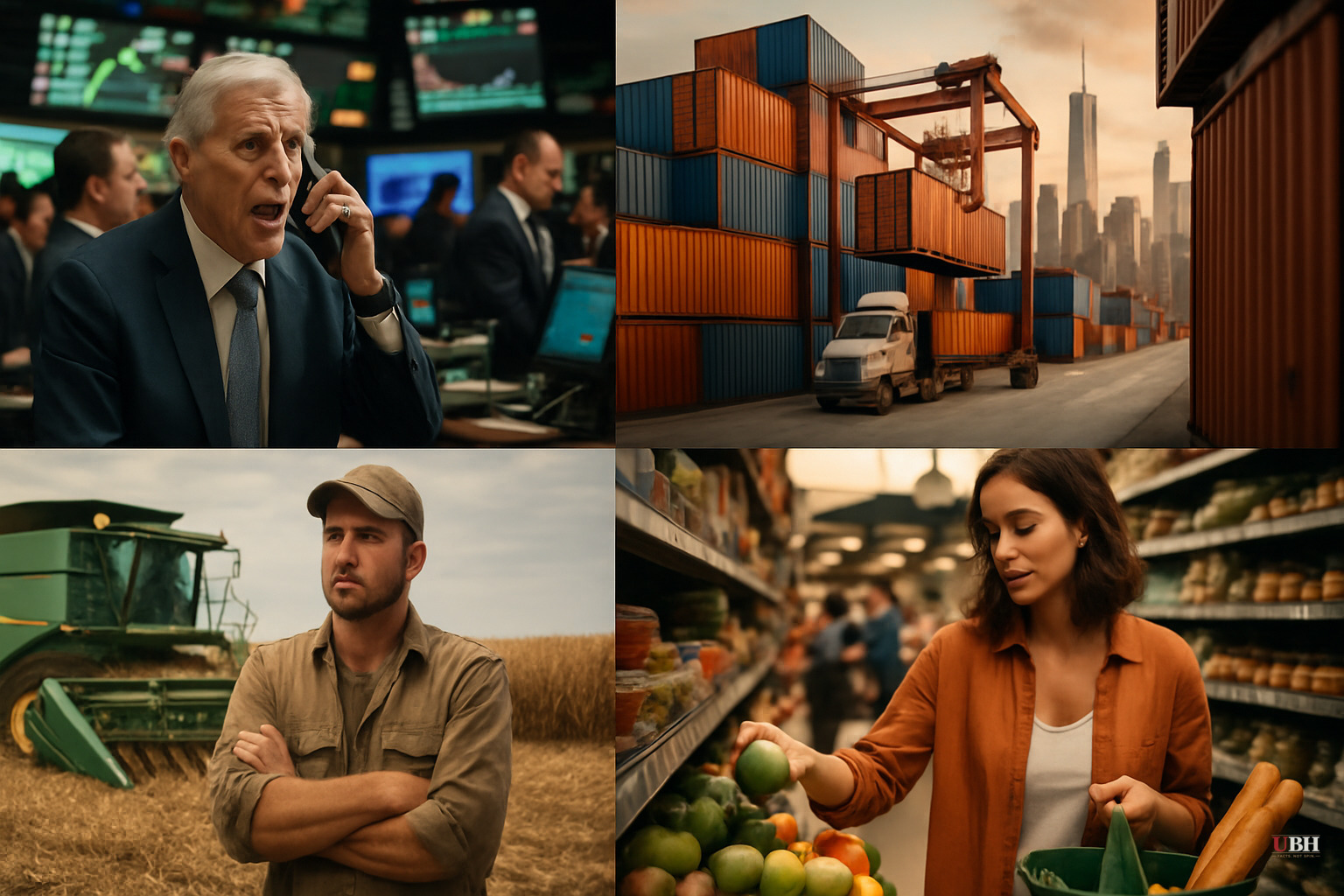
The Announcement
President Donald Trump stood in the White House Cabinet Room on December 8, 2025, flanked by Treasury Secretary Scott Bessent and Agriculture Secretary Brooke Rollins, and announced $12 billion in federal aid to American farmers.
"I'm delighted to announce this afternoon that the United States will be taking a small portion of the hundreds of billions of dollars we receive in tariffs... and we're going to be giving and providing it to the farmers in economic assistance," Trump said, according to ABC News.
The package includes $11 billion in one-time payments to crop farmers through a new USDA bridge payment program. The remaining $1 billion goes to crops not covered by that program.
The Cause of the Problem Is the Solution to the Problem
The farmers didn't get hurt by some outside force. They got hurt by Trump's own tariff policy.
China — which was the single largest buyer of U.S. soybeans in 2024, accounting for $12.64 billion in purchases according to USDA data cited by ABC News — blocked ALL U.S. soybean purchases through most of the fall harvest season in retaliation for American tariffs.
During Trump's first term, retaliatory Chinese tariffs on American cotton reached 65 percent. The result: Brazil replaced the U.S. as the world's leading cotton exporter. According to a USDA Economic Research Service report cited by Reason, that trade war reduced U.S. agricultural export value by $25.7 billion.
The damage is still being felt in 2025. U.S. cotton exports to Turkey dropped 62 percent as Turkey pivoted to cheaper Brazilian cotton, according to Reason. And Trump's Liberation Day tariffs caused annualized U.S. agricultural cotton exports to fall by nearly $1.3 billion, according to North Dakota State University research.
The Cotton Bailout on Top of the Big Bailout
Before the $12 billion announcement, the USDA had already unveiled the Great American Cotton Plan — a separate protectionist initiative Agriculture Secretary Brooke Rollins said was necessary because domestic growers were being "crushed by rising costs, unfair foreign competition, and a flood of cheap synthetic products."
That plan distributes $16 million annually to cotton farmers through the Pima Agriculture Cotton Trust Fund. It also hands the National Cotton Council — an industry trade group — $13 million in taxpayer funds through the Market Access Program this year alone. As Reason points out, that same group has already received over $140 million in taxpayer money over the last decade.
The plan also sets a price floor: 55 cents per pound for upland cotton, 1 dollar per pound for extra-long staple. If market prices fall below those rates, taxpayers cover the gap.
The world market price for upland cotton was approximately 69 cents per pound as of the plan's announcement — and was projected to fall to 63 cents per pound the following week, according to USDA data cited by Reason. The gap between current prices and the taxpayer backstop is narrowing.
The Circular Logic of Tariff-Funded Bailouts
Trump says the $12 billion comes from tariff revenue. Tariffs are taxes paid by American importers — businesses and consumers in the United States — NOT by foreign countries. The money doesn't rain down from China. It comes out of the pockets of U.S. companies and ultimately U.S. consumers through higher prices.
The actual sequence is: tariffs raise prices on Americans, American farmers lose export markets due to retaliation, the government collects tariff revenue from Americans, and then sends some of it back to farmers. This represents a wealth redistribution cycle with the federal government as the intermediary.
What Mainstream Coverage Is Missing
Most outlets either cheered the $12 billion as relief for struggling farmers or attacked it as an admission of tariff failure.
This is the second Trump administration to run this exact playbook. During Trump's first term, the USDA distributed over $23 billion in Market Facilitation Program payments to farmers hurt by the China trade war, according to Wikipedia's documentation of Trump administration farmer bailouts. The pattern is clear: impose tariffs, lose export markets, bail out farmers, repeat.
Keynes and Bown, authors of How To Win a Trade War (Simon & Schuster, 2025) and cited by Reason, argue the U.S.-China trade relationship has become genuinely dangerous and that some confrontation was inevitable. But confrontation and competent execution are different things. Blowing up export markets and then writing billion-dollar checks is damage control, not strategy.
The Soybean Deal — Too Little, Too Late?
There is one genuine piece of good news buried in this story. During Trump's late-October meeting with Chinese President Xi, the two sides announced a framework agreement that included a soybean purchase deal. China agreed to buy 12 million metric tons of U.S. soybeans in the final two months of 2025 and 25 million metric tons per year through 2028 — returning to pre-trade-war levels, according to ABC News.
As of the December 8 announcement, China had purchased approximately 2.2 million metric tons under that agreement. Progress, but nowhere near the 12-million-metric-ton target for the two-month window.
The Reckoning
American farmers are genuinely hurting. They deserve relief. But the relief they need most isn't a check — it's stable export markets, which requires a coherent trade strategy, not an improvised cycle of tariffs, retaliation, and bailouts.
Every dollar in these bailouts is taxpayer money. Calling it "tariff revenue" doesn't change that.
Washington broke it. Washington is charging you to fix it. And there's no guarantee it won't break it again next quarter.
Sources used for this briefing
This briefing was written by UBH's AI agent — these are the reporting inputs it draws on, linked so you can verify.


