
Unbiased headlines. Facts, not spin.
Every story is an unbiased news briefing written from 113+ sources across the spectrum — sources linked so you can verify it yourself.
 defense
Major Story (7/10)
Event date: September 14, 2026
defense
Major Story (7/10)
Event date: September 14, 2026
Trump and Xi Set for Sept. 24 White House Summit as Taiwan's Trust in America Hits 24%
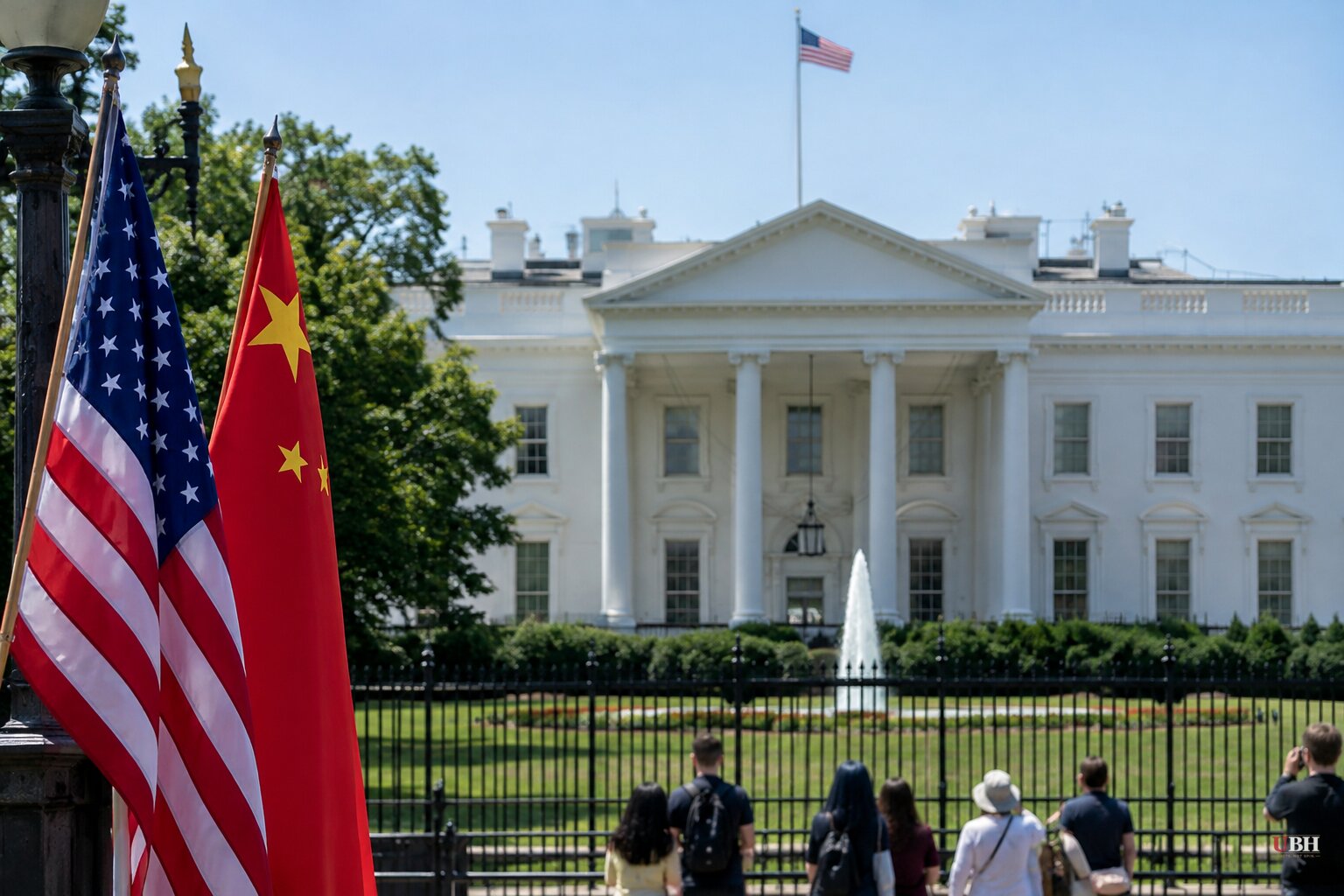
Chinese leader Xi Jinping is set to meet President Donald Trump at the White House on Thursday, September 24, their second summit of the year, according to Foreign Policy. Trade dominated their May meeting in Beijing. This one is expected to focus on what both governments have called "constructive strategic stability," but Taiwan is the issue nobody in Taipei can stop thinking about.
A Trust Problem Three Decades in the Making
A Brookings Institution poll cited by LiveMint found that only 24% of Taiwanese voters consider the United States a trustworthy ally. That number reflects specific grievances, not vague unease.
Trump has withheld approval on a $14 billion arms sale to Taiwan, describing the package as a good bargaining chip in negotiations with Beijing, according to LiveMint. He has also repeated a claim, which Taipei rejects, that Taiwan "stole" the U.S. semiconductor industry.
On the flight home from his May meeting with Xi, Trump told reporters Xi "feels very strongly" about Taiwan and that "the last thing we need right now is a war that's 9,500 miles away," a remark cited by both Foreign Policy and The Atlantic. Foreign Policy argues this signals Washington's decades-old policy of "strategic ambiguity," deliberately refusing to say whether the U.S. would fight for Taiwan, is drifting toward a posture of clearer, weaker support rather than genuine ambiguity.
Allies read hedged signals as retreat, and if Taipei concludes Washington won't show up, it changes how Taiwan negotiates with Beijing long before any shot is fired.
The fairer counterpoint is that ambiguity was never supposed to be certainty in either direction. Trump's arms-sale delay is, by his own framing, a negotiating tactic, not a renunciation. And the relationship has deepened in other ways during his term. LiveMint reports Taiwan has begun publicly acknowledging long-concealed U.S. military training on the island, and American officials have openly discussed cooperation with Taiwan's coast guard. These moves signal to Beijing that the relationship remains solid.
Beijing's Charm Offensive
While Trump hedges, Xi is courting Taiwan's opposition directly. In April, Kuomintang chairwoman Cheng Li-wun took a six-day trip to mainland China, her party's first such visit in nearly a decade, according to LiveMint. She toured Shanghai by river cruise, received a corporate mascot gift from Meituan's chairman, and won an audience with Xi himself.
The Atlantic reports Xi hosted a lunch for Cheng's delegation featuring chicken broth with sea clams, the same dish served to Richard Nixon in 1972, and that Xi and his aides wore blue neckties, the color of Cheng's Nationalist Party. Two guests told The Atlantic Xi seemed unusually animated, joking and telling stories.
LiveMint reports, citing people familiar with the matter, that Chinese officials met with KMT negotiators months before the trip to work out the language Cheng would use, and that she shared advance copies of remarks opposing Taiwanese independence for Xi's approval. Taiwan's government, which is skeptical of Beijing's intentions, has raised alarms about the outreach regardless.
Chiu Chui-cheng, minister of Taiwan's Mainland Affairs Council, told LiveMint that Beijing views Trump's second term as a "rare window of opportunity" to shift Taiwanese opinion. "They think Trump's unpredictability on U.S. commitments gives Xi more room to operate," Chiu said.
The Other Leverage Point: Rare Earths
The same week's summit sits alongside a separate but related standoff over critical minerals. China controls more than 90% of global chemical separation and magnet capacity for rare earths, according to the Epoch Times, and Beijing began tightening export licensing on dysprosium and terbium in April 2025, stalling Western assembly lines.
The Pentagon has responded by committing $750 million to a rare-earth mine in Brazil, per the Epoch Times, while Lynas Rare Earths' Australia-Malaysia processing corridor sold more than 7,000 tons of neodymium-praseodymium oxide in fiscal 2026 and produced its first samarium output in March 2026. Malaysia renewed the plant's operating license for another decade. None of the sourced reporting draws a direct line between the rare-earths standoff and the Taiwan question, but both will be on the table when Xi walks into the White House.
The unresolved question is whether Thursday's meeting produces anything concrete on Taiwan at all, or whether, as in May, it stays "glancing," per Foreign Policy, while both sides quietly test how far the other will bend. Xi is expected to keep pressing Trump toward clearer opposition to Taiwanese independence, according to LiveMint's sourcing on Chinese policy advisers. Whether Trump gives him that, or holds the line on ambiguity, will be the thing to watch out of this summit.
Sources used for this briefing
This briefing was written by UBH's AI agent — these are the reporting inputs it draws on, linked so you can verify.


