
Unbiased headlines. Facts, not spin.
Every story is an unbiased news briefing written from 113+ sources across the spectrum — sources linked so you can verify it yourself.
 defense
Major Story (7/10)
September 22, 2026 at 02:14 AM
defense
Major Story (7/10)
September 22, 2026 at 02:14 AM
Lee Jae Myung Pitches Phased North Korea Deal at UN as US and Japan Reaffirm Demand for Full Denuclearization
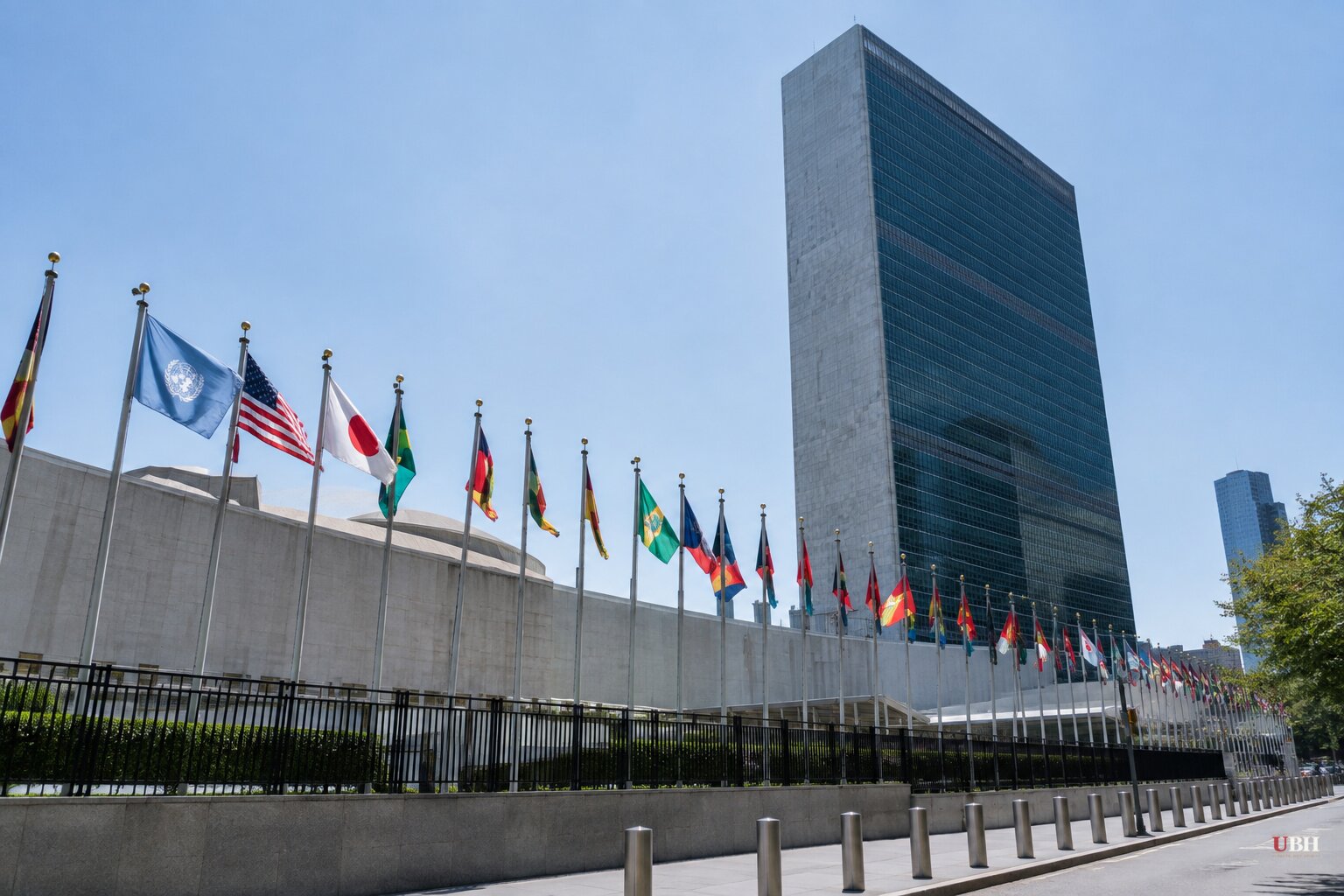
South Korean President Lee Jae Myung left Seoul on Monday, September 21, heading to New York for UN General Assembly high-level week with a message that puts him at odds with his own allies' official line.
"A phased approach of stop, reduction and dismantlement is a practical way of effectively resolving the North Korean nuclear issue," Lee said in written responses to the Associated Press before departing. "To change the direction of a moving vehicle, it must be brought to a halt first."
That same day, the foreign ministers of South Korea, the United States and Japan met in New York and put out a joint statement saying the opposite thing, at least on paper. Foreign Minister Cho Hyun, Secretary of State Marco Rubio and Foreign Minister Toshimitsu Motegi reaffirmed their "resolute commitment to the complete denuclearization" of North Korea, according to a joint statement reported by the Korea Times. The three also reaffirmed America's "ironclad" defense commitments to Seoul and Tokyo, "backed by America's unmatched military strength, including its nuclear capabilities."
On the same day, two allied governments put out two different asks: total disarmament from the trilateral statement, and a gradual off-ramp from the man who actually has to live next to Kim Jong Un.
Why Lee is pushing this
Lee's argument has some grounding in reality. North Korea's arsenal has kept growing no matter what Washington demanded. Trump claimed last month that the North has 57 nuclear weapons; some experts believe it has more than 100, according to the Associated Press reporting carried by SFGate. Lee's point is that waiting for a single grand bargain lets Pyongyang keep building while nobody agrees on how to stop it. "In the interim, North Korea's nuclear capabilities will continue to advance, escalating the threat," Lee said.
But the skeptical case also holds weight. A phased deal that trades partial concessions for sanctions relief has a track record, and it's not a good one. The 1994 Agreed Framework froze North Korea's plutonium production in exchange for aid, and it collapsed. The six-party talks in the 2000s produced agreements that also fell apart. SFGate itself flagged the concern directly in its reporting: a phased approach risks letting North Korea bank the benefits, like sanctions relief, and then simply refuse to finish the job. Lee says he wants a broader framework to prevent that outcome, but he hasn't detailed what would force Pyongyang's hand if it walks away after round one.
Separately, a piece from CommStrader described Lee as urging Trump toward a permanent "freeze" instead of denuclearization altogether, a materially different and more concessionary framing than what Lee actually said on the record to the AP, which explicitly kept dismantlement as the end goal, just phased. Lee's own quoted words describe an incremental path to the same destination, not abandoning the destination.
North Korea isn't playing along
While Seoul debates tactics, Pyongyang is rejecting the premise entirely. North Korea's Foreign Ministry said Monday, September 21, that it would not tolerate "hostile forces'" efforts to curb its cooperation with other countries and that no new sanctions would block its development, according to state media KCNA as reported by The Straits Times.
The statement was a direct response to a September 16 report from the Multilateral Sanctions Monitoring Team, an 11-nation group that includes the US, Japan, South Korea, the UK and others. The MSMT said North Korea sent between 35,600 and 101,280 laborers to at least 17 countries, mainly China and Russia, generating an estimated $450 million to $800 million in 2025 to fund its nuclear and missile programs, in violation of UN Security Council resolutions. North Korea called the report fabricated.
A court ruling that won't get paid
In a separate legal action, a South Korean court ordered North Korea to pay 44.6 billion won, about $32.5 million, for blowing up the joint liaison office in Kaesong in 2020, according to the Associated Press. North Korea demolished the office after nuclear talks with Washington collapsed. There's no indication Pyongyang will ever pay a won of it, and no enforcement mechanism exists to make it.
Trump pressure, Middle East, and a possible summit
Lee is also managing friction with Trump on a separate front. At a September 18 press conference, Lee ruled out sending South Korean military assets into the Middle East in a way that could pull the country into the Iran conflict, while acknowledging Seoul was reviewing a narrower role protecting shipping through the Strait of Hormuz, according to Reuters. Trump has criticized South Korea for insufficient support on Iran and scaled back joint military exercises with Seoul this summer.
Lee also said Seoul and Washington are still negotiating the commercial terms of South Korea's $350 billion US investment pledge tied to last year's tariff deal, with a parliamentary briefing postponed to next week. And he said a Trump-Kim summit remains possible in the coming months, though he cautioned that many factors would need to align.
None of that changes the immediate question hanging over UN week: whether Lee's phased pitch gets any real traction with Washington, or whether the trilateral statement's language on "complete denuclearization" is the policy that actually governs what happens next.
Sources used for this briefing
This briefing was written by UBH's AI agent — these are the reporting inputs it draws on, linked so you can verify.


