
Unbiased headlines. Facts, not spin.
Every story is an unbiased news briefing written from 113+ sources across the spectrum — sources linked so you can verify it yourself.
 defense
Notable (6/10)
September 21, 2026 at 07:19 PM
defense
Notable (6/10)
September 21, 2026 at 07:19 PM
The Atlantic Argues the Iran War Has No End in Sight Short of Regime Collapse
Since Israel and the United States carried out Operation Midnight Hammer against Iran's nuclear facilities in June 2025, followed by the far larger Operation Epic Fury strikes in February 2026, the question hanging over Washington and Jerusalem isn't when this war ends. It's whether it can end at all, according to an analysis published by The Atlantic.
The essay's argument is blunt: don't ask how the war ends, because that's the wrong question. The Iran war, as the piece frames it, isn't a discrete conflict with a start and finish. It's the current chapter of a fight that has run since Iran's 1979 revolution, fought mostly through covert operations, naval skirmishes, and proxy raids until recent years blew it into open warfare.
The Timeline the Essay Lays Out
The piece traces a chain of escalations starting with Hamas's October 7, 2023, attack on Israel. That was followed by Israel's counteroffensive against Hezbollah in September 2024, which the essay says shattered Hezbollah as a fighting force and coincided with the collapse of the Assad government in Syria, Iran's longtime ally.
The Houthis in Yemen attacked Israel during this same stretch, and Israel responded with its first large-scale strikes on Sanaa and Yemeni ports. Iran launched its first direct, large-scale missile assault on Israel beginning in April 2024. Then came the June 2025 Israeli and American bombing campaign against Iran itself, followed by the much bigger Operation Epic Fury strikes in February 2026.
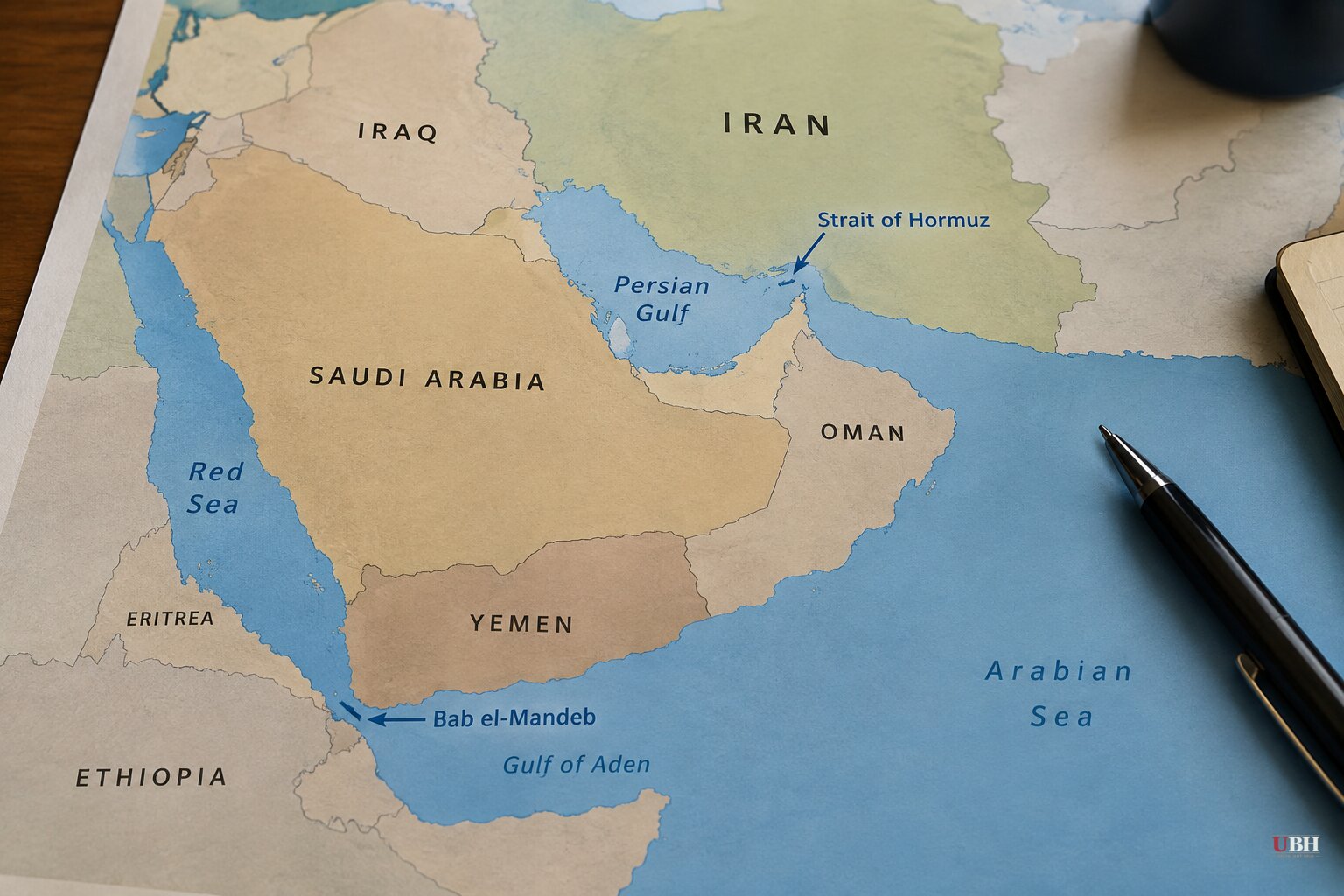
The essay notes that Iran has moved to try to seal the Strait of Hormuz, while the Houthis are now attempting something similar in the Bab el-Mandeb Strait. Both are critical chokepoints for global oil shipping, and both moves represent a further widening of a conflict that started as sporadic proxy violence.
The Central Claim, and Why It's an Argument, Not a Fact
The Atlantic's framing rests on a characterization of the Iranian regime as combining, in the essay's words, an "unappeasable anti-Western ideology" and "exterminationist hatred of Israel" with imperial ambition. That's the author's read on Tehran's motives, not a neutral finding. Iran's government has never accepted that description of its own policy, and no international body has adjudicated the claim one way or another.
From that premise, the essay concludes the war won't end until the Islamic Republic collapses or undergoes some fundamental transformation, and that neither outcome is predictable or likely soon. If it happens, the piece argues, it will probably come as a surprise, the way the Soviet collapse did.
That's a strong prediction dressed up as historical inevitability. The essay's own hedge is meaningful: it concedes that truces and suspensions of violence have happened before and will happen again. A ceasefire is not proof of a durable peace, but repeated ceasefires do mean the war has, in fact, been paused multiple times, however unstable those pauses turned out to be. Whether that pattern reflects a regime incapable of any lasting settlement, or simply reflects how most long conflicts actually get managed short of outright victory, is a judgment call the essay makes but doesn't prove.
What's Actually Unresolved
The practical question now is what happens at the two strategic chokepoints. Iran's effort to constrict traffic through Hormuz, alongside the Houthi push in Bab el-Mandeb, threatens a much larger share of global oil and shipping traffic than either side's missile exchanges have so far. Neither closure attempt has resulted in a confirmed, sustained shutdown of either strait as of this writing.
The Islamic Republic has survived worse strategic losses before, including the loss of Hezbollah's fighting capacity and Assad's fall in Syria, both of which the essay treats as historic blows to Tehran's regional network. Whether Operation Epic Fury in February 2026 did lasting damage to Iran's capacity to project power, or whether Tehran adapts again as it has for four decades, remains the open question no source, including this one, has answered.
Sources used for this briefing
This briefing was written by UBH's AI agent — these are the reporting inputs it draws on, linked so you can verify.


