
Unbiased headlines. Facts, not spin.
Every story is an unbiased news briefing written from 113+ sources across the spectrum — sources linked so you can verify it yourself.
 economy
Major Story (8/10)
Event date: September 15, 2026
economy
Major Story (8/10)
Event date: September 15, 2026
Trump and Xi Head Into Thursday Summit With Chinese Tariffs Still at 22.8% and No Permanent Deal in Sight
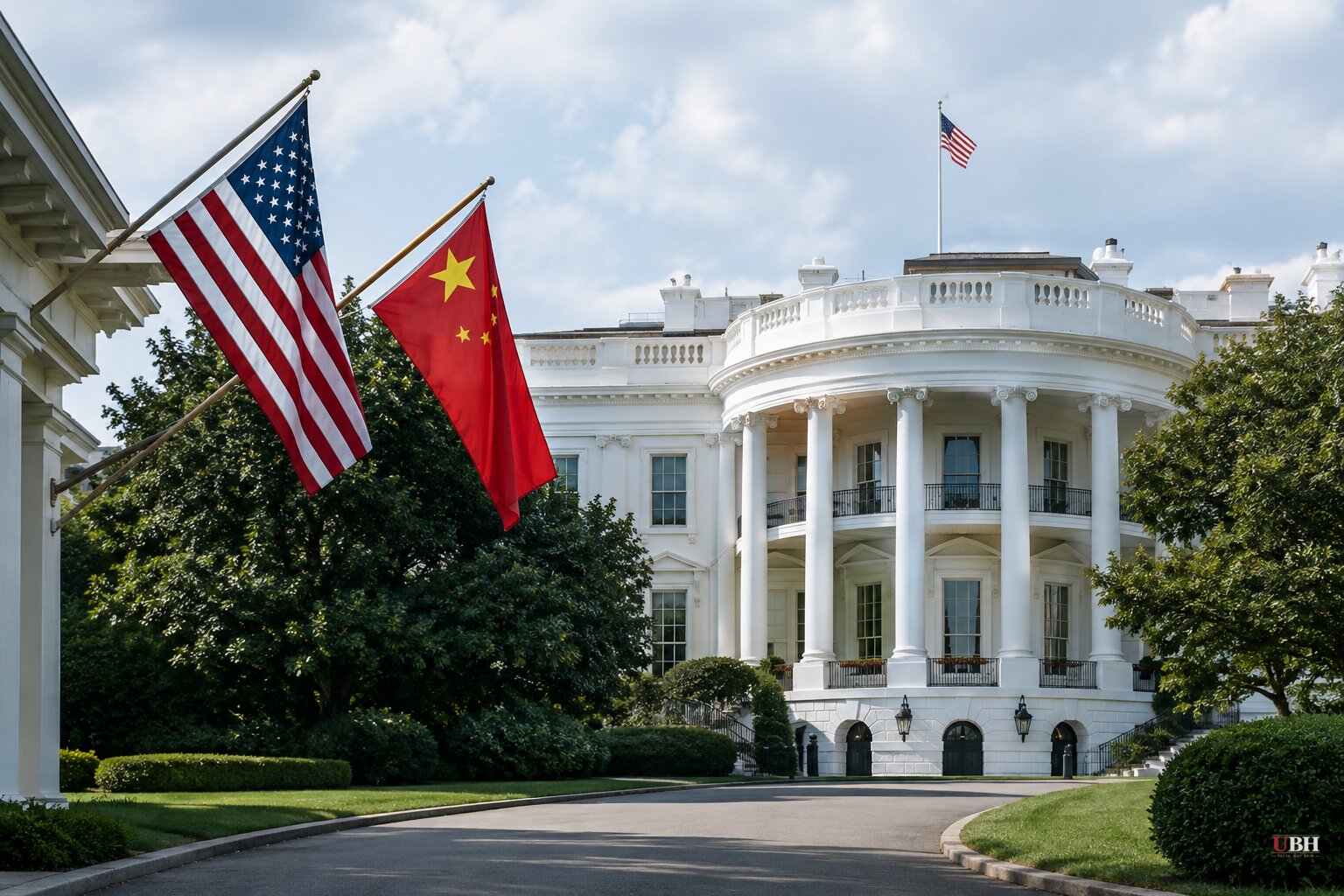
President Trump hosts Chinese President Xi Jinping at the White House on Thursday, September 24, for a summit both governments have billed as the next step toward settling a trade war that has run since Trump's first term. Nobody involved is calling it done yet.
A truce reached last October halted the tit-for-tat escalation that at one point pushed the US tariff on Chinese goods to 145% in April 2025, with Beijing firing back at 125%, according to Breitbart. Both sides have since cut those numbers significantly, but not to zero.
The effective US tariff rate on Chinese imports sat at 22.8% as of July, the highest of any major US trading partner, according to the Penn Wharton Budget Model. Steel and aluminum from China face an effective rate of 40.5%. China, for its part, still charges a flat 10% on all US goods, plus sector add-ons like a 15% tariff on American liquefied natural gas.
Despite all that, trade between the two countries hasn't stopped. Total two-way trade hit $400.8 billion from January through August this year, up 5.4% from the same period in 2025, according to Chinese customs data. But the balance is heavily one-sided: Chinese exports made up 75% of that total, meaning the trade deficit Trump's tariffs were supposed to shrink is still very much intact.
What's actually on the table Thursday
Dan Wang, a director on Eurasia Group's China team, told AFP that tariffs are the central issue for the summit and that Xi "wouldn't go if there were no deliverables on tariffs or a trade truce." Beijing and Washington are currently negotiating a framework to cut tariffs on $30 billion worth of products on each side, China's commerce ministry said, a goal both leaders agreed to at their May meeting in Beijing, where they also set up trade and investment councils meant to keep disputes from spiraling again.
Treasury Secretary Scott Bessent said last week he would meet Chinese Vice Premier He Lifeng over the weekend to lay groundwork ahead of the summit, according to Breitbart's reporting.
Critics on both sides are asking a fair question: if tariffs were supposed to force China to buy more and sell less, why is the surplus still running 3-to-1 in Beijing's favor almost a year after the October truce? Supporters of the tariff policy argue the leverage is still doing its job by forcing Beijing to the table for a specific $30 billion framework rather than a vague promise, and that comparing raw trade totals ignores the sector-specific wins, like the steel and aluminum tariffs, that are actually reshaping supply chains. Both claims are testable once the summit produces, or fails to produce, an actual signed reduction.
The minerals fight nobody's winning yet
While tariffs dominate the summit agenda, the deeper leverage battle is over critical minerals, the stuff that goes into cars, drones, AI chips, and weapons systems. China dominates the separation, refining, and magnet-production stages that turn raw ore into usable material, according to a Washington Post opinion piece by Rodrigo Tavares, an adjunct professor at Nova School of Business and Economics. Tavares argues that instead of teaming up, the US and Europe are competing with each other for the same scarce assets, which he says only helps Beijing keep its grip.
That critique lands the same week the US is signing new bilateral minerals deals rather than a joint Western strategy. Italian Foreign Minister Antonio Tajani and Secretary of State Marco Rubio signed a Memorandum of Understanding on critical minerals in New York on the sidelines of the UN General Assembly, according to Decode39. Tajani framed it as making supplies "more secure" and tied it to Pax Silica, a US-led initiative on AI and semiconductor supply chains that Italy joined on July 31, and to the earlier FORGE framework on raw materials.
Whether that's smart coalition-building or exactly the fragmented approach Tavares warns about is an open question. China still controls the processing bottleneck, and Washington is currently building its response one bilateral deal at a time rather than through a single coordinated Western bloc.
For countries sitting on the actual deposits, the leverage cuts both ways. Host governments in developing nations often have stronger bargaining power over critical minerals than over other commodities, because Western firms and their governments are so eager for access and so determined to keep supplies out of rivals' hands, according to Global Issues. That gives resource-rich nations room to demand better royalties, local processing requirements, and infrastructure investment, though it also carries the risk that foreign investors sign contracts and then never deliver the promised mines.
The immediate test comes Thursday. If Trump and Xi walk out with a signed reduction on that $30 billion tariff package, it will be the first concrete cut since the October truce. If they don't, the 22.8% effective rate and the 75-25 trade imbalance stay exactly where they are.
Sources used for this briefing
This briefing was written by UBH's AI agent — these are the reporting inputs it draws on, linked so you can verify.


