
Unbiased headlines. Facts, not spin.
Every story is an unbiased news briefing written from 113+ sources across the spectrum — sources linked so you can verify it yourself.
 economy
Major Story (7/10)
Event date: September 14, 2026
economy
Major Story (7/10)
Event date: September 14, 2026
Chicago Fed's Goolsbee Says Inflation Now Driven by Demand, Not Just Tariffs, as Gas Hits $4.31 a Gallon
A Fed President Says the Excuses Are Running Out
Chicago Fed President Austan Goolsbee told the Official Monetary and Financial Institutions Forum in London on Monday, September 21, that inflation may no longer be just a tariff and energy story. Strong demand, including a surge in AI-related investment, is now adding to price pressure, according to Reuters.
"If the through line is that it's coming from overheating demand, I think the implication is the rate response is more aggressive and more front-loaded," Goolsbee said.
This changes the argument the Fed has used for the last 18 months. Central bankers had been treating tariff and oil-shock inflation as temporary and largely "looking through it," per Goolsbee. If demand, not supply shocks, is now the driver, the standard playbook of waiting it out doesn't apply.
The comments land a week after the Federal Reserve raised its policy rate a quarter point following a two-day meeting, a decision Fed Chairman Kevin Warsh's committee made unanimously, according to CNN. Warsh told reporters afterward that "this summer's inflation readings do not tell me that underlying trends have meaningfully improved," and said inflation has been a problem for five years. The Fed also dropped language attributing elevated inflation specifically to supply shocks in energy, per CNN's reporting. The next rate decision comes in late October, days before the midterms.
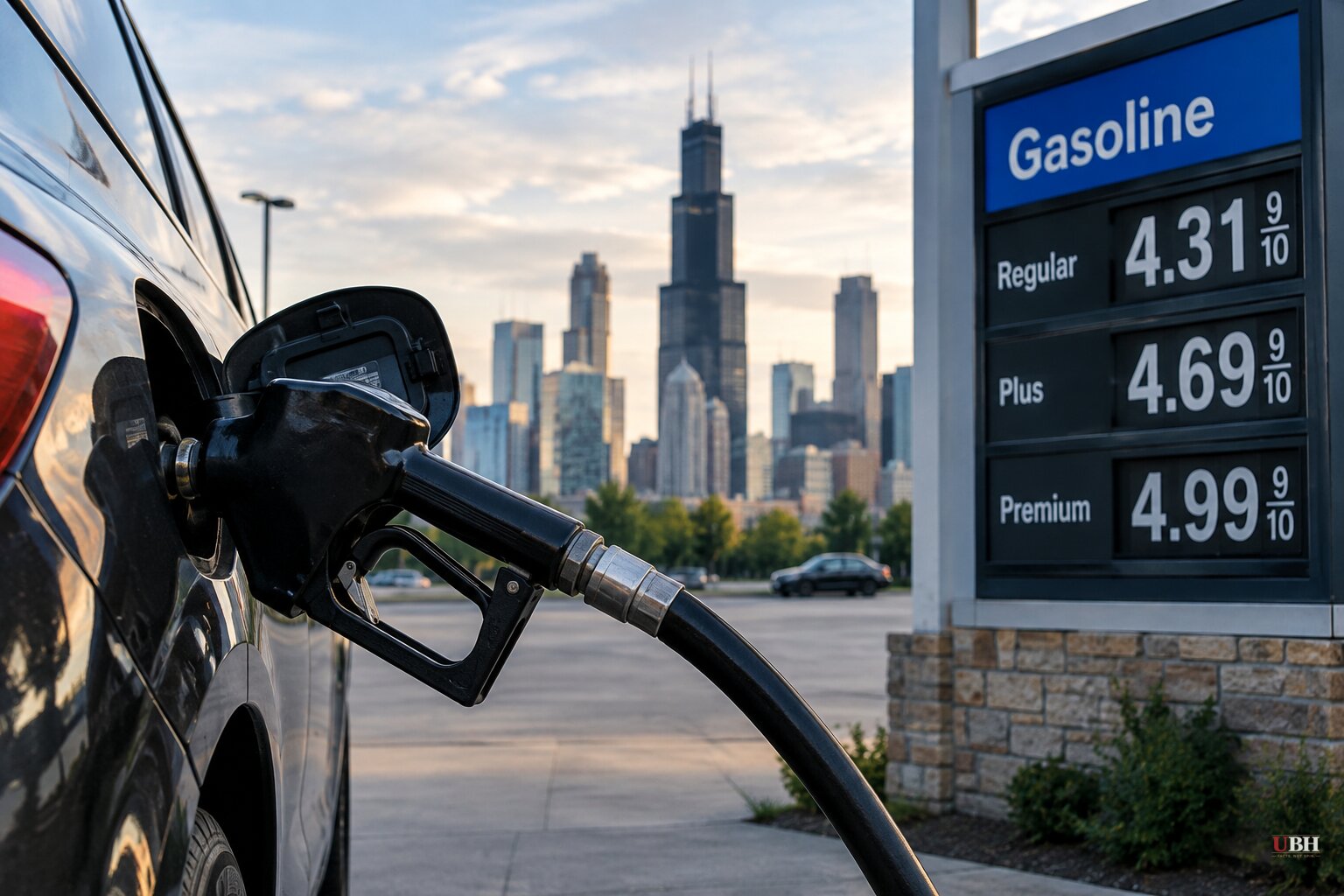
The Bureau of Labor Statistics reported on September 11 that annual inflation ran at 3.4%, with fuel oil prices up more than 50% year-over-year, according to the Wisconsin Independent. AAA data cited in that same report put the national average gas price at $4.31 a gallon on September 14, up from $3.12 the day Trump took office in January 2025, a 38% increase.
The Joint Economic Committee's Democratic minority, led by ranking member Sen. Maggie Hassan (D-N.H.), released state and district-level breakdowns on September 15 claiming families have spent an additional $4,200-plus on everyday essentials since Trump took office, covering housing, energy, groceries and health care costs. This is a partisan committee report, not an independent audit, and the JEC minority acknowledges it's part of Hassan's ongoing effort to build a case against the administration's economic record.
The White House disputes the framing entirely. A spokesperson told the Wisconsin Independent that August's CPI report shows "dramatic month-over-month price reductions for beef, prescription drugs, and car insurance," and blamed Democrats for "abetting Joe Biden's generational inflation crisis." That's a real, specific counterclaim: even if year-over-year numbers are elevated, the administration is pointing to recent monthly declines in select categories as evidence its policies are starting to work.
The Politics Are Already Showing Up
A Fox News poll last week found 63% of all voters, including 73% of independents, say the Trump administration has made the economy worse, according to the Hill. The same poll found 62% call grocery prices a "major problem" and 61% say the same about gas. Opposition to Trump's tariffs has grown 7 points to 64% over the past year, per that poll.
CNN senior political analyst Ronald Brownstein, in analysis also carried by Business Today, found that support for tariffs is eroding even among the working-class voters who backed them. A January Pew survey found 60% of Americans opposed Trump's tariff increases, and an April CNN/SSRS poll found four times as many Americans said tariffs hurt their personal finances as said they helped. Recent polling in Wisconsin and Ohio found roughly 60% opposition to the tariffs, and in Michigan and Maine, two-thirds or more said the latest Canada tariffs were bad for their states.
A 2025 Chicago Council on Global Affairs survey found nearly two-thirds of white Americans without a college degree preferred import restrictions to protect jobs over policies that keep prices low. That preference hasn't vanished, it's just colliding with the actual price tags showing up at the pump and the grocery store.
In Michigan's Upper Peninsula, that collision is direct. Trump's 50% tariff on nearly $20 billion in Canadian goods is raising shipping and product costs for cross-border businesses, according to Michigan Public Radio's Russ McNamara, reporting for NPR. Newberry business owner Ben Rahilly, who says he voted for Trump, told NPR he's "baffled" by a trade fight with a country his region depends on economically, even as he says the U.S. needs a domestic workforce it doesn't currently have.
In Kansas, Sen. Roger Marshall was booed at a State Fair debate over lawsuits his medical practice filed against patients, including new mothers, for bills as small as $129, according to the Hill. Former Kansas Gov. Bill Graves, a Republican, has since endorsed Marshall's Democratic opponent, pastor Adam Hamilton. Decision Desk HQ currently gives Democrats a 70% chance of winning the House and a 52% chance of winning the Senate, per the Hill's reporting, though those are probabilistic forecasts, not results.
Whether Goolsbee's demand-side diagnosis wins out inside the Fed before the late-October meeting, or whether Warsh's committee sticks with a wait-and-see approach on tariffs and oil, the rate decision lands just before voters decide the Kansas, Michigan and other midterm races where these exact numbers are already on the ballot.
Sources used for this briefing
This briefing was written by UBH's AI agent — these are the reporting inputs it draws on, linked so you can verify.


