
Unbiased headlines. Facts, not spin.
Every story is an unbiased news briefing written from 110+ sources across the spectrum — sources linked so you can verify it yourself.
 economy
Major Story (8/10)
Event date: September 20, 2026
economy
Major Story (8/10)
Event date: September 20, 2026
Kremlin Ties AfD's German State Win to Lost Russian Gas as EU Weighs Windfall Tax on Record Fuel Prices
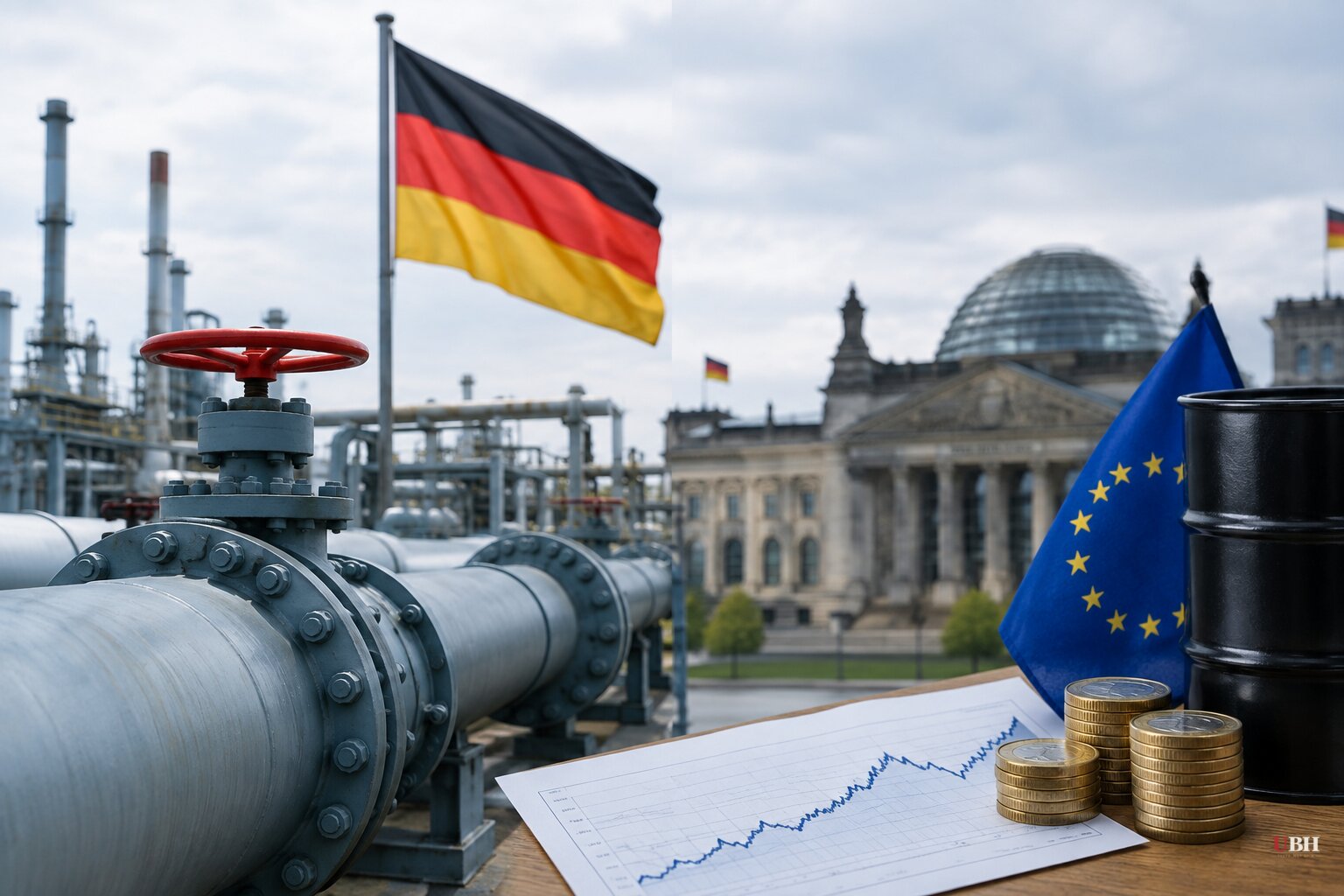
Since the AfD topped Sunday's vote in Mecklenburg-Western Pomerania and the CDU fell to second place in Berlin, the fallout has moved from German domestic politics to Moscow and Brussels. On Monday, Kremlin spokesman Dmitry Peskov offered his own explanation for the result, and it wasn't migration or crime.
"The decline in the competitiveness of the German economy is largely due to Germany's decision to stop buying cheap Russian gas and instead purchase much more expensive gas from other countries, primarily the United States, at times paying several times more on the spot market," Peskov said, according to Reuters.
Peskov added that Germans "are looking for an alternative to the current authorities in order to improve their situation," calling it "a natural process." Reuters also reported that two people familiar with the matter said Putin's top economic envoy, Kirill Dmitriev, and AfD leaders have begun preparations for a meeting, tentatively planned for 2027, to discuss restarting gas supplies to Germany. Neither the AfD nor a representative for Dmitriev commented.
The numbers behind Merz's worst defeat since 1949
The scale of the CDU's loss is not in dispute. According to Clean Energy Wire, Chancellor Friedrich Merz's party failed to clear the 5% threshold in Mecklenburg-Western Pomerania and will have no seats in that state parliament at all. The AfD finished as the strongest party there, though every other party has ruled out a coalition with it, leaving the Social Democrats to look at a possible government with the Left Party and the Greens. In Berlin, the CDU and SPD both lost ground while the Left Party and AfD gained, with the Left now negotiating a coalition with the Greens and SPD.
Merz called the result a "disaster" and told reporters in televised remarks that he would press ahead with his reform agenda, according to Clean Energy Wire, though he did not detail which reforms. The federal coalition had reintroduced a fuel tax cut just two days before the vote, an attempt to blunt anger over pump prices. Clean Energy Wire reported that economists and NGOs criticized the move as a short-term, climate-damaging fix that voters didn't reward anyway.
The energy squeeze is now a Europe-wide problem
The pressure isn't confined to Germany. The Guardian reported that oil futures have climbed back above $100 a barrel, roughly 50% higher than before the Iran war, with diesel across the EU up 38% year-on-year and jet fuel more than double. German diesel hit a record €2.45 a litre and petrol €2.31 a litre, according to motoring association ADAC, cited by the Guardian. Dutch petrol topped €2.73 a litre the same week.
Germany's finance minister, Lars Klingbeil, told fellow EU finance ministers in Dublin that oil companies are "exploiting the situation, overcharging and significantly increasing their profits," and asked the European Commission for windfall-tax proposals by next month, the Guardian reported. The Commission's economic commissioner, Valdis Dombrovskis, said there are no plans for an EU-wide tax mechanism "at this stage," but that Brussels is "ready to engage in discussion," leaving individual member states free to act on their own. Italy's Giorgia Meloni has already moved, announcing plans to scrap road tax for 14.5 million vehicles starting next year at a cost of over €2 billion, on top of an existing €2.8 billion diesel duty cut, according to the Guardian.
The AfD's argument, and its limits
AfD co-leader Alice Weidel has framed the fuel-price surge as a deliberate policy choice, not an accident. "The established parties want to take the money out of your pocket, fuel is being deliberately made so expensive," she wrote on X, according to Euronews, calling for scrapping the CO2 levy and cutting VAT and the EU energy tax. That argument, that cutting off cheap Russian gas raised German costs, is not baseless on its face. German industry has long relied on inexpensive Russian pipeline gas, and Berlin's post-Nord Stream pivot to costlier LNG, much of it American, has coincided with higher prices.
But the current spike traces to a different, more immediate cause than the Russian gas cutoff: the Guardian's sourcing ties the latest surge to escalating attacks across the Middle East threatening supply routes, pushing oil above $100 a barrel, not to a fresh German or EU policy decision. Germany's government has defended ending Russian energy purchases as a response to the security risk exposed by the 2022 Nord Stream pipeline explosions, a position the AfD does not share.
What happens next is unresolved on two fronts. The European Commission has not committed to a windfall tax and Dombrovskis' "at this stage" language leaves the door open either way. And no date beyond a general 2027 window has been confirmed for the reported Dmitriev-AfD talks on restarting gas supplies. A meeting like that would have no legal effect on German policy since the AfD holds no seat in the federal government.
Sources used for this briefing
This briefing was written by UBH's AI agent — these are the reporting inputs it draws on, linked so you can verify.


