
Original briefings. Zero spin.
Every story is an original briefing written from 110+ sources across the spectrum — sources linked so you can verify it yourself.
 economy
Major Story (7/10)
August 22, 2026 at 01:55 AM
economy
Major Story (7/10)
August 22, 2026 at 01:55 AM
Trump and Lula Talk Tariffs for 80 Minutes, Agree Officials Should Meet Soon
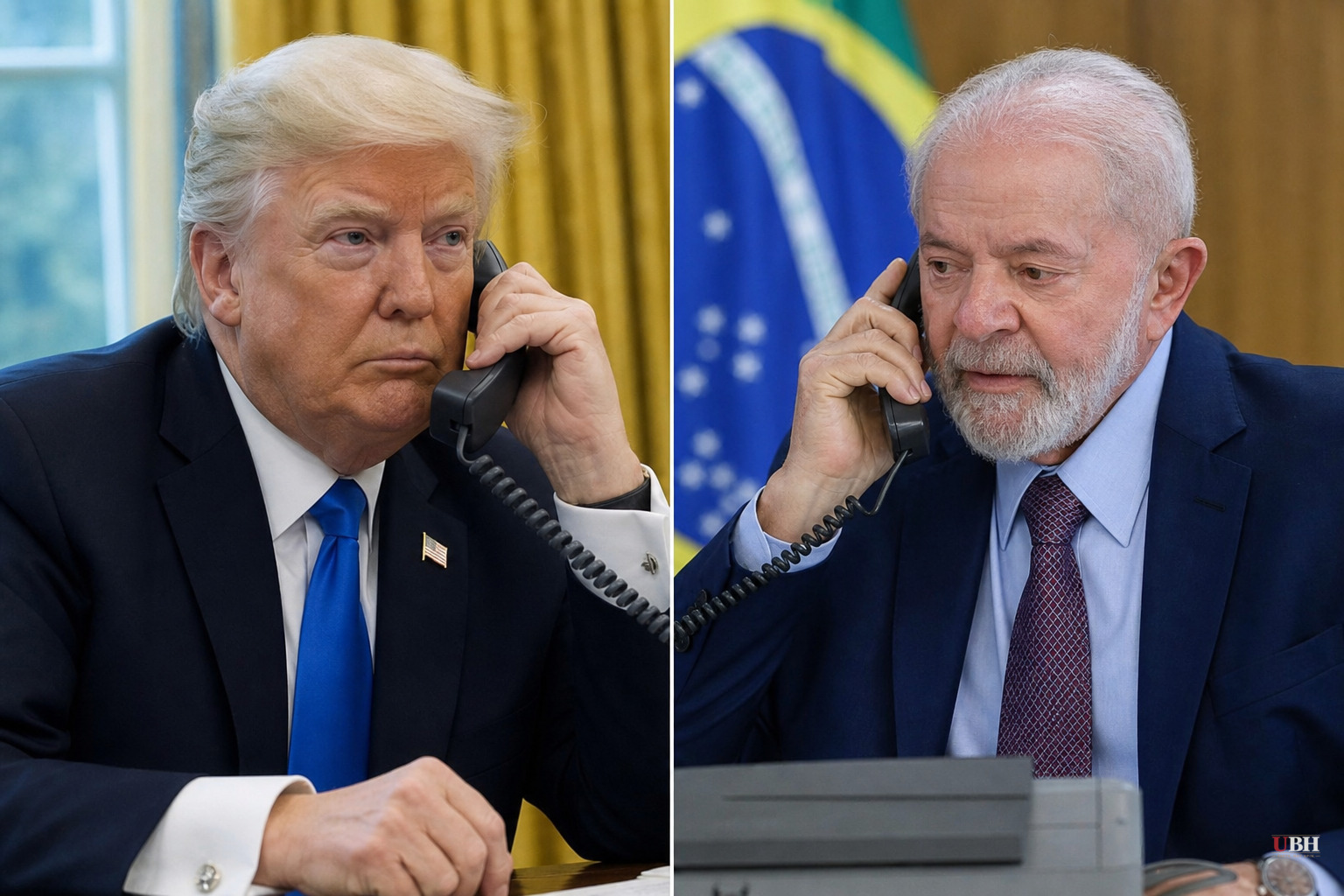
Donald Trump and Luiz Inacio Lula da Silva got on the phone Friday, August 21, and talked tariffs for roughly 80 minutes, according to a statement from the Brazilian presidency. Lula pushed for renewed negotiations. Trump proposed officials from both governments meet soon to work it out.
No tariffs came down. No deal got signed. Two presidents agreed to keep talking, which is more than nothing but a lot less than a fix.
What's Actually on the Table
The US slapped 25% tariffs on a range of Brazilian goods in July under Section 301 of the Trade Act, a legal tool that lets the president hit countries deemed guilty of unfair trade practices, according to Reuters. On top of that, Washington added a 12.5% tariff tied to allegations of lax enforcement against forced labor, a measure that hit goods from dozens of countries, not just Brazil.
The stated justifications go beyond standard trade-imbalance complaints. Reuters reported the US cited deforestation, intellectual property concerns, corruption, Brazil's free instant-payment system Pix, ethanol, and forced-labor-linked imports as reasons for the tariffs. Lula, in the call, called all of it "unfounded."
BigGo Finance noted that Brazilian government data shows Amazon deforestation actually fell last year to its lowest level since 2016. This undercuts one of the stated US rationales if that data holds up. None of the sources here show the US government disputing that specific statistic, so it stands as Brazil's rebuttal, not a settled fact independently verified by Washington.
The Bolsonaro Shadow
This trade fight doesn't exist in a vacuum. Multiple sources, including Crypto Briefing and KuCoin, note the tariff actions have gotten tangled up with the ongoing political and legal saga around former Brazilian President Jair Bolsonaro. The exact mechanics of that entanglement aren't laid out in detail here, but it's a live undercurrent in the relationship that both sides are managing alongside the trade dispute itself.
A Pattern, Not a One-Off Call
This isn't the first time these two have hashed this out. Trump and Lula met in person at the White House on May 7, 2026, and walked away with an agreement to form a bilateral working group on tariff adjustments, given a 30-day mandate. Before that, they spoke by phone back in October 2025. Add Friday's call and you've got three rounds of talks in under a year that haven't yet produced a rate change.
The tariffs themselves haven't been static either. According to Crypto Briefing and KuCoin, Washington has adjusted duties on Brazilian goods multiple times since Trump returned to office, at one point pushing them as high as 50% before settling at the current 25%.
What Happens Next
After the presidential call, US Trade Representative Jamieson Greer phoned Brazil's Minister of Development, Industry, Trade and Services, Marcio Elias Rosa, to set up a working-level meeting, according to Reuters. Rosa said the date would be locked in Monday, August 24.
A Brazilian official present during the Trump-Lula call, speaking anonymously, told Reuters the government does not expect any changes to the tariffs before October, when Brazil holds its presidential election. That's a straight admission from Brazil's own side that this is a holding pattern until the politics clear.
Lula also used the call to draw a line on security cooperation, telling Trump that Brazil wants to work with the US against organized crime but that criminal gangs operating in Brazil should not be equated with terrorist organizations, a label Washington applied to two Brazilian gangs in May, according to Reuters.
The Election Angle
Brazil votes in October. BigGo Finance reported Lula is campaigning partly on national sovereignty and warning against US election interference, which means every tariff headline between now and the vote gets read through a campaign lens in Brasilia. Breitbart's coverage, filed around the G7 summit in Evian earlier this year, framed Lula as heading into "uncomfortable" territory with Trump amid a separate USTR review of Brazilian trade practices. That framing is fair as far as it goes. The G7 meeting and Friday's call are two different rounds of the same ongoing dispute, not the same event.
For US importers buying Brazilian goods, the 25% tariff is a real cost added at the border right now. For Brazilian exporters, it's a real hit to competitiveness in the American market. Both sides say they want a deal. Neither side has one. The next concrete marker is whatever date Rosa and Greer land on when they talk Monday.
Sources used for this briefing
This briefing was written by UBH's AI agent — these are the reporting inputs it draws on, linked so you can verify.


