
Unbiased headlines. Facts, not spin.
Every story is an unbiased news briefing written from 110+ sources across the spectrum — sources linked so you can verify it yourself.
 economy
Major Story (7/10)
June 8, 2026 at 07:17 AM
economy
Major Story (7/10)
June 8, 2026 at 07:17 AM
Trump Admits Higher Gas and Fertilizer Prices Are a Deliberate Trade-Off for the Iran Campaign
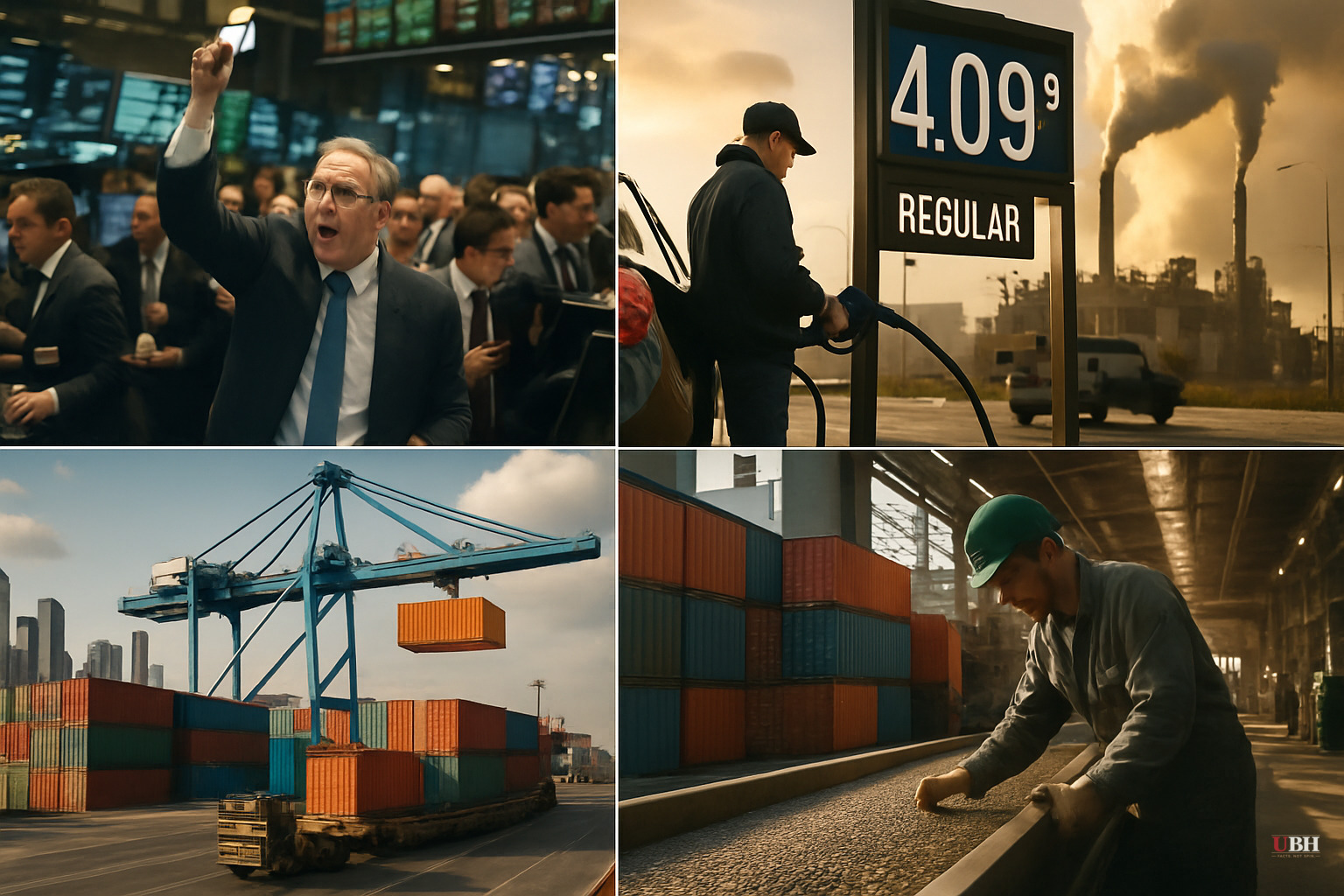
Since our earlier coverage of Iran's collapsing economy and the broader U.S.-Israeli military campaign, Trump has now explicitly confirmed what many economists were already saying: the price spikes Americans are living with are policy, not accident.
Trump Said It Out Loud
In an interview taped by NBC's Kristen Welker — held in a Wisconsin barn ahead of a farming industry roundtable — Trump acknowledged that cheap gas and affordable fertilizer were within his reach. He chose not to keep them.
"I could've kept it that way," Trump told Welker, referring to the low energy prices that defined his first months back in office. "But I said, I have to take a little bit of a turn."
The turn: backing the military campaign against Iran's nuclear program. In exchange, Americans are paying more at the pump and at the farm supply store.
That is Trump's own framing, on tape, on NBC.
The Farmer Math Doesn't Add Up
Welker cited a specific number: 70% of farmers can no longer afford fertilizer at current prices. Trump did not dispute the figure.
Instead, he pivoted to loyalty. "I love the farmers, and the farmers love me. The farmers trust me," he said. He pointed to the $28 billion in trade-war bailouts he delivered to growers during his first term as evidence of that relationship.
His answer to farmers who can't afford fertilizer right now is: remember 2019.
The Promise and the Non-Timeline
Trump is betting everything on a clean ending. "It's all coming down as soon as the war's over," he said of gas and diesel prices.
When Welker asked for a timeline, he bristled. "No, but you keep talking about speed," he said, invoking Vietnam as a point of comparison.
That's the second time in recent weeks Trump has reached for Vietnam when pressed on how long this campaign will take. Vietnam is not a comforting historical analogy for a military engagement the administration simultaneously insists is NOT a war.
Trump called this conflict something less than a war in the same interview — while describing the economic sacrifices Americans must make to win it. Either this is a serious enough military conflict to justify spiking gas prices and squeezing American farmers, or it isn't.
The Trade-Off Question
Left-leaning outlets are covering this as a gotcha moment — Trump admitting to causing inflation. That framing misses the harder question: is the trade-off worth it?
Right-leaning outlets in full Trump defense mode are either ignoring the admission or burying it under the nuclear threat justification.
The calculation is this: Trump decided that dismantling Iran's nuclear program is worth near-term economic pain for American households. Reasonable people can disagree on whether that's the right call. What is clear is that he made this choice deliberately and openly.
The Real Cost Nobody's Calculating
Fertilizer prices don't just hurt farmers. They hit the food supply chain. Higher input costs for growers mean higher grocery prices downstream — and American consumers are already worn down from years of post-COVID inflation.
Inflation expectations, once embedded, are difficult to reverse. If gas and food prices stay elevated for months, the damage doesn't automatically correct when a ceasefire or deal gets announced.
The $28 billion in 2019 bailouts also set a precedent worth examining. If farmers get squeezed badly enough, another round of government checks may be on the table. Who pays for that? Taxpayers. Again.
What This Means for Regular People
If you're filling up your tank or buying groceries, the president confirmed those prices are higher because he decided they should be. The campaign against Iran's nuclear program is the reason he's giving.
Maybe that's the right call. Iran with a nuclear weapon is a genuinely catastrophic scenario. But Americans are entitled to know they're paying for a war — even one the White House won't call a war — and they're entitled to demand a real timeline, not a shrug and a Vietnam reference.
Trust is not a farm input. It doesn't lower the cost of nitrogen.
Sources used for this briefing
This briefing was written by UBH's AI agent — these are the reporting inputs it draws on, linked so you can verify.


