
Unbiased headlines. Facts, not spin.
Every story is an unbiased news briefing written from 110+ sources across the spectrum — sources linked so you can verify it yourself.
 economy
Notable (6/10)
May 31, 2026 at 09:25 AM
economy
Notable (6/10)
May 31, 2026 at 09:25 AM
Trump Administration Moves to Block $166 Billion in Tariff Refunds After Supreme Court Struck Down the Tariffs
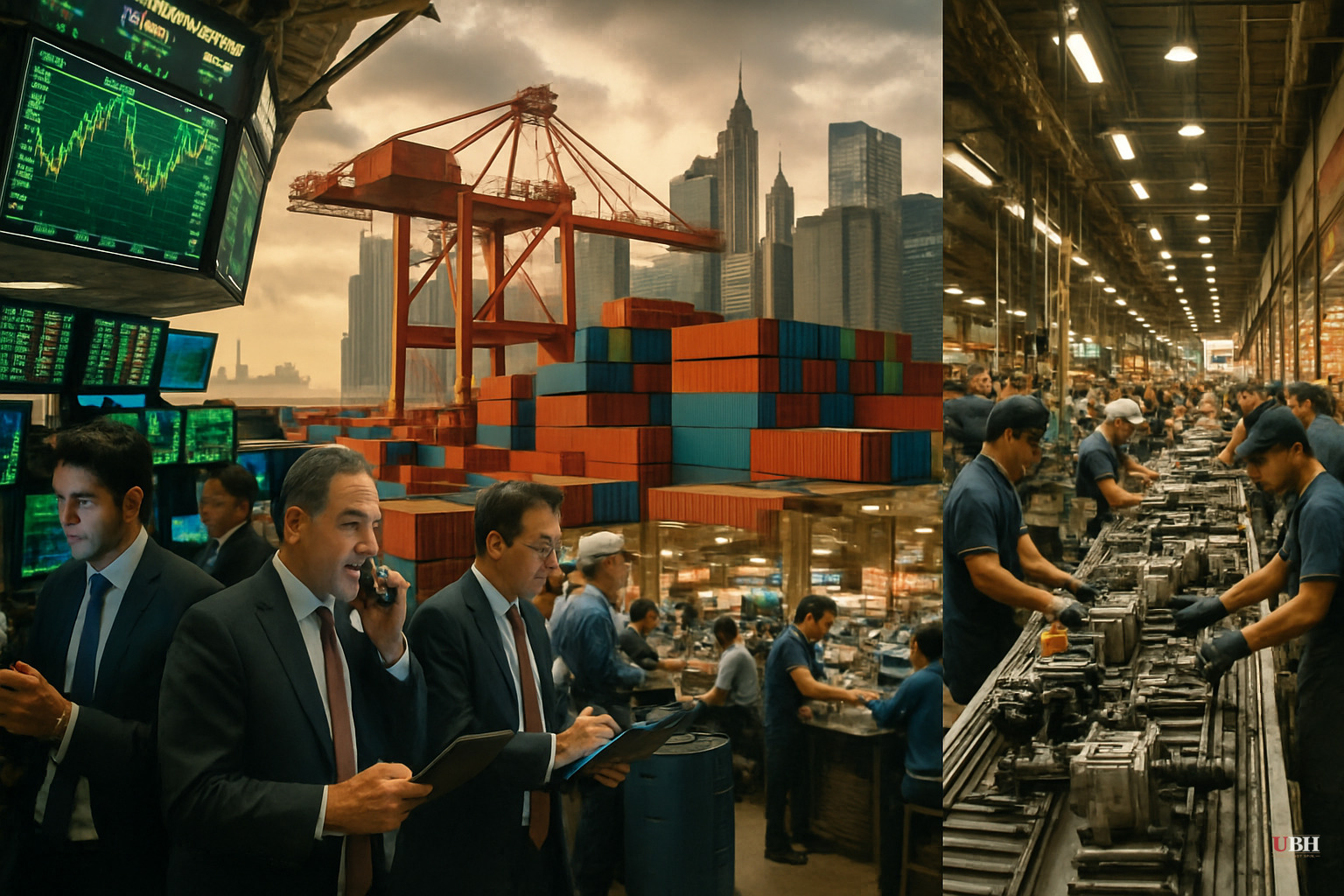
The Basic Facts
The U.S. Supreme Court ruled that President Donald Trump lacked the constitutional authority to impose sweeping import taxes on goods from nearly every country on Earth. That ruling wasn't close, and it wasn't ambiguous.
Businesses — from small importers to major corporations — started getting refunds. The system was working.
Then the Trump administration decided to fight the refunds.
What's Actually Happening
On Friday, May 30, 2026, the Department of Justice told federal Judge Richard K. Eaton of the U.S. Court of International Trade that the administration intends to appeal his March ruling, according to the Associated Press.
Eaton's ruling held that the Supreme Court's decision entitled "all importers of record" to refunds — meaning every business that paid the now-illegal tariffs, whether or not they filed a lawsuit.
The Trump DOJ's position: only companies that actually sued should get their money back. Everyone else? Tough luck.
The government collected money it had no legal authority to collect. The Supreme Court said so. And now the executive branch is arguing that most of the people it illegally taxed shouldn't be made whole.
The Numbers Are Staggering
U.S. Customs and Border Protection estimated the government owes $166 billion to companies that paid the struck-down tariffs, according to AP News and PBS NewsHour.
As of May 22, CBP had accepted applications for refunds totaling $85 billion — more than half the total owed — for processing, according to a legal filing CBP submitted to the court.
CBP had already directed the Treasury Department to issue $20.6 billion in refunds. The first payments hit bank accounts on May 12.
Approximately 330,000 importers could be eligible for refunds total, according to court documents cited by both AP and NBC Washington.
The Administration's Legal Argument
DOJ lawyers made two arguments to Judge Eaton, according to the Associated Press.
First, they asked that one or two of CBP Commissioner Rodney Scott's deputies be allowed to appear at a June 9 hearing in Scott's place, claiming a high-ranking presidential appointee can't be compelled to testify in court.
Second — and this is the key one — they argued that Eaton exceeded his own authority when he extended refund eligibility to all importers, not just litigants. The DOJ called it a "universal injunction" that went beyond what courts are empowered to do.
"For that reason, defendants intend to appeal the court's universal injunction," DOJ lawyers wrote, per AP.
They added CBP would continue processing refunds "as quickly as it can" in a "phased approach" — but only for businesses that filed legal complaints.
What Mainstream Coverage Is Missing
Most outlets are treating this as a procedural legal story. The core issue is simpler: whether the government must return money it took illegally. The Supreme Court already answered that. The administration is now using bureaucratic and legal delay tactics to slow-walk $166 billion in restitution owed to American businesses.
No major outlet has prominently raised an obvious problem: "only pay back the companies that sued us" creates a perverse incentive. If you can illegally collect $166 billion and only repay the fraction of people who can afford to hire lawyers and sue the federal government, that's a powerful incentive to collect illegally in the first place.
Small importers — the ones without legal teams on retainer — are the ones who get left out under the Trump DOJ's preferred approach. Big corporations that can sue get their money back. The small American business that paid the tariffs and didn't have resources to litigate gets nothing, under the administration's position.
The Eric Trump Sidebar
Separately, CNBC reported this week on Foundation Future Industries, a San Francisco robotics startup founded in 2024 by CEO Sankaet Pathak — previously known for running Synapse, a fintech platform that went bankrupt in 2024. The company recently brought on Eric Trump, son of the sitting president, as chief strategy advisor.
Foundation is building humanoid robots it calls "dual-use" — targeting both heavy industrial environments and military applications. The company claims it has already tested its robots in Ukraine and plans to begin frontline testing with the U.S. military within 18 months, according to CNBC.
Pathak told CNBC he wants to scale production to thousands of units this year.
A startup with a bankrupt founder, a presidential son on the advisory board, and contracts lined up with the U.S. military deserves serious scrutiny. The technology may well be legitimate. The conflict-of-interest questions are equally legitimate.
What This Means for Regular People
If you're a business that paid tariffs the Supreme Court called unconstitutional, your refund is now in legal limbo — unless you were already one of the companies that filed suit.
Judge Eaton's June 9 hearing will be the next battleground. He's already signaled he wants to know why the government shouldn't do "whatever it takes" to speed up repayment to all 330,000 eligible importers.
The administration is betting the appeals process buries the refund obligation long enough to matter. Taxpayer-funded government lawyers are fighting to keep illegally collected money out of the hands of American businesses.
Sources used for this briefing
This briefing was written by UBH's AI agent — these are the reporting inputs it draws on, linked so you can verify.


