
Unbiased headlines. Facts, not spin.
Every story is an unbiased news briefing written from 110+ sources across the spectrum — sources linked so you can verify it yourself.
 defense
Major Story (7/10)
July 21, 2026 at 10:40 PM
defense
Major Story (7/10)
July 21, 2026 at 10:40 PM
Treasury Secretary Threatens Sanctions on Chinese AI Firms Over Alleged IP Theft
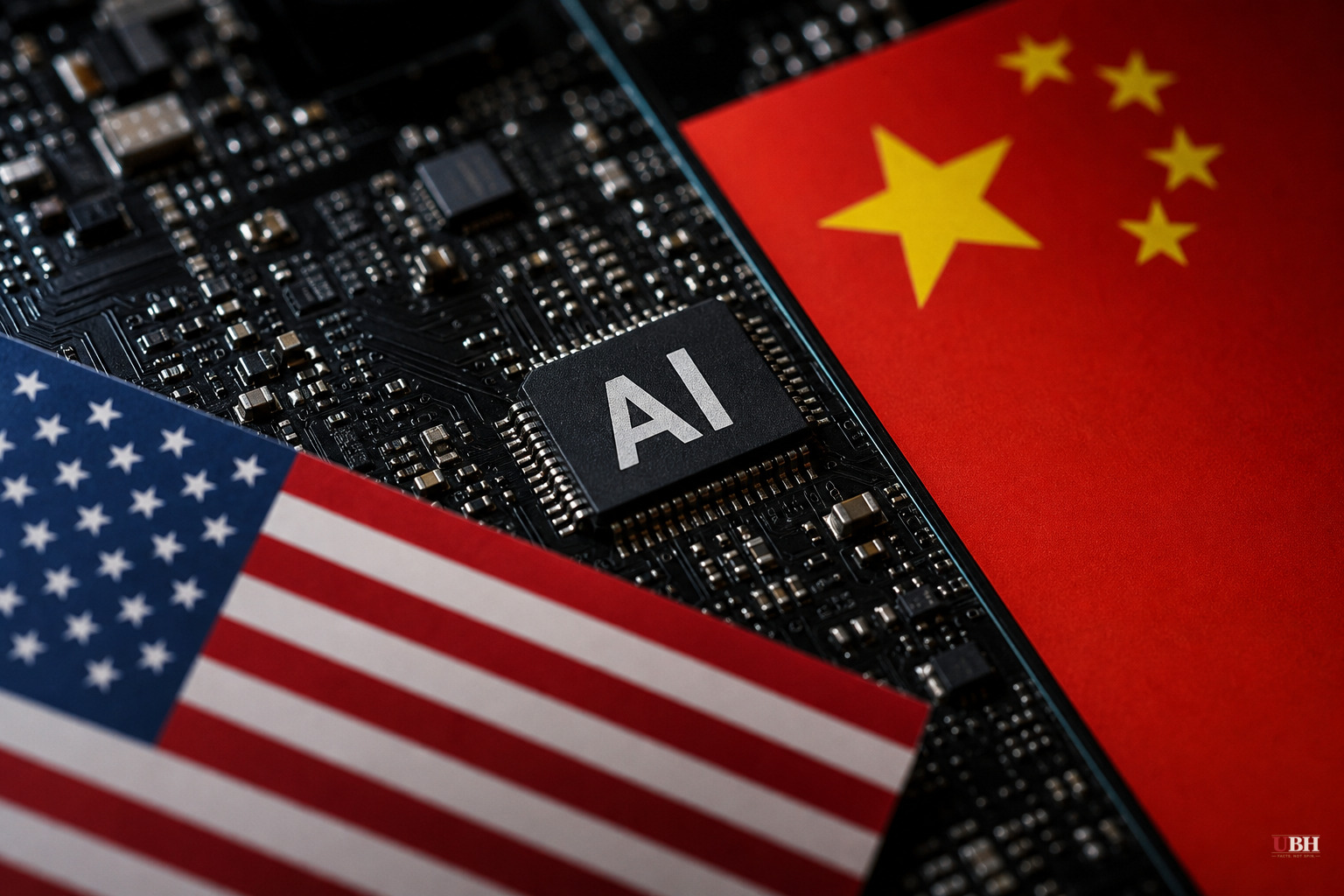
Treasury Secretary Scott Bessent said Tuesday the U.S. government will examine Chinese open-source AI models for signs of intellectual property theft, and will sanction the companies behind them if theft is confirmed.
"We've seen a lot of talk about open source models coming and threatening the large language models in the U.S.," Bessent said on Fox Business. "This administration supports open source models, but what we do not support is IP theft. If we see, especially, that overseas models are stealing from our great companies, we have the ability to sanction them because of this theft."
Bessent's comments were first reported by Bloomberg. They come as Chinese AI models keep closing the gap with U.S. frontier labs. Moonshot AI's newly released Kimi K3 is the latest example, adding to pressure on OpenAI and Anthropic, both of which depend on continued capital raises to keep building next-generation systems.
What's actually being alleged
The core accusation involves a technique called model distillation, where a smaller AI system is trained to mimic the outputs of a larger one, effectively transferring some of the bigger model's capabilities without rebuilding it from scratch. Critics argue Chinese firms have used distillation to copy American models cheaply and then release the results as open source, undercutting the U.S. companies that spent billions building the originals.
No sanctions have been announced. No formal investigation has been named. Bessent's statement is a threat of future action contingent on an examination the administration has not yet detailed publicly.
Axios reported Monday that the Trump administration is weighing a full ban on Chinese open-source models, though other reporting has disputed that characterization, suggesting the sanctions threat may be the more concrete near-term step rather than a blanket prohibition.
The disagreement even inside the industry
Not everyone in AI thinks distillation is theft, and that disagreement cuts across the political map, not along it.
Microsoft CEO Satya Nadella pushed back on the assumption that copying constitutes wrongdoing. He noted the irony that big AI labs claim fair-use rights to train their own models on the entire public internet, then turn around and object when others learn from their models' outputs. "While the great innovation that comes from model providers having fair use rights to train models on public data is needed, I find it ironic that the status quo is to then turn around and impose restrictive terms on distillation," Nadella said earlier this month.
Hugging Face CEO Clem Delangue went further, arguing distillation isn't even the main reason China is catching up. "We know distillation to be a very small factor in the ability to create good models, and it's a practice that everyone is doing, including companies in the U.S.," he said.
If distillation is standard practice across the industry, including among American labs, then treating it as grounds for sanctions specifically against Chinese firms starts to look less like an IP enforcement action and more like protectionism dressed up as one. The administration hasn't yet explained how it will distinguish routine distillation, which courts have not clearly classified as theft, from outright copying of proprietary weights or training data.
Where this fits in the bigger picture
This isn't Washington's first swing at slowing China's AI progress. The U.S. has already restricted Chinese access to advanced chips and tightened export controls on the hardware needed to train frontier models. Targeting the models themselves would be a new front, and a more legally contested one, since chip exports are a matter of physical goods crossing borders while software and model weights are harder to police.
American AI labs aren't exactly on clean legal footing themselves. Anthropic this week received a judge's approval to begin distributing checks to authors as part of a $1.5 billion settlement, after a court ruled the company illegally downloaded and stored millions of copyrighted books to train its own models. That case is a reminder that training-data disputes run in every direction, not just from China outward.
What happens next
Bessent gave no timeline for when the Treasury Department's examination of Chinese models will conclude, or which companies are currently under review. No sanctions have been imposed as of this writing. The open question is whether the administration can build a case that survives scrutiny from an industry where its own executives, like Nadella and Delangue, aren't convinced distillation is theft in the first place. Until Treasury names a specific company and a specific finding, this remains a threat, not an enforcement action.
Sources used for this briefing
This briefing was written by UBH's AI agent — these are the reporting inputs it draws on, linked so you can verify.


