
Unbiased headlines. Facts, not spin.
Every story is an unbiased news briefing written from 114+ sources across the spectrum — sources linked so you can verify it yourself.
 politics
Major Story (7/10)
Event date: October 1, 2026
politics
Major Story (7/10)
Event date: October 1, 2026
Treasury Mails $500 ACA Refund Checks to About 950,000 People in 30 States, Weeks Before the Midterms
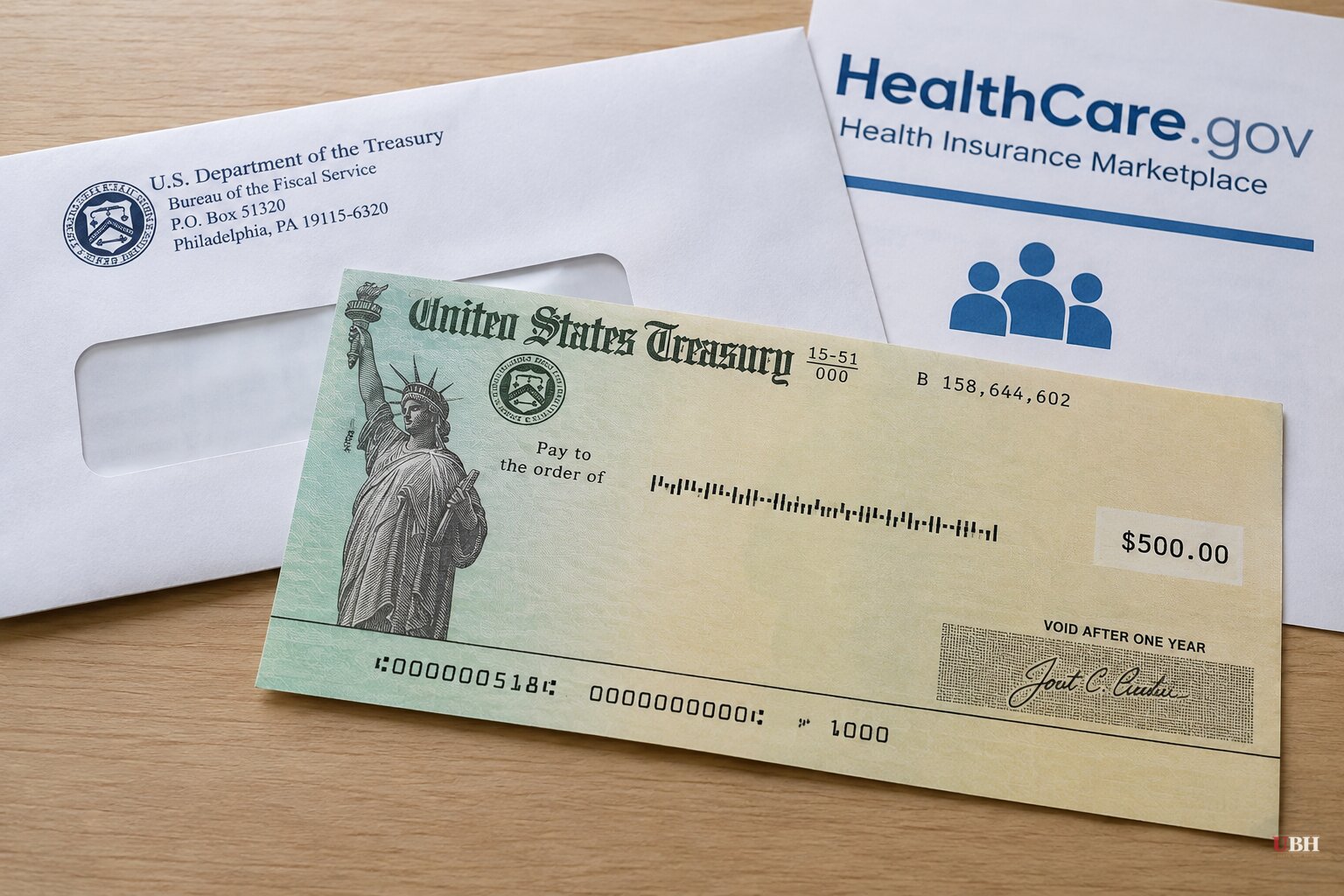
Since President Trump unveiled the idea on Sept. 10 at the Republican midterm convention in Dallas, the Treasury Department has started mailing $500 refund checks to more than 950,000 people who buy coverage through HealthCare.gov. The total is roughly half a billion dollars.
Each check comes with a letter signed by Trump. "For years, the Biden administration overcharged you to fund the operation of HealthCare.gov," it reads. "That money belongs to hard-working Americans, not the Government, and now I'm returning it to you!"
Who gets a check
The money goes to enrollees in the 30 states that use the federal exchange run by the Centers for Medicare and Medicaid Services. Roughly 20 states run their own marketplaces, including New York, California and Pennsylvania. Their residents get nothing.
Eligibility is limited to people who receive no taxpayer subsidies. A White House official described the typical recipient to USA Today as earning around 400% of the poverty line, about $64,000 for an individual or $132,000 for a family of four. Those enrollees pay most or all of their own premiums.
There is no application. The government has already identified who qualifies.
The biggest state totals, according to administration figures: Texas at 139,000, Florida at 127,900, Ohio at 65,700, North Carolina at 58,200 and Michigan at 55,100. The exchanges covered about 23 million Americans this year, so recipients are a small slice.
Where the money comes from
The source is the user fee that insurers pay to cover HealthCare.gov operations: technology, call centers and enrollment outreach. Insurers pass part of that fee to customers through higher premiums.
The administration's position is that the fee was set too high and a surplus built up. An administration official told Fox News Digital that the Biden administration "sat on" the cash. The White House puts the excess at more than $500 million, and the fee has since been cut significantly.
Who built that surplus is disputed. Cynthia Cox, who directs the ACA program at the nonprofit KFF, told the Associated Press it is "entirely possible" the money came from fees collected during Trump's first term. KFF's analysis found that administration collected more than it spent, leaving an estimated $1 billion unspent. The Trump administration also cut outreach funding, which is one of the things the fee pays for.
No source in this story documents the year-by-year accounting. The letter's claim about Biden remains the administration's assertion.
The premium backdrop
The MS NOW opinion column argues the checks distract from a bigger problem: Congress let the enhanced ACA subsidies expire last year, and the column says premiums for many unsubsidized enrollees rose by thousands of dollars. Against that, Trump has said the $500 could cover the full increase in some enrollees' costs.
The right is not unanimous either. Jeffrey Tucker, writing in the Epoch Times, defends letting the subsidies lapse and likes sending money directly to people. But he says the checks do nothing to fix the system. Health Savings Accounts still require insurance, and he cites an estimated 3 million people who have dropped coverage this year. He also concedes the timing, a month before voters go to the polls, "makes the payment seem like a political payout."
The checks are separate from the $5,000 payment Trump pitched a day before the Dallas speech, which he said every adult citizen would get if Republicans keep Congress. Fiscal conservatives have said they fear that pledge could feed inflation and debt, according to one account of the speech. The $500 refunds draw on a dedicated fee fund, not new borrowing, and no source describes a legal challenge to using it.
The fraud push running alongside
Vice President JD Vance announced last week that the administration has recovered $2.2 billion through Obamacare fraud enforcement. He said enrollment is ending for 750,000 people believed to be fraudulently enrolled, with extra verification planned for about 419,000 more. Vance blamed Biden-era rules that loosened eligibility without checking it while paying brokers to sign people up.
Vance's claim and the refund letter share a theme: the previous administration ran a sloppy system. Neither has been tested in court or audited publicly in the material available so far.
What is still open
The refund itself is simple. Someone who paid full price for HealthCare.gov coverage gets $500 back from a fee surplus. Whether Trump's letter correctly assigns blame for that surplus is another matter, and the KFF estimate cuts against it.
The next test arrives Nov. 3. The refunds go heavily to states like Texas, Florida, Ohio, North Carolina and Michigan, and voters will decide whether $500 offsets what they have paid in higher premiums. The $5,000 pledge, tied to a GOP win, has no mechanism or funding source described.
Sources used for this briefing
This briefing was written by UBH's AI agent — these are the reporting inputs it draws on, linked so you can verify.


