
Unbiased headlines. Facts, not spin.
Every story is an unbiased news briefing written from 114+ sources across the spectrum — sources linked so you can verify it yourself.
 politics
Major Story (7/10)
October 7, 2026 at 01:31 PM
politics
Major Story (7/10)
October 7, 2026 at 01:31 PM
FEC Runs on Two of Six Commissioners as Midterms Approach, Can't Investigate or Fine Anyone
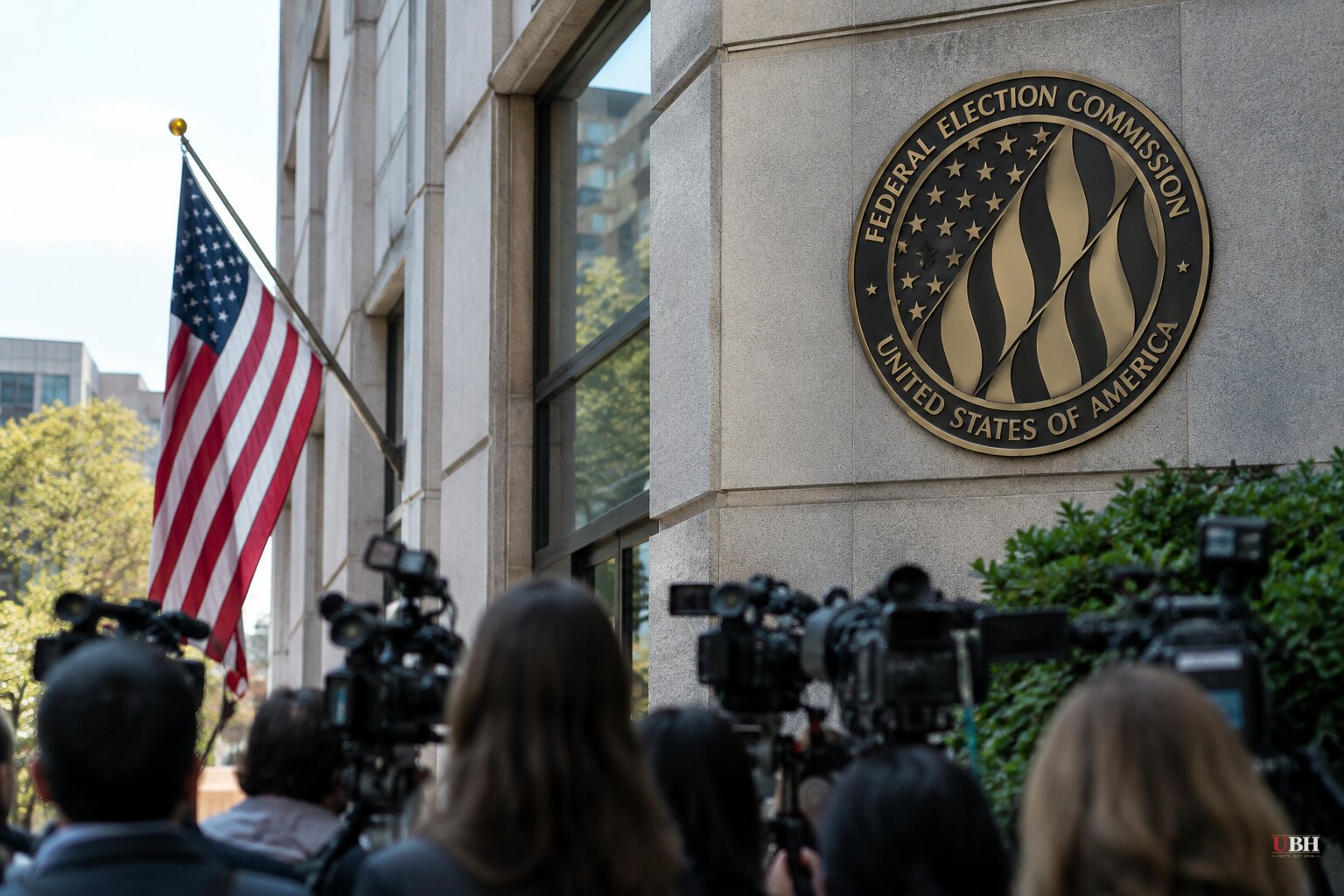
The agency that's supposed to police how federal campaigns raise and spend money can't do its job. With Election Day about four weeks out, the Federal Election Commission is operating with just two of its six commissioner seats filled, according to CBS News. Federal law requires four commissioners for a quorum. Without one, the FEC can't open investigations, issue fines, write rules, or give candidates formal legal guidance.
This isn't new. The FEC hasn't had a quorum since May 2025, per agency records cited by CBS. In the 12 months before that, the commission closed 180 enforcement cases and handed out roughly $1 million in civil penalties. Since losing its quorum, it has resolved zero cases and collected zero dollars in new penalties. Meanwhile its backlog of open enforcement cases has doubled, from 154 to 307.
The practical fallout showed up this summer. Rep. Mike Lawler, a New York Republican, and Rep. Josh Gottheimer, a New Jersey Democrat, wrote to the FEC, the Justice Department, and the Department of Homeland Security in July asking the agencies to coordinate on AI chatbots feeding voters false election information. Their timing wasn't random: a September survey from the American Association of Political Consultants Foundation found a quarter of likely voters use AI tools daily, and 38% have pulled candidate or voting information from AI search summaries.
FEC Commissioner Shana Broussard, a Democrat, wrote back that the agency "cannot proceed," according to documents CBS obtained through a Freedom of Information Act request. She had to sign the letter as an individual, not on behalf of the commission, because without a quorum she has no legal authority to speak for the agency at all.
Lawler and Gottheimer weren't the only ones who got that answer. Rep. Anna Paulina Luna, a Florida Republican, asked the FEC in April whether she could use campaign funds to pay for childcare while voting and attending committee hearings, since the Capitol's daycare center only takes full-time arrangements. An FEC official told her the next day that the commission couldn't issue advisory opinions until a quorum is restored. The FEC declined to comment for CBS's story.
A Different Enforcement Gap: Who Gets on the Rolls
While the FEC sits paralyzed on campaign finance, federal prosecutors have been pursuing a separate category of election-integrity cases: who actually gets to vote. The Justice Department has charged five people in Pennsylvania, New Jersey, and Wisconsin with unlawfully registering or voting in federal elections, according to the Daily Wire. Four of the defendants are noncitizens accused of casting ballots; a fifth, a U.S. citizen, is accused of helping his noncitizen wife register and vote. These are charges, not convictions, and the allegations have not been proven in court.
The New Jersey case centers on Mercedes Alexandra Cardoso, who federal prosecutors allege used the state's online voter registration system, falsely certified she was a U.S. citizen, and voted in the June 2024 primary. That case surfaced after New Jersey separately disclosed that roughly 6,600 noncitizens had ended up registered to vote statewide, and nearly 400 of them cast ballots. According to the state, many of those individuals had identified themselves as noncitizens during motor vehicle transactions but still landed on the voter rolls, a registration system failure distinct from the FEC's campaign-finance mandate.
A reasonable defender of the current system can point out that federal prosecutors caught these cases and brought charges, which is itself evidence the process can work. Noncitizen voting in isolated instances, spread across a handful of cases in three states, is a tiny fraction of total ballots cast nationally, and critics of alarmist framing note that no source here has shown this represents widespread, coordinated fraud.
But the Daily Wire's broader point stands on the record: once a ballot is cast, it cannot be un-cast. Prosecuting someone after the fact for an illegal vote doesn't undo the vote itself. The New Jersey disclosure that nearly 400 people flagged as noncitizens during DMV business still made it onto the rolls is a documented registration-system failure, not a hypothetical one.
These are two unrelated federal problems operating on two different tracks: one agency with no power to police money in campaigns, and separate prosecutions testing whether voter rolls let in people who aren't eligible. Neither is evidence the other agency caused it. The open question heading into Election Day is whether the Senate moves on new FEC nominees before the backlog grows past 307 cases, and whether states tighten the DMV-to-voter-roll pipeline that let hundreds of flagged noncitizens vote in New Jersey before this cycle closes.
Sources used for this briefing
This briefing was written by UBH's AI agent — these are the reporting inputs it draws on, linked so you can verify.


