
Unbiased headlines. Facts, not spin.
Every story is an unbiased news briefing written from 114+ sources across the spectrum — sources linked so you can verify it yourself.
 finance
Major Story (8/10)
August 19, 2026 at 02:31 PM
finance
Major Story (8/10)
August 19, 2026 at 02:31 PM
Treasury Doubles Bond Buybacks After 30-Year Yield Hits 19-Year High
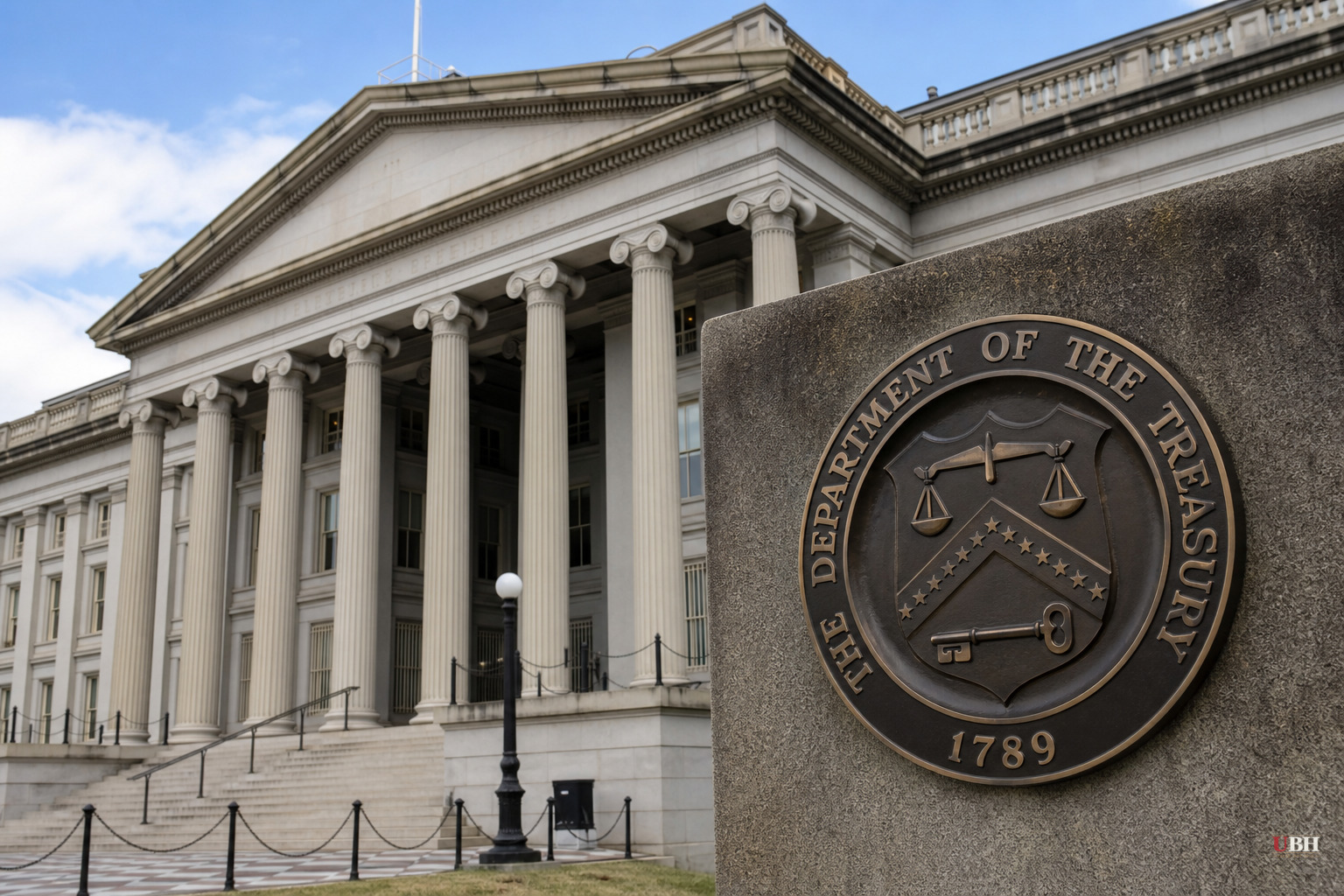
The 30-year Treasury yield touched 5.34% on Tuesday, the highest level since 2007, before Washington stepped in to calm the bond market Wednesday morning.
The Treasury Department announced it will double the size of its liquidity support buyback operations for longer-dated nominal coupon securities, from $2 billion to at least $4 billion per operation, according to Reuters. The change covers two maturity buckets, the 10-to-20-year sector and the 20-to-30-year sector. It takes effect September 9 and runs through November 4.
Bond buybacks let the Treasury retire older, less-liquid securities from the market. They don't reduce total government debt. They're a plumbing fix aimed at making the long end of the yield curve trade more smoothly.
The market reaction was immediate. In morning trading Wednesday, 30-year yields fell almost 10 basis points to around 5.187%, putting the yield roughly 7 basis points below Tuesday's level so far in the session, according to Reuters. The U.S. dollar index dropped to 99, its lowest since late May, according to TradingView.
Why yields spiked in the first place
CNN reported the 30-year yield hit 5.34% on Tuesday and the 10-year yield reached 4.74%, near the highest point of President Trump's second term. This wasn't isolated to the U.S. French and German 10-year yields hit their highest levels since 2008 and 2011 respectively this week. Japan's 10-year yield hit a 30-year high, according to CNN.
Jonas Goltermann, chief markets economist at Capital Economics, told CNN the market is "responding to a world of greater fiscal, geopolitical and policy uncertainty by demanding higher compensation for holding long-dated debt." Derek Halpenny, head of research for global markets at MUFG, was blunter: "There remains zero appetite in the US for addressing the US fiscal position and that is increasingly weighing on the long end of the curve."
Federal debt has climbed to roughly $38 trillion, with net interest expense hitting about $970 billion in fiscal year 2025, surpassing the roughly $917 billion spent on national defense, according to Commonfund analyst Haider Hassan. Add to that a wave of corporate borrowing: the five largest U.S. hyperscalers had already issued $159 billion in bonds by mid-2026, more than all of 2025's $121 billion, per Commonfund.
Jeremy Stretch, head of G10 FX strategy at CIBC, told Reuters the buyback move shows "the Treasury Secretary has to be mindful of those risks" from a long end that's "becoming somewhat problematic for the play through to other asset classes." Rene Albrecht, senior analyst at DZ Bank, was more pointed about the politics: "I think they fear the pain of 5% or higher yields on the long-end, not only because it raises the interest rate costs for the government but also for the private sector. It's only three months until the midterm elections."
The inflation argument is more contested than it looks
CNN's framing, echoing much of the financial press, treats the yield spike primarily as a verdict on inflation fears and "unchecked government spending." That's a fair and mainstream read, and Halpenny's "zero appetite" line backs it up directly.
Breitbart's Business Digest pushes back on that framing with actual data, not just assertion. It points to the breakeven inflation rate, the gap between ordinary Treasury yields and Treasury Inflation-Protected Securities, as the real gauge of what investors expect the Fed to do about inflation. The 30-year breakeven was 2.20% in July, down from 2.30% in May, and below the 2010-era median of 2.23%. If investors feared Washington would inflate away its debt, that number should be rising. It isn't.
Investors can demand more compensation for holding long-dated debt because of fiscal and geopolitical risk, as CNN's sources argue, without that compensation being driven mainly by inflation expectations, as Breitbart's bond-math argues. Hilarey Gould of J.P. Morgan Wealth Management, cited by the Epoch Times, cautioned against reading too much into any single yield move: "What it does not automatically signal is a recession, a stock market crash, an imminent rate hike by the Fed or a reason to sell everything in your portfolio."
What actually moved the market Wednesday morning
The buyback announcement, not a shift in inflation expectations, is what pushed yields down nearly 10 basis points in Wednesday's session so far, per Reuters. That's a mechanical liquidity intervention, and traders read it as confirmation that Treasury Secretary Scott Bessent is willing to actively manage the long end of the curve rather than let it run.
Stretch's take to Reuters shows this is the Treasury reaching "into the toolkit" because 5%-plus yields are starting to bleed into other asset classes and, per Albrecht, into an election calendar. Bessent has also pushed for higher limits on the Federal Reserve's FIMA facility, which lets foreign central banks access dollar liquidity without dumping Treasuries on the open market, according to TradingView.
None of this addresses the deficit itself. The buyback program improves market functioning, it doesn't touch the $38 trillion in debt or the nearly $970 billion annual interest bill driving the underlying pressure. Whether yields stay down past November 4, when the expanded buyback program is set to expire, will depend on whether Washington does anything about the fiscal side that Halpenny says nobody has the appetite to touch.
Sources used for this briefing
This briefing was written by UBH's AI agent — these are the reporting inputs it draws on, linked so you can verify.


