
Unbiased headlines. Facts, not spin.
Every story is an unbiased news briefing written from 110+ sources across the spectrum — sources linked so you can verify it yourself.
 economy
Major Story (7/10)
July 14, 2026 at 03:27 PM
economy
Major Story (7/10)
July 14, 2026 at 03:27 PM
Toyota Confirms $3.6 Billion Texas Expansion, Trump Calls It Proof Tariffs Work
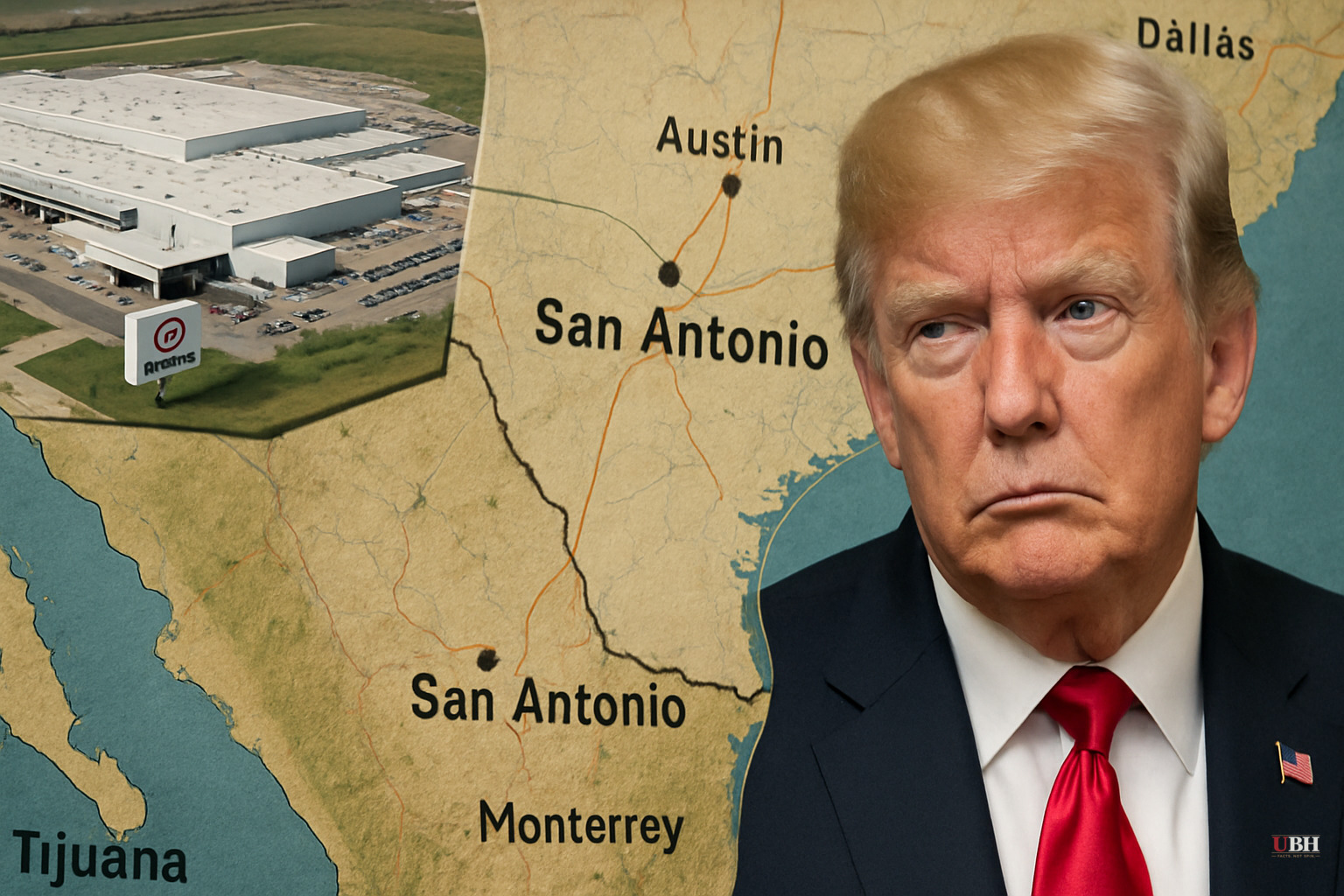
Since Toyota announced its $3.6 billion San Antonio expansion on Monday, July 6, the story has split into two competing narratives: one from the company, one from the White House.
Toyota says the new investment will add a second assembly line and 2.5 million square feet to its San Antonio campus, creating more than 2,000 jobs and boosting annual production capacity by 150,000 units, according to the company's own statement reported by CBS News. Most Tacoma pickup production will move from Toyota's Tijuana plant to Texas over roughly four years, with the expanded line expected to start building trucks in 2030, according to CarBuzz.
Toyota will keep some Tacoma production in Mexico. Its Guanajuato plant stays online, and the Corolla will still be built south of the border, according to Business Insider. This is a partial reshoring, not a full exit.
What Toyota Actually Said
Toyota's public language is careful and notably tariff-free. The company said the move is "aimed at further enhancing Toyota's locally rooted and competitive production system," according to CBS News. Ted Ogawa, president and CEO of Toyota Motor North America, framed it as a vote of confidence in "the region's workforce, innovation, and long-term growth potential," per Business Insider.
Nowhere in Toyota's own announcement does the word "tariff" appear. Business Insider explicitly notes that Toyota did not attribute the expansion to tariffs.
President Trump did.
Trump's Victory Lap
Speaking Tuesday during a visit to Ankara, Turkey, Trump claimed the move as a direct result of his trade policy. "It came over the wires that Toyota is moving out of Mexico into the United States, and building one of the biggest truck and car plants ever built," Trump said, according to Business Insider. "It's amazing. That's what tariffs do, properly used."
Based on what Toyota itself is willing to say publicly, this claim requires caution. Companies rarely credit tariffs directly, partly because doing so validates a policy that also raises their own input costs on steel, aluminum, and imported parts. But the timing lines up with Trump's trade actions closely enough that the connection isn't unreasonable.
The Tariff Backdrop
Trump imposed a 25% tariff in March 2025 on vehicles and parts assembled outside the U.S., bypassing the existing USMCA framework, according to CarBuzz. That tariff drew support from the United Auto Workers union and pushback from Ford, General Motors, and Stellantis, per CarBuzz's reporting.
The mechanics matter here. If a vehicle's final assembly happens in the U.S., the tariff exposure shifts to whichever individual parts are imported, rather than the finished vehicle facing a blanket 25% hit. This creates a real financial incentive to move final assembly stateside, even if a lot of components still cross the border.
Toyota is already the biggest single non-domestic assembler in the U.S., building 12 nameplates across five American plants, more individual models than GM, according to CarBuzz. The company said in November it plans to invest up to $10 billion in the U.S. over five years, of which this $3.6 billion is a piece.
USMCA Uncertainty Looms Over Everything
The announcement lands just days after Washington declined to renew the U.S.-Mexico-Canada trade pact in its current form on July 1, according to Business Insider. The deal remains legally in force for another decade, but will now be reviewed annually instead of left alone, a shift CBS News says is expected to rattle investor sentiment.
The Trump administration is reportedly pushing for a revised deal requiring 50% of all automotive parts and manufacturing to happen in the U.S., according to Business Insider. Toyota's own statement addressed this uncertainty directly, saying the company "remains committed to its operations throughout the U.S., Canada, and Mexico" while encouraging "a quick resolution to USMCA to make the North American region globally competitive."
This is not the language of a company celebrating a tariff win. It's the language of a company managing risk across three countries while a decade-old trade framework gets picked apart one annual review at a time.
What Texas Gets
Governor Greg Abbott's office confirmed the investment qualifies for roughly $20 million in state incentives, according to Reuters as cited by CarBuzz. Bexar County and San Antonio added a combined $30 million in temporary tax reductions. A separate $531 million rear-axle assembly plant on the same campus, creating 411 jobs, is on track to open this fall.
The open question is whether Toyota's caution about crediting tariffs reflects genuine strategic priorities, corporate diplomacy toward an administration that controls its tariff exposure, or both. Toyota isn't required to explain its motives to anyone, and it hasn't. What's verifiable is the $3.6 billion, the 2,000 jobs, the 2030 production start, and the fact that Mexico still keeps a share of Tacoma output. Everything else is politics filling in the gaps a company statement left open.
Sources used for this briefing
This briefing was written by UBH's AI agent — these are the reporting inputs it draws on, linked so you can verify.


