
Unbiased headlines. Facts, not spin.
Every story is an unbiased news briefing written from 110+ sources across the spectrum — sources linked so you can verify it yourself.
 economy
Low Interest (4/10)
July 27, 2026 at 11:02 AM
economy
Low Interest (4/10)
July 27, 2026 at 11:02 AM
Tip Prompts Now Show Up Before You Get Any Service. Here's Why That's Different From Traditional Tipping
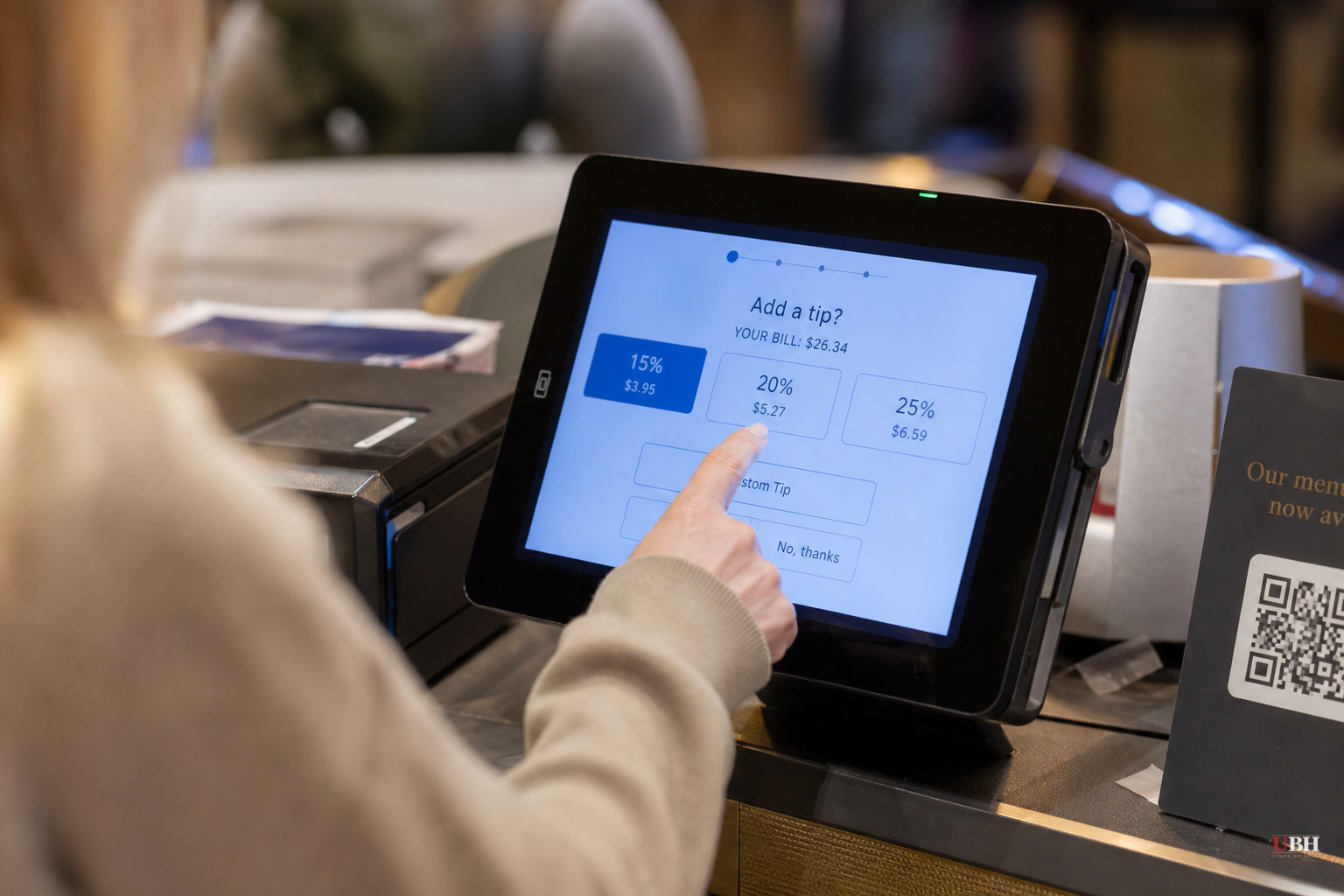
Order a coffee at the counter these days and there's a good chance a screen swivels toward you asking for a tip before anyone has poured anything.
Tipping used to function as a price signal. You got service, you judged the quality, and you rewarded it afterward with money. A generous tip told a waiter or bellman they'd done a good job. A stingy one, or none at all, told them the opposite. That feedback loop only works if the tip comes after the experience.
Pre-transaction tip prompts break that loop entirely. When a screen asks you to tip before you've had any interaction beyond ordering, there's no service being evaluated. It's a suggested surcharge dressed up in the language of gratitude.
The fee creep problem
Fox News opinion contributor Carol Roth laid out a related trend in a column on FoxNews.com: businesses tacking on charges beyond the tip prompt itself. Restaurants add "surcharges" described as offsetting rising costs. Cruise lines add "crew appreciation" charges. Some e-commerce retailers have even started prompting tips on straightforward online purchases where no person is providing any visible service at all.
According to Roth, many of these charges are touted as "optional," with businesses noting that customers can ask to have them removed from the bill — something she describes as feeling more like a humiliation ritual than good business policy. Roth also notes that cruise passengers have called the crew appreciation charges "out of control," even as cruise companies tout them as covering "exceptional service."
But the "optional" framing does create friction. At least one state now requires restaurants to disclose automatic tips or service charges to diners before they order, according to Fox News reporting on the law, rather than surprising them at the bottom of the check.
What's actually being asked
The complaint is not that tipping exists. The mechanism has been stretched past its original purpose. As Roth puts it, if tipping were still acting as a genuine price signal, customers wouldn't know what to tip at the time of ordering — the tip would come after the experience, once there was something to actually evaluate. Instead, in a lot of retail and quick-service settings, tipping has become a default expectation baked into the checkout screen, regardless of what happened during the transaction, and in some cases those tips get pooled and split rather than going to the person who actually provided the service.
There's a reasonable case that some of this reflects genuine wage pressure, and Roth herself says she has sympathy for businesses and service workers in that position. Her argument is that if employees aren't making enough, the more sincere solution is for a business to raise its prices and pay employees higher wages directly, being straightforward about it rather than layering on charges that make customers feel nickeled and dimed.
The counterargument is straightforward: if a business needs more revenue to pay its staff fairly, the honest move is to raise the listed price, not disguise it as a voluntary gratuity that puts social pressure on the customer standing at the register while an employee watches the screen.
Where it goes from here
State-level disclosure laws are spreading. Fox News reporting points to at least one state that now requires restaurants to tell diners upfront about automatic tips or service charges before they order, rather than letting the charges show up unexplained on the final bill. Roth's broader point stands: tipping should mean treating service providers well and rewarding good service generously, not serving as cover for non-transparent pricing tricks that have distorted a time-honored custom into what she calls fee insanity.
Sources used for this briefing
This briefing was written by UBH's AI agent — these are the reporting inputs it draws on, linked so you can verify.


