
Unbiased headlines. Facts, not spin.
Every story is an unbiased news briefing written from 110+ sources across the spectrum — sources linked so you can verify it yourself.
 defense
Notable (5/10)
July 24, 2026 at 08:18 PM
defense
Notable (5/10)
July 24, 2026 at 08:18 PM
Three More Airports Ditch TSA Screeners for Private Contractors. The Union Calls It a Safety Threat.
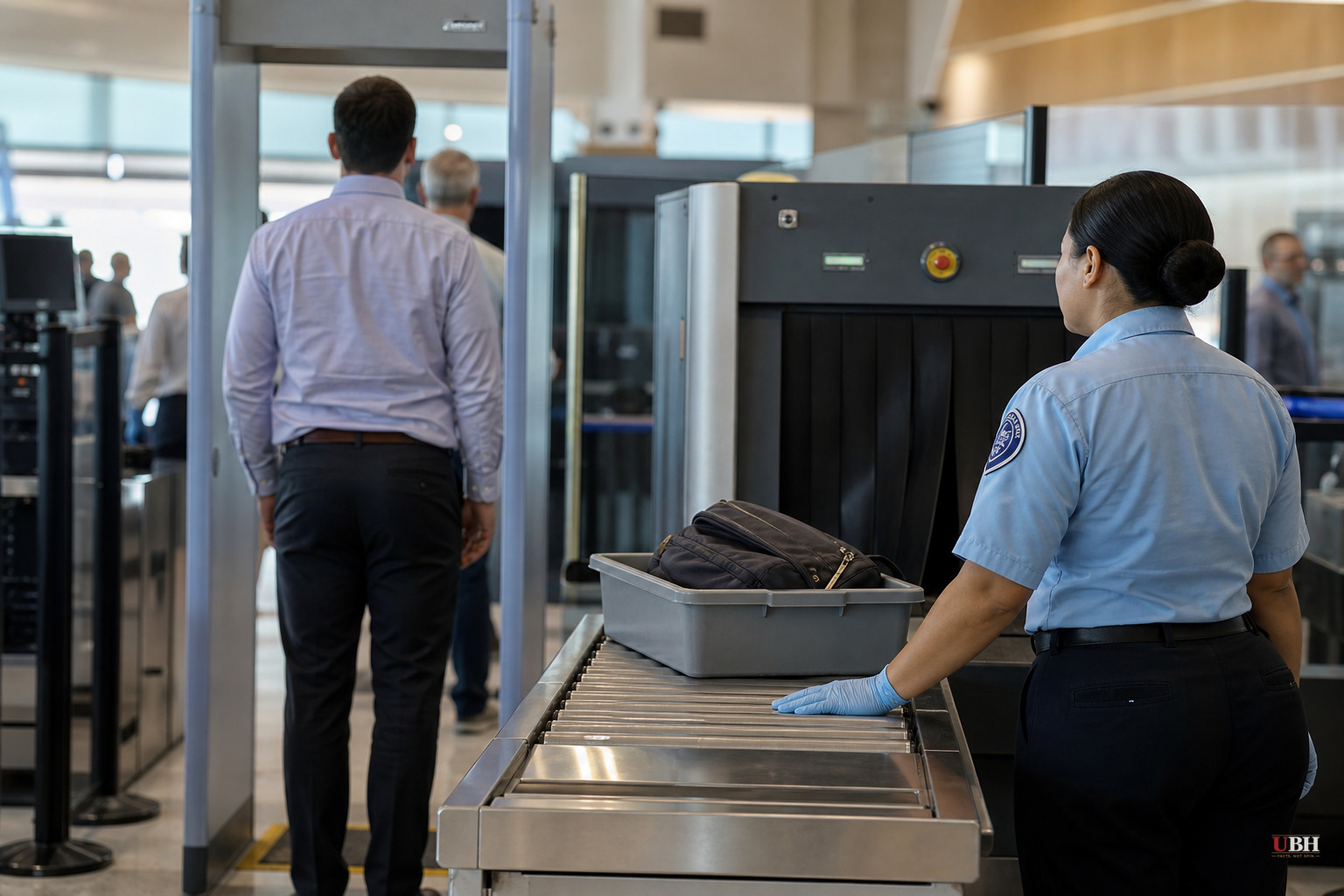
Tampa International Airport, Des Moines International Airport, and Charleston International Airport have all signed on to the Transportation Security Administration's Gold+ program, a Trump administration initiative that lets airports bring in private companies to run security screening instead of relying solely on federal TSA officers.
The American Federation of Government Employees, which represents 47,000 Transportation Security Officers across 400 airports, isn't happy about it. AFGE President Everett Kelley issued a statement this week calling the move a "major departure and step backwards" from the security standards put in place after 9/11.
That claim doesn't match what's actually in the program. Gold+ contractors still have to meet TSA training and background-check requirements. The TSA still oversees staffing, technology, and maintenance at no additional cost to the airports. What changes is who employs the checkpoint and baggage screeners, and how much flexibility airports get to manage that workforce.
What Gold+ Actually Does
The Trump administration soft-launched Gold+ in May 2026 as an expansion of the TSA's long-running Screening Partnership Program, which has quietly outsourced security screening at 20 airports nationwide for years, including San Francisco International, one of the busiest airports in the country.
Under Gold+, any of the 440 commercial airports under TSA jurisdiction can opt in voluntarily. Airports can either contract with a private security firm or bid to run screening themselves. Gold+ operators handle checkpoints, baggage screening, cybersecurity compliance, and workforce management, all under TSA standards. The one thing the TSA won't dictate is specific staffing levels or ratios, leaving that call to the airport or contractor.
That flexibility is likely the real source of union anxiety. Fewer mandated staffing quotas could mean fewer union jobs at participating airports, even if security outcomes stay the same or improve.
The Union's Track Record on Job Security
If AFGE members are worried about losing jobs, recent history suggests they have more leverage than the union's press release lets on.
The Trump administration has already tried, and failed, to cut TSA staffing through other means. In February 2025, then-Department of Homeland Security Secretary Kristi Noem sent a memo canceling the TSA's collective bargaining agreement. A federal judge blocked it with an injunction, and the agreement stayed in place.
Separately, the Department of Homeland Security's fiscal year 2027 budget proposes cutting 9,439 positions department-wide, including 8,385 full-time TSA jobs. But David Cummins, President Trump's nominee to lead the TSA, told senators this month during his confirmation hearing that current TSA employees will get "right of first refusal" for jobs at airports that join the Gold+ program. That's a real commitment, on the record, in a confirmation hearing, not a vague assurance.
The Fair Case for Skepticism
Union concerns about privatized security shouldn't be waved off just because they come from a union. A legitimate question is whether private contractors, operating without mandated staffing ratios, might cut corners on wait times, screener experience, or checkpoint coverage during peak travel periods to save money. Airports and contractors have profit incentives that federal agencies don't, and it's fair to ask whether TSA oversight is robust enough to catch problems before they become safety gaps.
Kelley's statement frames Gold+ as a rollback of post-9/11 security architecture itself, the background checks, training standards, and federal requirements that have applied since the TSA was created in 2001. The program's public description includes requirements that contractors meet TSA training and vetting standards. The 20 airports already running the older Screening Partnership Program, including San Francisco International, haven't experienced a documented rollback in screening standards as a result of privatization.
What's Unresolved
No data yet exists on how Gold+ airports will perform relative to TSA-staffed airports on wait times, missed-item detection rates, or complaint volume, because the program only soft-launched in May 2026 and Tampa, Des Moines, and Charleston are just now joining. Whether Cummins gets confirmed to lead the TSA, and whether his "right of first refusal" commitment survives contact with actual staffing decisions at Gold+ airports, remains to be seen. AFGE has not announced legal action against the program, unlike its successful challenge to the DHS memo on collective bargaining, so for now the fight is playing out in press releases rather than court.
Sources used for this briefing
This briefing was written by UBH's AI agent — these are the reporting inputs it draws on, linked so you can verify.


