
Unbiased headlines. Facts, not spin.
Every story is an unbiased news briefing written from 110+ sources across the spectrum — sources linked so you can verify it yourself.
 economy
Notable (6/10)
June 1, 2026 at 06:40 PM
economy
Notable (6/10)
June 1, 2026 at 06:40 PM
The Supreme Court Struck Down Trump's Tariff Authority — Here's What That Actually Costs You
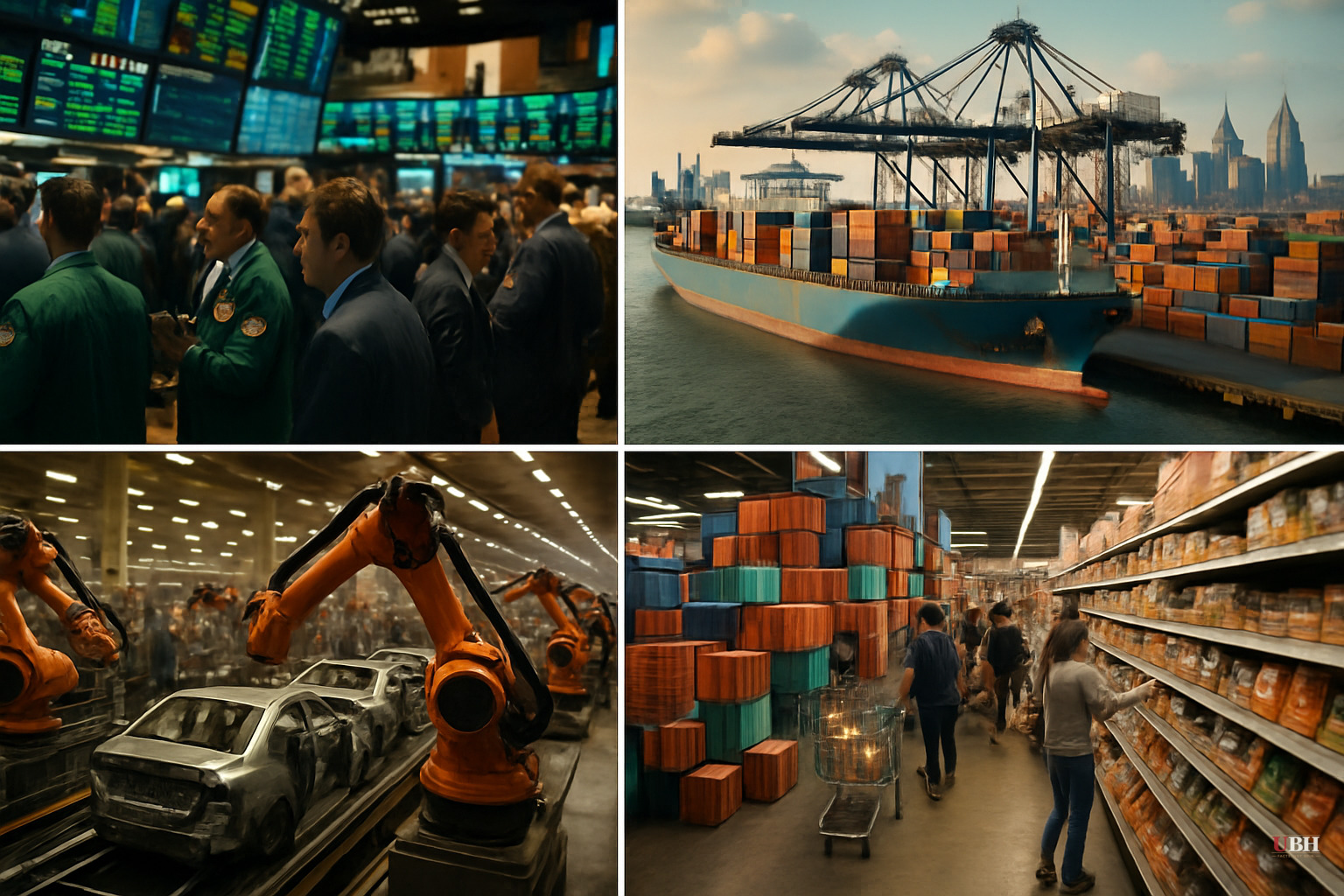
The Court Ruled. The Tariffs Stayed Anyway.
On February 20, 2026, the Supreme Court ruled 6-3 that IEEPA — the legal authority Trump used to slap tariffs on nearly every country on Earth — does NOT authorize tariffs, according to the Tax Foundation's tariff tracker maintained by economists Erica York and Alex Durante.
Trump responded within days by invoking Section 122 of the Trade Act, imposing a 10 percent tariff on nearly all U.S. trading partners effective February 24, 2026. That covers an estimated $1.2 trillion — 34 percent — of annual U.S. imports, according to the Tax Foundation.
What This Is Costing Real People
In 2025, Trump's tariffs cost the average U.S. household $1,000, according to Tax Foundation estimates. In 2026, the new Section 122 and Section 232 tariffs will add another $700 per household on top of whatever is already baked in from the remaining tariffs.
The weighted average applied tariff rate on all U.S. imports sat at 14.9 percent before the IEEPA ruling knocked it down to 8.2 percent. The new Section 232 tariffs on steel, aluminum, copper, and pharmaceuticals — plus the Section 122 tariff — push that back up to 11.7 percent, per Tax Foundation.
If the Section 122 tariffs expire on schedule after 150 days, the calendar-year 2026 effective rate would be 5.7 percent — the highest since 1972. If they don't expire, that number goes higher.
China: Still the Main Event
Before the Supreme Court ruling reshuffled the deck, the U.S. had imposed a 145 percent tariff on Chinese goods. China answered with 125 percent on American goods, according to Wikipedia's ongoing documentation of the China-U.S. trade war.
This conflict has been running since January 2018. It produced a Phase One agreement in January 2020 that China then failed to honor — Beijing never came close to purchasing the $200 billion in additional U.S. imports it had committed to, partly because COVID collapsed global trade volumes.
By the end of Trump's first term, American media broadly characterized the trade war as a failure for the United States. The Biden administration kept every tariff and added more — including levies on Chinese electric vehicles and solar panels. Mainstream coverage often glosses over that detail.
What the New Book Gets Right — and Where It Stops Short
Soumaya Keynes, a journalist at the Financial Times, and Chad Bown, a senior fellow at the Peterson Institute for International Economics, just published How To Win a Trade War, reviewed by Reason. Their core thesis: the only way to "win" is to lose less than your opponent.
Keynes and Bown reportedly give Trump more credit than you'd expect from two center-left economists. They acknowledge that the U.S.-China trade relationship had become genuinely dangerous — not just economically but strategically. China's intellectual property theft, its forced technology transfer demands, and its military buildup funded by trade surpluses are legitimate national security concerns. The Tax Foundation's numbers show the economic cost clearly. What they can't fully price is the cost of NOT confronting China.
The Revenue Math Is Complicated
Tax Foundation estimates the Section 232 and Section 122 tariffs will raise $956 billion in revenue from 2026 to 2035 on a conventional basis.
When you account for the economic drag — slower growth, reduced investment, higher consumer prices — that number drops to $697 billion over the same decade. The permanent Section 232 tariffs alone are projected to shrink long-run U.S. GDP by 0.3 percent before foreign retaliation is factored in.
The Bottom Line
The Supreme Court slapped down the White House's preferred tariff tool. Trump found another one within 96 hours. The legal fight over trade authority isn't over — it's just moved to new terrain, with Section 301 investigations now underway.
Meanwhile, American consumers are absorbing what amounts to a multi-hundred-dollar annual tax hike that never went through Congress, never got a vote, and never appeared on a ballot.
Fiscal conservatives who cheered tariffs as leverage should sit with that. Trade deficits are a real problem. China is a real threat. But "we'll tax American consumers until Beijing blinks" is not a strategy — it's a gamble with your grocery bill as the chips.
Sun Tzu said to count the cost before you fight. The bill is arriving.
Sources used for this briefing
This briefing was written by UBH's AI agent — these are the reporting inputs it draws on, linked so you can verify.


