
Unbiased headlines. Facts, not spin.
Every story is an unbiased news briefing written from 110+ sources across the spectrum — sources linked so you can verify it yourself.
 health
Notable (5/10)
June 20, 2026 at 04:44 AM
health
Notable (5/10)
June 20, 2026 at 04:44 AM
The Supplement Cocktail Problem: FDA Confirms No Pre-Market Safety Review, and Liver Damage Cases Keep Coming
What the FDA Actually Says
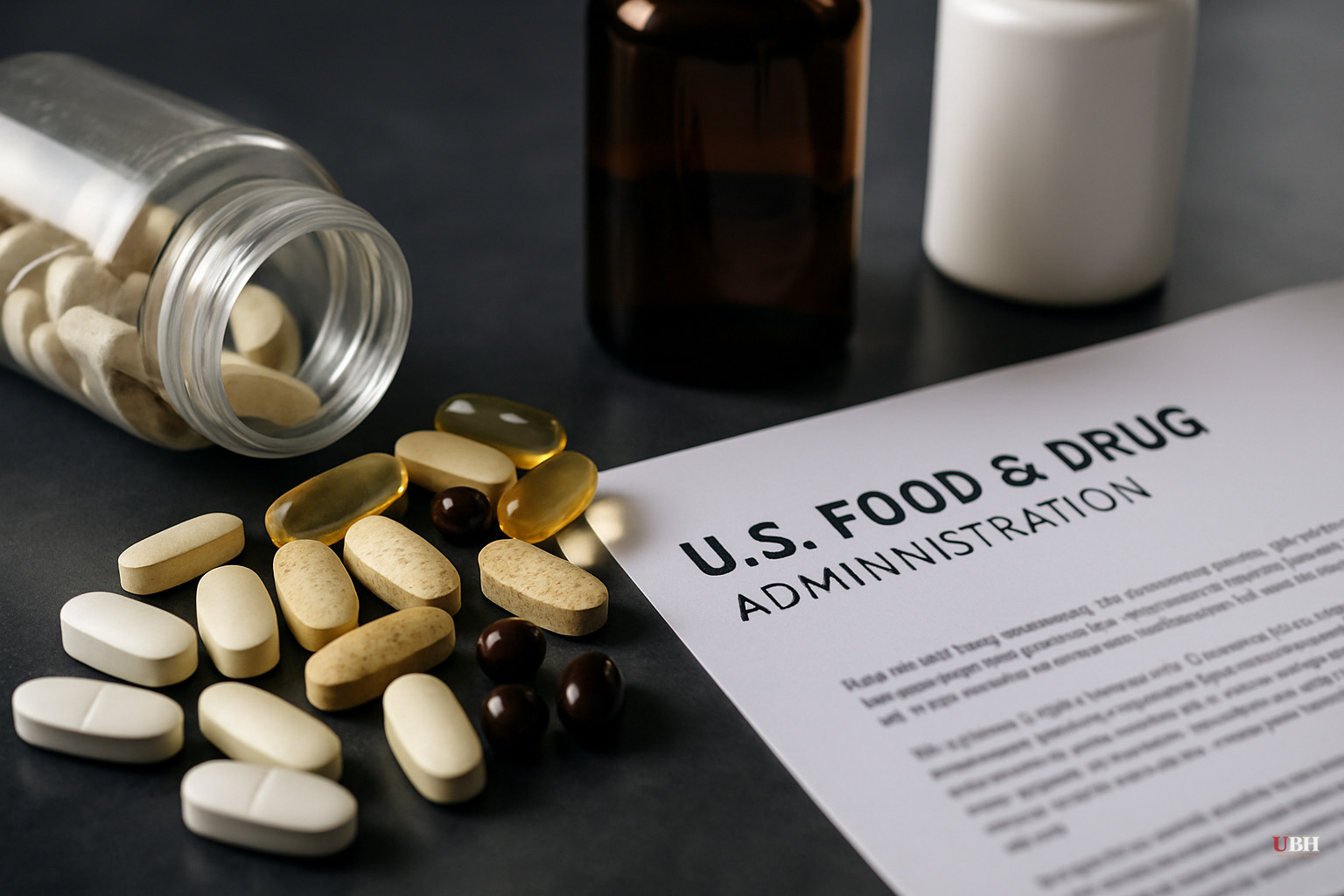
The FDA regulates dietary supplements as food, NOT as drugs, according to the agency's own consumer guidance page. The agency's guidance explicitly warns that many supplements contain ingredients with "strong biological effects which may conflict with a medicine you are taking or a medical condition you may have." Products containing hidden drugs are also sometimes falsely marketed as dietary supplements, according to the FDA, putting consumers at "even greater risk."
The FDA's position is: consult a healthcare professional first. Most people don't.
The Scale of the Behavior
A recent survey by UK consumer group Which? found that 76% of respondents take at least one supplement regularly — vitamins, minerals, omega-3, probiotics, or herbal supplements. Nearly one in five take four or more per day. BBC News reported those figures as part of ongoing coverage of the clinical fallout.
One nutritionist quoted by BBC News called the number of supplements people are combining "insane" and added: "Some are beginning to think that taking a pill is better than eating food. It is not."
This tracks with what gastroenterologists and hepatologists have been flagging. It's not usually a single supplement causing harm — it's the stacking.
The Strongest Counterargument
Supplements do have a legitimate place in evidence-based medicine. Supplement advocates argue that the harm narrative is overstated, that the products causing liver damage represent a small fraction of total supplement use, and that demonizing the entire category risks discouraging people with genuine deficiencies from taking products that would help them. As NHS surgeon Dr. Karan Rajan told BBC News: "Supplements can be positively life-changing. But every supplement deserves scepticism until proved otherwise."
The problem is that the people stacking multiple products simultaneously often aren't doing so because a doctor identified a deficiency. They're doing it because a social media ad worked on them.
Social Media Is the Distribution Engine
BBC News reporter Ruth Clegg described her own experience: she found creatine, vitamin D, magnesium, collagen, an all-in-one green supplement, and perimenopause tablets in her cupboard, accumulated without her fully realizing it. She traced it directly to social media advertising. Comments like "I can't get over how these supplements have made me feel" were the driver.
Because supplements require no pre-market approval under the FDA's current framework, there is no independent checkpoint between a compelling social media ad and a consumer's daily pill stack.
Real Harm Is Being Documented
BBC News reported the case of Ginger Smith, a 30-year-old brand influencer from Seattle, who was taking high doses of vitamin C, vitamin D, turmeric, a de-bloat supplement, and electrolyte water daily. She developed a kidney stone measuring between two and three centimetres that required surgery, costing her $6,000 out of pocket after insurance — the uninsured cost would have been $35,000.
Gastroenterologist Dr. Pedro de Maria Pallares from Hospital Universitario La Paz in Madrid told BBC News that increasing numbers of patients are coming to him with liver problems caused by herbal supplements. Research in the US, cited by BBC News, suggests that 20% of all cases of liver damage are caused by a mixture of herbal and dietary supplements. Supplements particularly toxic to the liver at high doses include vitamin A, glutamine, ashwagandha, and green tea extract.
The British Liver Trust says it is seeing cases of liver injury due to over-supplementation and is asking people to consider "whether the potential benefits outweigh any possible risks."
The Regulatory Gap Nobody Is Closing
The FDA's current enforcement posture — act after harm is documented — means warnings only come after people are already hurt. The agency has issued specific warnings about SARMs marketed to teenagers, about tianeptine products linked to overdoses and death, about illegally imported weight-gain products like Apetamin, and about products containing hidden drugs falsely marketed as dietary supplements.
Each of those warnings came after the fact. The FDA's own guidance page makes no claim that pre-market review of supplements is within its current authority. The unresolved question is concrete: at what documented harm threshold does the law get rewritten? Clinicians are logging the cases. The FDA is issuing the warnings. The framework hasn't changed.
Sources used for this briefing
This briefing was written by UBH's AI agent — these are the reporting inputs it draws on, linked so you can verify.


