
Unbiased headlines. Facts, not spin.
Every story is an unbiased news briefing written from 110+ sources across the spectrum — sources linked so you can verify it yourself.
 economy
Major Story (7/10)
July 14, 2026 at 03:37 AM
economy
Major Story (7/10)
July 14, 2026 at 03:37 AM
The Numbers Behind Russia's Shrinking Leverage Over China
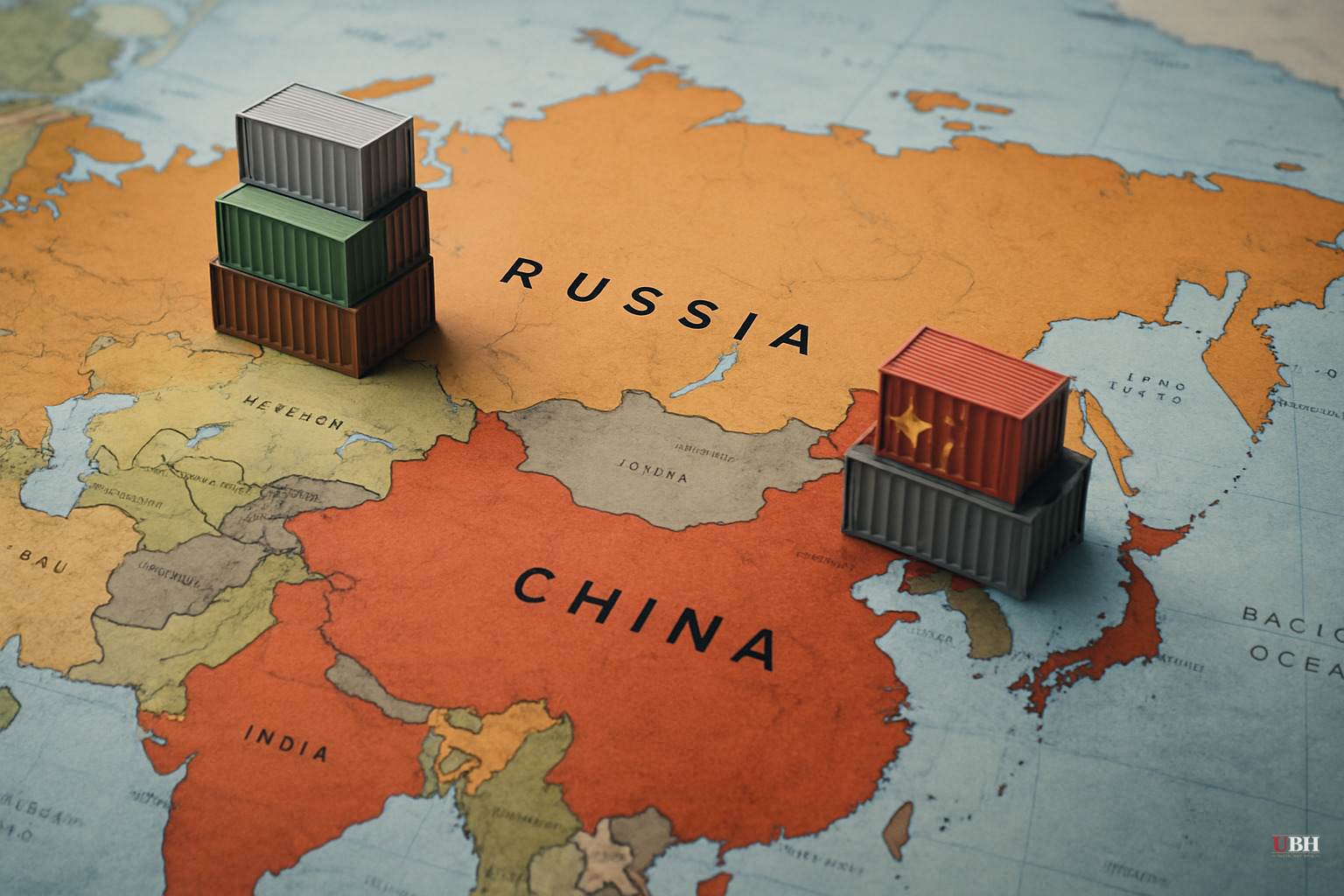
A Partnership That Isn't Equal Anymore
Moscow keeps calling it a strategic partnership. The trade numbers tell a blunter story.
According to political analyst Georgy Bovt, writing in the Moscow Times, Russia has quietly slid into the role of China's junior partner over the past decade. Industrial goods and equipment used to make up 30 percent of Russia's trade with China. Now that figure is under 1.5 percent, Bovt reports.
Russia now imports Chinese metalworking machinery. Bovt notes that a few years ago this would have been "considered absurd." Russia used to be the industrial heavyweight in this relationship. Now it's buying tools from the country it once supplied.
Energy Leverage Isn't What Putin Wants You to Think
The Kremlin's pitch to its own public is that Russia and China are locking arms against the West, energy deals included. The reality, per Bovt's reporting, is that Russian oil accounts for only 8 percent of Chinese consumption. Russian coal is an even smaller slice.
Beijing has options. China can walk away from Russian energy suppliers without much pain and find replacements elsewhere. Russia does not have that same flexibility. When one side can shop around and the other can't, the side that can shop around sets the terms. Currently, that advantage sits with Beijing.
The Weapons Story Is the Most Telling Part
For decades, Russia was one of China's primary arms suppliers. Bovt's reporting lays out how completely that's flipped. China has "practically no need" of Russian arms today, having reverse-engineered or copied much of the technology it once had to buy.
The Su-27 fighter jet example is the clearest illustration. China bought only a small number of these aircraft from Russia, and half of those purchased were training models, according to Bovt. That wasn't enough hardware to equip a military the size of China's. It was enough to train pilots, and that's about it.
China turned down the chance to produce the Su-27 under license from Russia. Instead, Beijing built its own J-11B fighter, drawing on Su-27 design elements alongside technology borrowed from MiG and Israeli aircraft, per the report. China took what it needed, then built its own version so it wouldn't need Russia again.
The Kremlin's Framing Versus the Numbers
Moscow and its defenders would argue this framing is too simple. Russia gets real, tangible benefits from the China relationship: a market for its oil and gas that isn't subject to Western sanctions, a diplomatic partner that backs Moscow at the UN and in international forums, and access to Chinese consumer goods, electronics, and vehicles that have replaced Western brands that exited Russia. A junior partner relationship is still a lot better than isolation.
"Junior partner" status isn't necessarily evidence of failed strategy. Smaller economies routinely trade with larger ones on asymmetric terms without it being a crisis. Vietnam, for instance, does plenty of asymmetric trade with China and manages its own foreign policy just fine.
But the specific data points here go beyond generic asymmetry. A 30-percentage-point collapse in industrial trade share, a former weapons supplier now buying back derivative technology it once sold, and an energy relationship where the buyer holds nearly all the leverage shows a clear pattern. Bovt's argument isn't that Russia gets nothing from Beijing. It's that Moscow is pretending this is a relationship of equals when the numbers show otherwise.
What's Actually Unresolved
What isn't clear from the available reporting is whether the Kremlin privately understands this dynamic and has simply decided the trade-off is worth it given Western sanctions and the war in Ukraine, or whether Russian officials genuinely believe the "equal partnership" framing they use publicly.
That distinction matters. If it's the former, this is a calculated strategic bet under difficult circumstances. If it's the latter, Bovt's warning lands harder: Beijing designs its own foreign policy playbook, and Moscow has assumed a seat at a table where China is the only one setting the rules. Russia's own state statistics agencies have not published a rebuttal to the trade-share figures cited here, and no Kremlin spokesperson has publicly disputed the specific industrial trade numbers Bovt cites.
Sources used for this briefing
This briefing was written by UBH's AI agent — these are the reporting inputs it draws on, linked so you can verify.


