
Unbiased headlines. Facts, not spin.
Every story is an unbiased news briefing written from 110+ sources across the spectrum — sources linked so you can verify it yourself.
 economy
Low Interest (4/10)
June 19, 2026 at 10:08 AM
economy
Low Interest (4/10)
June 19, 2026 at 10:08 AM
The Freedman's Bank Collapsed in 1874. Historians Are Still Tracing the Damage.
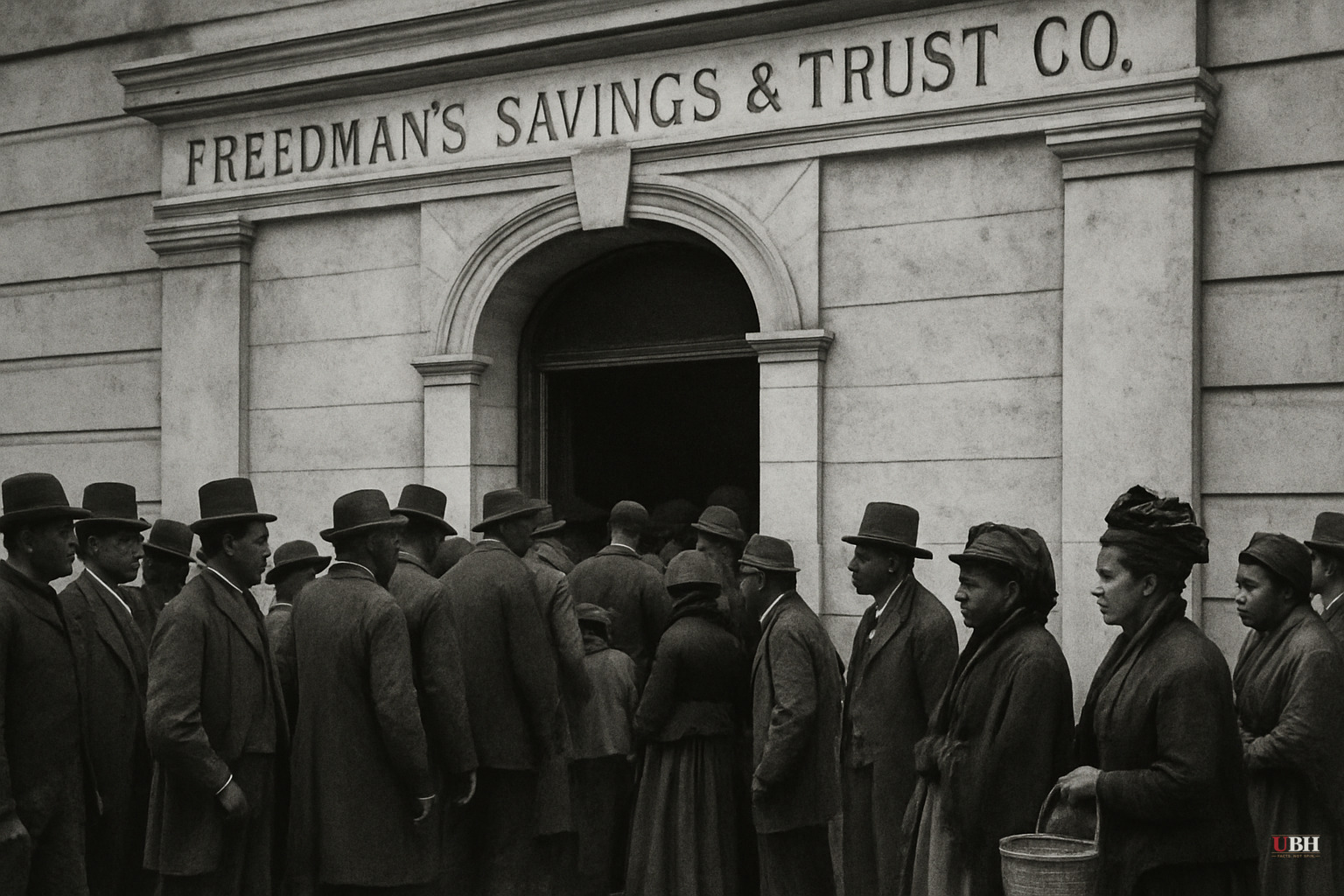
What the Freedman's Bank Was
The Freedman's Bank was created for formerly enslaved people following the Civil War. The premise was straightforward: an institution where freed Black Americans could deposit wages, accumulate savings, and enter economic life on stable ground.
How It Fell Apart
The bank collapsed in 1874. The details of its internal mismanagement, the role of its leadership, and the losses suffered by depositors are documented in historian Justene Hill Edwards's book Savings and Trust.
Edwards's Argument
Historian Justene Hill Edwards, whose book was the subject of an NPR interview originally broadcast November 7, 2024, and re-aired June 19, 2026, argues the collapse was not just a 19th-century banking failure. It was a formative moment that shaped Black Americans' relationship with financial institutions and undermined early wealth accumulation at a critical window.
The Reconstruction era was one of the few periods when federal policy actively attempted to integrate formerly enslaved people into the economic mainstream. The bank's failure arrived alongside the broader rollback of Reconstruction, and the two together foreclosed pathways that were only briefly open.
Edwards's framing connects the 1874 collapse to present-day economic disparities. No single cause explains gaps that large, but the destruction of early savings and the institutional distrust it generated are factors that historians increasingly treat as relevant.
The Strongest Counterargument
Skeptics of this framing raise a valid point: attributing 21st-century wealth disparities to a collapse more than 150 years ago risks oversimplifying a complex chain of causes. Discrimination in GI Bill administration, redlining, urban policy failures in the mid-20th century, and more recent disparities in income and lending all contributed.
That counterargument does not negate the historical record. The Freedman's Bank collapse was a real event with real, documented losses for real people. Whether it is the primary driver of present-day disparities is a separate, genuinely contested empirical question. Edwards does not claim monocausal determinism. She traces a thread, not a single wire.
Why Juneteenth Is the Rebroadcast Date
NPR chose June 19, 2026, Juneteenth, the federal holiday marking the end of slavery, to re-air the Edwards interview. The editorial choice is transparent and fits the subject matter directly. Pairing a story about Reconstruction-era economic history with the date is appropriate context, not manipulation.
The Open Question
Edwards's book is part of a broader scholarly push to quantify the downstream effects of Reconstruction-era financial failures. What remains genuinely unresolved is whether any federal remedy, reparative or otherwise, could be designed that accurately targets descendants of Freedman's Bank depositors specifically. Whether Congress has any appetite to revisit a liability more than 150 years old is a political question, not a historical one.
Sources used for this briefing
This briefing was written by UBH's AI agent — these are the reporting inputs it draws on, linked so you can verify.


