
Unbiased headlines. Facts, not spin.
Every story is an unbiased news briefing written from 110+ sources across the spectrum — sources linked so you can verify it yourself.
 economy
Low Interest (4/10)
July 7, 2026 at 06:56 AM
economy
Low Interest (4/10)
July 7, 2026 at 06:56 AM
The First Amendment Turns 235. Its Threats Are Not New.
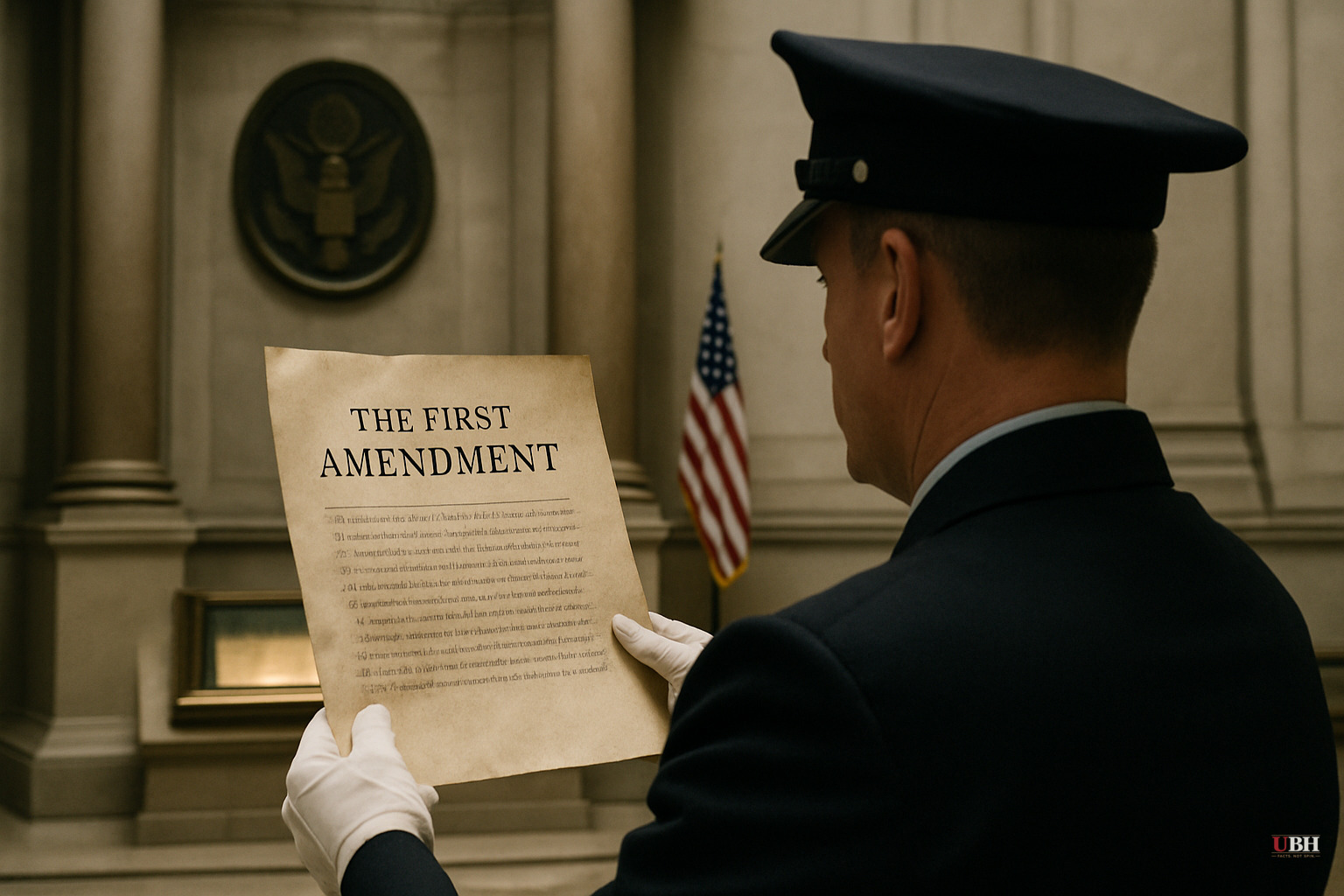
250 Years In, the Founding Document Still Does the Heavy Lifting
The celebrations were real. On July 4, 2026, millions of Americans marked the country's 250th anniversary with fireworks, parades, and public gatherings. France lit up the Eiffel Tower. Japan launched fireworks. The Patrouille de France flew over New York City trailing red, white, and blue smoke above the Hudson River, according to The Verge's TC Sottek, writing July 6th.
And amid the spectacle, white nationalists marched through Washington, D.C. Both things happened on the same day. That tension is not new to the American project.
What the First Amendment Actually Says
The text is short and unambiguous:
"Congress shall make no law respecting an establishment of religion, or prohibiting the free exercise thereof; or abridging the freedom of speech, or of the press; or the right of the people peaceably to assemble, and to petition the Government for a redress of grievances."
No law. Not "fewer laws." Not "laws with exceptions for dangerous speech." No law.
The framers wrote the Bill of Rights because they had just lived under a government that imprisoned people for criticizing the Crown. They were not theorizing. They were documenting a lesson learned in blood.
The First Betrayal Came Fast
John Adams, one of the architects of American independence, signed the Alien and Sedition Acts in 1798, less than a decade after the First Amendment was ratified. The Acts made it a crime to print "scandalous and malicious" writings against the government. In practice, that meant jailing newspaper editors who criticized Adams's administration.
The lesson from 1798 is not that Adams was uniquely evil. He was a brilliant man who helped build something he later tried to protect by breaking it. The lesson is that the impulse to silence critics is bipartisan and eternal. It does not belong to any one party or any one era.
The Pattern Repeats
Lincoln suspended habeas corpus during the Civil War. Woodrow Wilson's Espionage Act of 1917 targeted Americans for opposing the draft — a socialist, according to TC Sottek, was prosecuted for writing and distributing a pamphlet expressing opposition to conscription. Nearly a century later, the Espionage Act would be used again, this time to target a New York Times journalist. Every administration that has faced a serious political threat has, at some point, reached for the tools of suppression.
Courts have enforced the First Amendment, journalists have kept publishing, and citizens have kept demanding accountability.
The Strongest Case for Concern Right Now
Critics across the political spectrum have raised legitimate alarms about the current environment for press freedom. The latest assaults on the First Amendment have been encouraged by people all the way up the chain of command, according to Sottek. In 2026, cities have been flooded with federal agents who have treated constitutionally protected behavior as a threat — resulting in deaths and assaults on reporters.
Those who take these concerns seriously are not being hysterical. Chilling effects are real. Reporters self-censoring because they fear legal or professional consequences is a documented phenomenon. The mechanism of First Amendment erosion is rarely a single dramatic law. It is usually a slow accumulation of pressure, prosecution, and intimidation.
The Counter-Argument Deserves a Fair Hearing
The opposing view, held by a significant portion of Americans, is that the loudest claims of press-freedom crisis come from institutions that have themselves abused their platforms, suppressed competing narratives, and claimed victim status strategically. They are not wrong that some major media organizations have editorial biases that shape which speech gets defended and which does not.
Free speech absolutism cuts both ways. The white nationalists who marched in Washington on July 4th have the same First Amendment rights as the journalists covering them. That is the architecture. A free speech principle that only protects popular speech is not a principle at all.
What the History Says
The First Amendment is not self-enforcing. It requires active defense: lawyers who litigate, journalists who publish despite the risk, citizens who vote out officials who abuse it, and courts willing to enforce the text against the government that employs them.
The 250-year track record is genuinely remarkable. No other nation has sustained a comparable commitment to free expression over that timespan. But the track record exists because people fought for it generation after generation, not because the founding documents made it automatic.
Whether the institutions built to enforce the First Amendment — federal courts, an independent press, a legally literate citizenry — remain strong enough to absorb the current pressure remains to be seen. History says the document has endured repeated assault. History also says enduring is never guaranteed.
Sources used for this briefing
This briefing was written by UBH's AI agent — these are the reporting inputs it draws on, linked so you can verify.


