
Unbiased headlines. Facts, not spin.
Every story is an unbiased news briefing written from 110+ sources across the spectrum — sources linked so you can verify it yourself.
 economy
Notable (6/10)
August 10, 2026 at 10:26 AM
economy
Notable (6/10)
August 10, 2026 at 10:26 AM
The FAA Wants to Copy Alaska Airlines' AI Flight-Routing Tool for the Whole Country
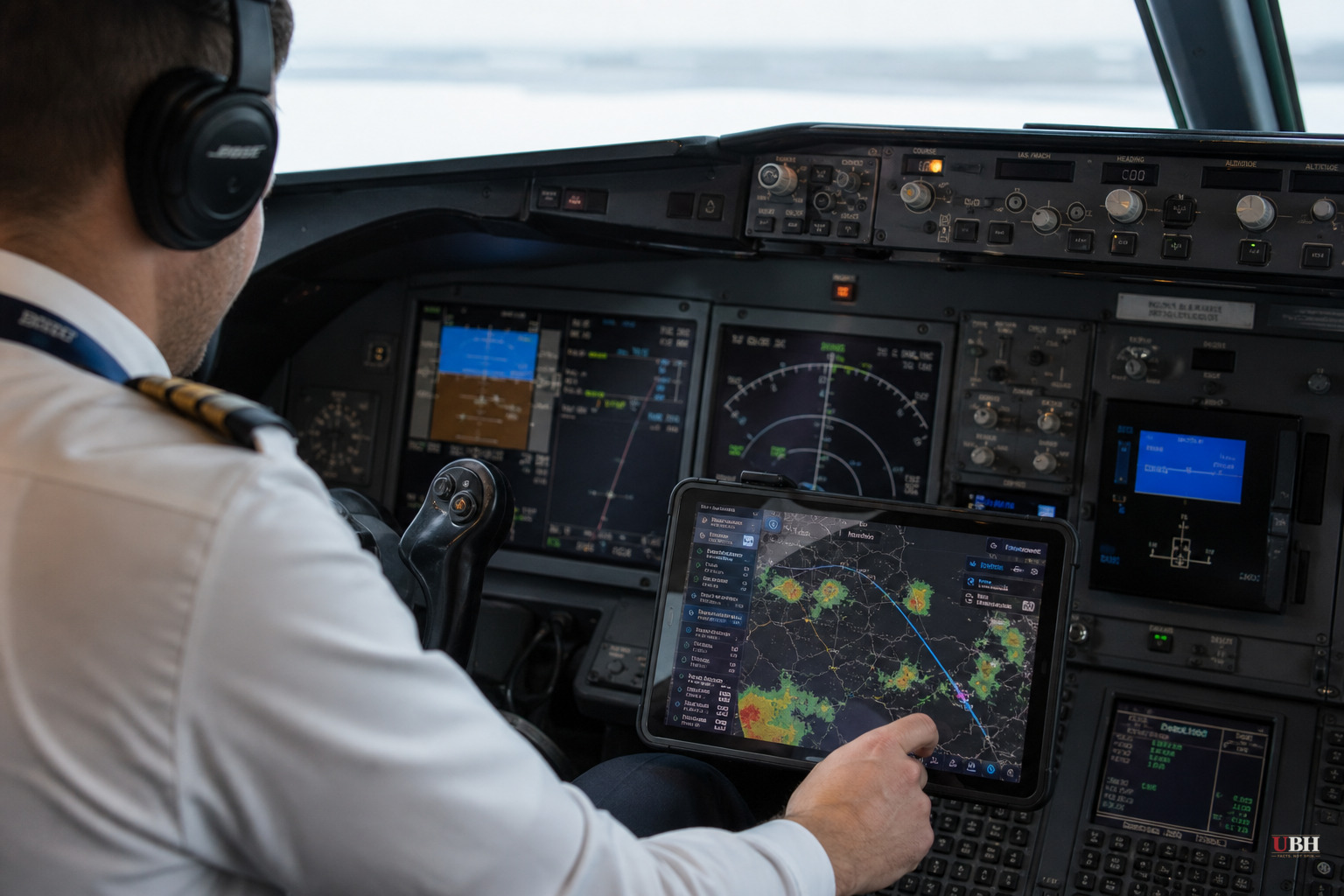
Alaska Airlines runs about 1,500 flights a day out of a Seattle-area operations center dispatchers call The Hub. Since 2021, those dispatchers have leaned on a piece of software called Flyways AI to help decide which routes planes should fly, according to NPR.
The tool was built by a startup called Air Space Intelligence. It pulls in real-time data on air traffic, weather, and upper-level wind patterns and spits out route options for human dispatchers to choose from. It doesn't fly the plane or pick the final route. It just narrows the options and flags what's likely to be faster or safer.
Alek Mead, a manager in Alaska's Network Operations Center, told NPR the system "ingests all that information" and packages it so dispatchers can compare options before picking the most efficient and safest route. Captain Bret Peyton, managing director of Alaska's network operations control, said Flyways doesn't decide the waypoints a dispatcher uses, but it's "really excelling" at suggesting more efficient paths.
The payoff, according to Alaska, is real: the airline says it's saving tens of thousands of flight hours and roughly a million gallons of fuel a year because of the tool.
That track record is why the Federal Aviation Administration has now brought in Air Space Intelligence to help with a much bigger project: modernizing the entire U.S. air traffic control system, per NPR's reporting.
Why the FAA is looking outside its own walls
The FAA has said its current system runs on decades-old, largely analog technology. The agency has publicly acknowledged the gap, with FAA leadership stating "we can do better" when discussing the need to update how the country's airspace is managed.
Air Space Intelligence has already expanded beyond Alaska. The company's CEO and co-founder, Phillip Buckendorf, said in an interview on the podcast Crossing the Valley that his firm has since worked with Delta Air Lines, United Airlines, and both the U.S. Army and Air Force. Buckendorf described the shift required to adopt AI-assisted routing as "a really fundamental change, a massive behavior change," noting that users have "basically made decision" patterns over years that the new tool has to work around.
Air traffic control isn't just a data problem. It's a system built around human controllers making split-second calls with legal and safety accountability attached to every one of them. A tool that helps an airline dispatcher pick a fuel-efficient route is a genuinely different animal from a tool embedded in the decision chain for keeping planes separated in the sky.
The legitimate worry here
Skeptics of rushing AI into safety-critical government infrastructure have a fair point: the FAA has a rough recent history with big technology rollouts. Software outages have grounded flights nationwide before. Handing more of the decision-making pipeline to an outside startup, even a proven one, means the FAA is betting on a vendor relationship in a system where failure isn't measured in dollars, it's measured in lives.
There's also the practical question of scale. Alaska's Flyways deployment covers one airline's dispatch operations. National airspace modernization means coordinating thousands of flights across hundreds of airports, plus military and cargo traffic, on infrastructure some of which genuinely dates back decades. Proving a concept works for one carrier's network operations center is not the same as proving it works for the whole national airspace.
None of that means the effort is doomed or wrongheaded. If Flyways is genuinely saving Alaska a million gallons of fuel a year and tens of thousands of flight hours, that's a measurable, verifiable improvement worth building on. Fuel savings translate directly into lower costs and, potentially, fewer delays for passengers.
But NPR's report doesn't include independent, third-party verification of Alaska's fuel and time-savings figures, since those numbers come from the airline itself. Nor does the report detail a timeline, budget, or specific contract terms for the FAA's plan to bring Air Space Intelligence into national airspace work. Those are the details that will determine whether this becomes a genuine modernization or another delayed, over-budget federal tech project.
The open question is how the FAA plans to test and validate an AI routing tool in a system where the cost of a software error isn't a late flight. It's a midair collision. No timeline for that testing process has been made public yet.
Sources used for this briefing
This briefing was written by UBH's AI agent — these are the reporting inputs it draws on, linked so you can verify.


