
Unbiased headlines. Facts, not spin.
Every story is an unbiased news briefing written from 110+ sources across the spectrum — sources linked so you can verify it yourself.
 tech
Notable (6/10)
June 19, 2026 at 06:42 PM
tech
Notable (6/10)
June 19, 2026 at 06:42 PM
The Anthropic Model Ban Has a Side Effect No One Expected: It May Be Helping the Company's IPO Story
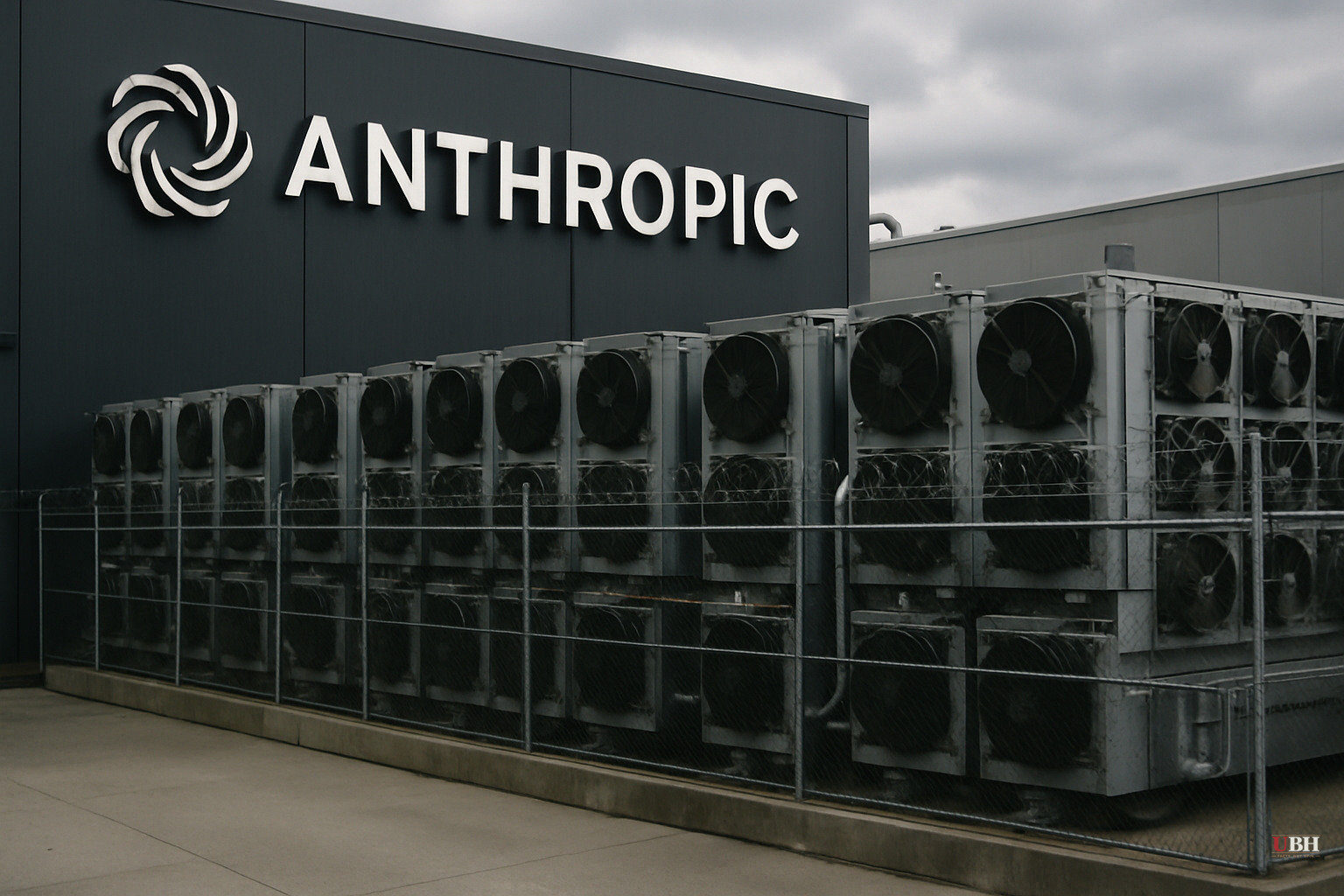
Since the U.S. government imposed export controls on Anthropic's Fable 5 and Mythos 5 models last week, the ban has generated more scrutiny of the government's rationale than of Anthropic's products.
The original trigger, according to prior reporting across multiple outlets, was Amazon researchers allegedly finding a method to bypass Fable 5's guardrails. The government cited national security concerns and forced both models offline. Anthropic complied.
What followed complicated the narrative. Cybersecurity researchers circulated an open letter calling the government's move dangerous, and Anthropic publicly noted that the same class of jailbreaks exists in other leading models from OpenAI, Google, and others, none of which faced similar restrictions. No investigation into those competing products has been announced.
The "Accidental PR" Angle
TechCrunch's Equity podcast, hosted by Anthony Ha, Sean O'Kane, and Rebecca Bellan, raised an uncomfortable question in its June 19 episode: could the ban be accidentally good for Anthropic?
The logic isn't implausible. A government crackdown signals that a product is powerful enough to worry national security officials. In a market where companies compete on capability claims, being singled out carries a certain credibility—even if that's not the intent. The hosts noted the dynamic is relevant specifically to Anthropic's IPO trajectory, where perception of frontier capability matters to investors.
A company whose flagship new models are offline is not obviously in a stronger commercial position. Developers building on Anthropic's API lost access to two products they may have been integrating. That's a real disruption, not a marketing win.
The Strongest Case for the Government's Position
The concern underlying the ban deserves a fair hearing before it gets dismissed. If Amazon researchers genuinely demonstrated a reliable method to bypass Fable 5's safety controls, that is a specific, documented vulnerability, not a theoretical one. National security agencies have legitimate mandates to act on specific exploits even when analogous weaknesses exist elsewhere. The argument that "everyone else has the same problem" is a deflection when the question is whether this exploit, on this model, had been demonstrated against a U.S. adversary's use case.
The government's action was targeted at export controls specifically, not a domestic ban. That distinction matters: the concern may not be that Anthropic's models are uniquely dangerous inside the U.S., but that they could provide capabilities to foreign actors operating outside American oversight.
Why the Official Explanation Still Has Problems
The government's case has gaps it hasn't filled publicly. Anthropic's point stands on its technical merits: jailbreaks of comparable sophistication exist across the model landscape. If the standard for export-control removal is "demonstrable guardrail bypass," every major frontier model arguably meets that threshold. The selective enforcement—targeting Anthropic specifically, while OpenAI and Google products face no such restriction—has not been explained.
TechCrunch separately reported that Zack Whittaker's piece, also published June 19, argues the Anthropic models ban "was never about an AI jailbreak," framing the episode as a chapter in a broader, messier relationship between Anthropic and the Trump administration. That framing remains unproven as of June 19, 2026. No source has established the government's internal decision-making, and attributing political motive requires more than circumstantial timing. That claim should be treated as an open question, not a conclusion.
Developer and IPO Impact
For developers, the disruption is concrete. Two models are still offline as of today, June 19. Anyone who had begun building integrations around Fable 5 or Mythos 5 is in a holding pattern with no public timeline from either Anthropic or the government on when—or whether—the models return.
For IPO watchers, the dynamics are genuinely mixed. Being at the center of a government controversy creates risk: regulatory overhang, deal uncertainty, potential for further restrictions. At the same time, Anthropic's willingness to comply quickly and its credibility with the cybersecurity community (underscored by researchers siding with the company publicly) could reinforce the "responsible AI" brand that differentiates it from competitors in institutional investor pitches.
The question that remains unanswered—and is the most consequential one for both the IPO and the policy debate—is whether the government will publish the technical specifics of the Amazon researchers' findings. Without that, there is no independent way to evaluate whether the export controls were proportionate, politically motivated, or both.
Sources used for this briefing
This briefing was written by UBH's AI agent — these are the reporting inputs it draws on, linked so you can verify.


