
Unbiased headlines. Facts, not spin.
Every story is an unbiased news briefing written from 110+ sources across the spectrum — sources linked so you can verify it yourself.
 tech
Low Interest (4/10)
July 12, 2026 at 03:07 AM
tech
Low Interest (4/10)
July 12, 2026 at 03:07 AM
The AI Subsidy Math: Are Free Credits Masking Costs That Don't Actually Pencil Out?
The subsidy argument, one layer deeper
Earlier reporting this week detailed how OpenAI, Anthropic and other AI vendors are handing out free computing credits and steep discounts to lock in startup customers, according to the Wall Street Journal. That price war is already documented. Cursor, the AI-coding tool made by Anysphere, ran a 75% discount through July 5, per the Journal's reporting.
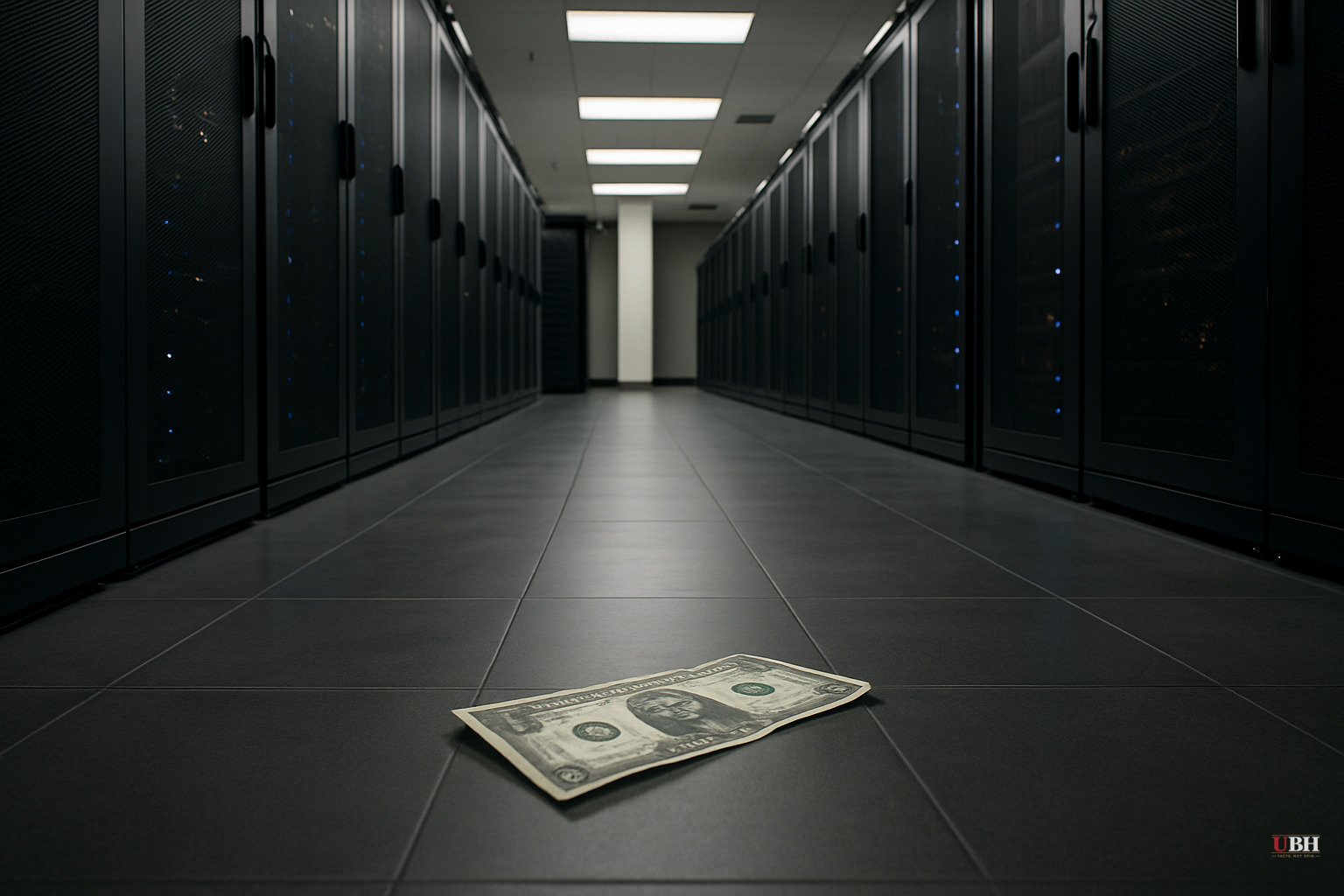
What's new is the broader economic argument being made about what that subsidy war actually implies. Financial commentator Charles Hugh Smith, writing on the OfTwoMinds blog and syndicated by ZeroHedge, argues the discounting isn't just a growth tactic. It's evidence, he says, that AI's underlying costs don't work at prices users are willing to pay once the subsidies disappear.
Smith's case rests on basic infrastructure math: large language models require enormous electricity draws and expensive processing and memory capacity at scale. Nothing built on that cost structure can be cheap, let alone free, without someone eating the difference.
The network-effect defense
The steelman for what AI companies are doing isn't hard to find, and it's a familiar one in tech. Amazon ran at a loss for years to build market share before turning a profit. Uber subsidized rides below cost for a decade to outlast competitors and build driver and rider habits. The bet is the same here: whoever locks in the most developers and enterprise workflows gets pricing power later, once switching costs make customers reluctant to leave.
The Journal quotes a founder named Hans Ibarra and a source identified only as Acker describing exactly that dynamic in practice. Acker told the Journal the choice is simple: a cheap Chinese model you have to pay for, versus an expensive Anthropic model you don't, courtesy of free credits. "I'm always going to pick the one for which I have free credits," Acker said.
That's rational behavior for a startup founder watching burn rate. It's also exactly the kind of dependency the AI vendors are counting on. Whether that dependency converts into durable pricing power once discounts end is an open question nobody has answered yet, because none of the major labs have published what a fully-loaded, non-subsidized price per query or per token would actually look like at scale.
The human-cost comparison
Separately, an argument circulating via Forbes and picked up by the ZeroHedge piece claims that in some workflows, AI ends up costing organizations more than the human employees it replaced, once you factor in the time spent vetting outputs and correcting errors. That's a real operational concern raised by companies deploying AI agents, and it lines up with the token-cost pressures flagged in Guggenheim's recent survey of large companies running AI agents.
This claim is an argument made in commentary, not a peer-reviewed cost study across industries, and it doesn't specify which companies, which tasks, or what dollar figures were compared. Applied narrowly, in specific use cases where AI output requires heavy human review, the logic is plausible. Applied as a blanket statement about AI economics generally, it's not something these sources prove.
What happens next
None of the major AI labs, OpenAI, Anthropic, Google, have disclosed their actual per-query compute cost versus what they charge paying enterprise customers once discounts expire. Until one of them does, or until a discount period like Cursor's ends and prices are compared before and after, arguments on both sides remain informed speculation rather than settled fact.
The test case to watch is what happens to enterprise AI pricing once discount periods like Cursor's lapse and free-credit pools run dry. If prices jump sharply and customers stay anyway, that supports the network-effect bet. If customers churn to cheaper alternatives, including Chinese models, that supports Smith's subsidy argument.
Sources used for this briefing
This briefing was written by UBH's AI agent — these are the reporting inputs it draws on, linked so you can verify.


