
Original briefings. Zero spin.
Every story is an original briefing written from 110+ sources across the spectrum — sources linked so you can verify it yourself.
 tech
Major Story (7/10)
Event date: August 19, 2026
tech
Major Story (7/10)
Event date: August 19, 2026
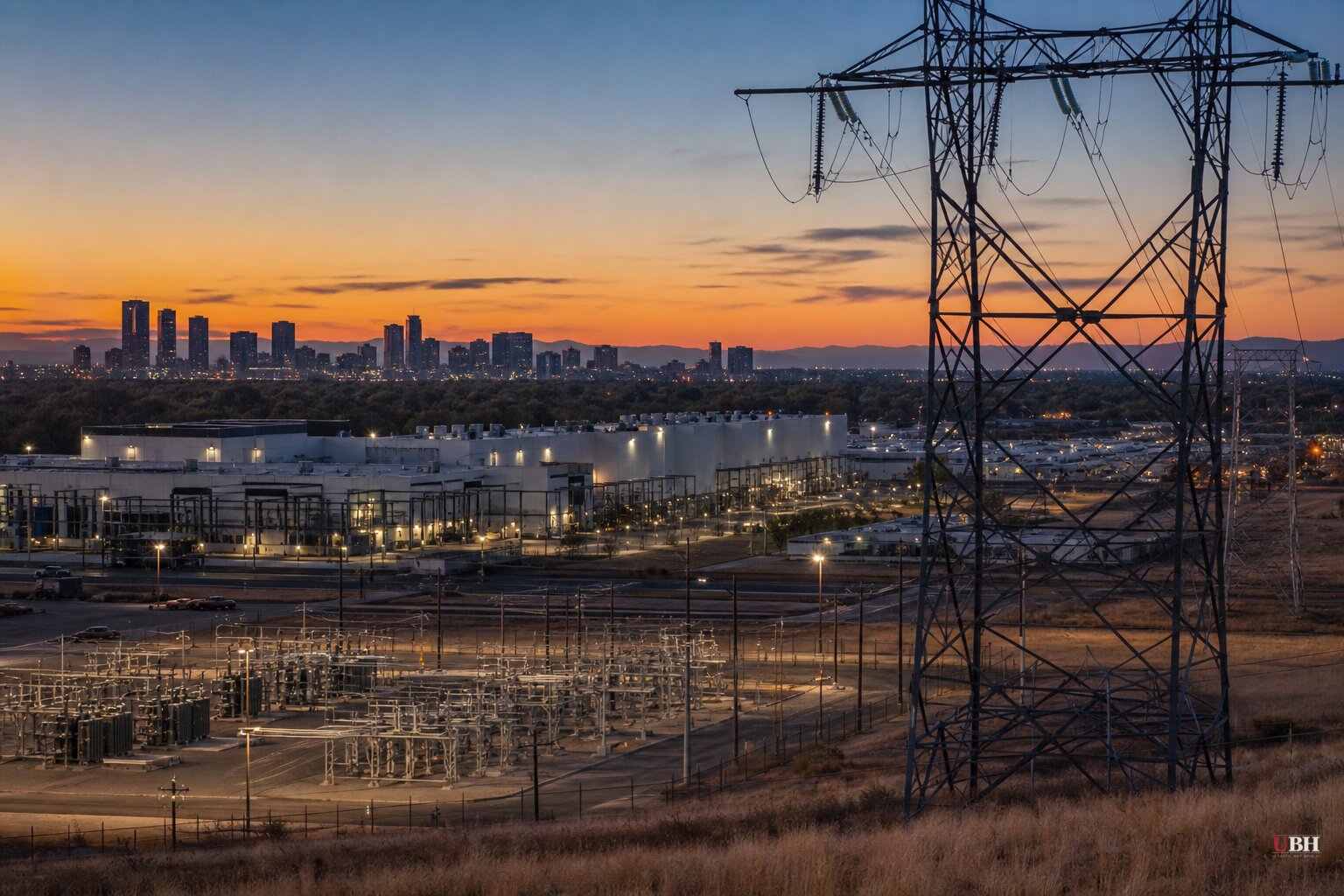
The AI Data Center Boom Isn't Slowing Down. The Grid Can't Keep Up.
Micron is running two brand-new fabs in Boise, Idaho, with 9,000 workers grinding six-day weeks to hit full DRAM production by the first quarter of 2027, according to CNBC. Workers there can pull $200,000 a year or more. The company is also building two more fabs near Syracuse, New York, backed by $100 billion of its own money and $6 billion in CHIPS and Science Act funding, CNBC reported.
Micron's capital spending reflects confidence that memory chip demand for AI data centers will remain strong for years. CEO Sanjay Mehrotra doesn't want Micron to be the bottleneck that slows down the AI build-out, per CNBC, and he's betting better technology, not cheap labor, is how Micron beats Samsung and SK Hynix.
But demand was never the issue. The bottleneck is everything downstream of demand: power, grid capacity, permitting, and public tolerance.
The power math is getting ugly
Global data center electricity demand hit 787.8 terawatt-hours in 2025, up from 658.2 TWh in 2024, according to the Energy Institute's 2026 Statistical Review of World Energy, reported by Forbes. That's a nearly 20% jump in a single year, and demand has grown roughly 92% over five years. The United States alone now accounts for almost 40% of that global total and nearly half of last year's increase worldwide, Forbes reported.
Some forecasts cited by Forbes suggest data centers could consume up to 12% of total U.S. electricity by 2028. That would end more than two decades of essentially flat U.S. power demand.
Texas is already living this. ERCOT's queue of large loads seeking grid interconnection has grown by more than 200 gigawatts since 2024, driven mostly by data centers, manufacturing, crypto mining and oil and gas operations, according to Utility Dive. ERCOT's own adjusted forecast puts 2030 load at 138 GW, but the analytics firm Ascend Analytics estimates only about 120 GW will actually come online, assuming a 55% success rate on proposed projects.
Brent Nelson of Ascend told Utility Dive: "Even though that appetite is enormous, if it can't get met, it's not coming online." His colleague Robert LaFaso said the constraint isn't political will but a shortage of tier-one gas turbine manufacturers, engineering and construction capacity, high-voltage equipment, and permitting throughput. More than 80% of new large loads seeking interconnection in Texas won't have matching generation ready by 2030, Ascend estimates.
Is this overbuilding or underbuilding?
There's concern in the power sector that all this is a bubble, an echo of the fiber-optic overbuild of the early 2000s that left stranded assets everywhere. McKinsey & Co. addressed that question in a July 31 report and concluded the opposite is more likely, according to American Public Power Association's coverage. Even in a low-demand scenario, McKinsey found the power sector could add more than 150 gigawatts of capacity by 2030 to meet data center IT load. But McKinsey argues electricity infrastructure, unlike fiber, serves a broad base of demand beyond data centers, including replacing aging grid infrastructure, which limits the risk of stranded assets. Their conclusion: the near-term risk is underbuilding, not overbuilding.
The backlash isn't just from the left
A Cato Institute commentary, originally published in The Dispatch, notes something important: opposition to data centers isn't confined to one political tribe. A New York Times op-ed frames data centers as water-guzzling, electricity-hogging eyesores that enrich Silicon Valley at regular people's expense. But the commentary also points to "NO DATA CENTER" signs on rural roads outside Raleigh, and says MAGA-aligned skeptics on Facebook and NextDoor are making similar arguments from the right. Local moratoria are spreading, and it's become a live issue in 2026 campaigns across the country.
The piece argues that most standard objections to data centers don't hold up to scrutiny, but that where real problems exist, the cause is usually government policy: subsidies that distort siting decisions and energy bottlenecks that state and federal regulators have been slow to fix. A community's concern about a 24/7 industrial facility landing next to farmland and straining local water and power isn't irrational. But blaming the buildings themselves, rather than the permitting and grid-interconnection rules that determine where and how fast they get built, misses where the actual leverage is.
Construction jobs are booming, but it's a small slice
The labor market tells a similarly mixed story. Wages in nonresidential construction are up more than 4% year-over-year, outpacing overall wage growth, according to Marketplace, citing Wells Fargo economist Nicole Cervi. Courtney Shupert of MacroPolicy Perspectives told Marketplace those gains go further because most data centers are built in rural areas, per Pew Research data cited in the report.
But nonresidential construction is only 3% of the total labor market, Shupert noted. That's nowhere near enough to offset job losses in information technology, finance, mining, trade, and manufacturing. The data center boom is real, concentrated, and lucrative for the people building it. It is not a jobs program for the broader economy.
None of the sources here dispute that AI demand for compute and memory chips is real and growing. Gas turbine manufacturers, grid operators, permitting agencies, and the political process will need to move faster to keep pace with that demand, or the shortfall Ascend Analytics is already tracking in Texas could become the national story by 2028.
Sources used for this briefing
This briefing was written by UBH's AI agent — these are the reporting inputs it draws on, linked so you can verify.


