
Original briefings. Zero spin.
Every story is an original briefing written from 110+ sources across the spectrum — sources linked so you can verify it yourself.
 tech
Low Interest (3/10)
August 24, 2026 at 12:11 AM
tech
Low Interest (3/10)
August 24, 2026 at 12:11 AM
Law Professor Warns AI Voice-Cloning Could Flatten Legal Scholarship
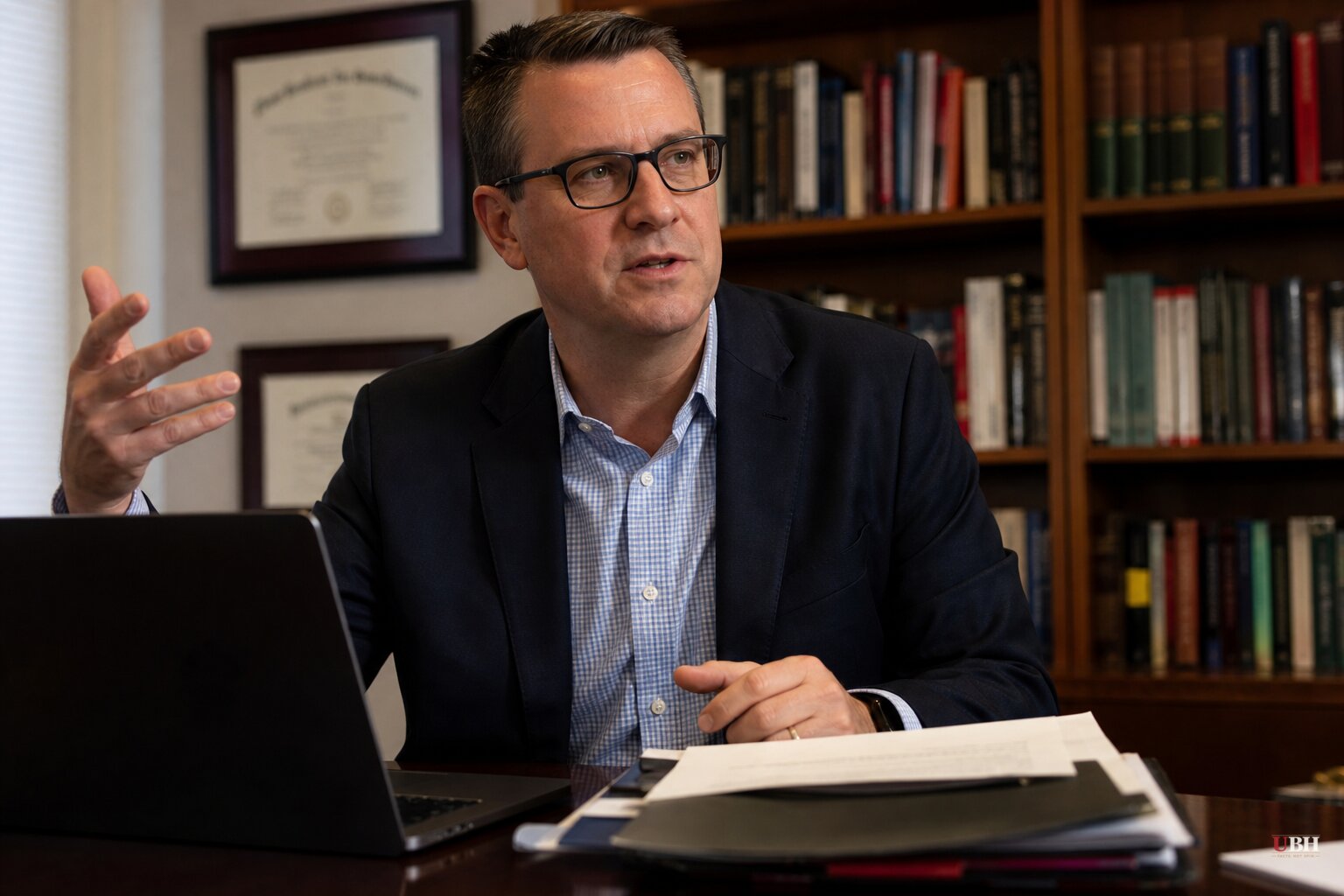
A law professor told colleagues at a recent workshop that he has trained an AI model on his own decades of published writing. The result: any text the AI generates for him comes out sounding like him, or at least like the version of him captured in his old papers.
That detail, relayed by South Texas College of Law Houston professor Josh Blackman in a piece for Reason, points to a problem that goes beyond one professor's writing habit. Blackman argues it exposes a structural issue for how legal scholarship gets written, evaluated, and rewarded going forward.
The Voice Problem
Legal academics write in what's known as a "scholarly voice," a particular register distinct from judicial opinions or legal briefs. Blackman says junior professors typically spend years developing that voice, and it evolves over time. He notes his own writing has changed substantially since he started teaching in 2012, and he calls that evolution a good thing.
The AI-training approach flips that process. A professor with 15 or 20 years of published work has a large corpus to feed a language model, so the machine can replicate his style indefinitely, even after his actual thinking or research interests move on. Blackman raises the pointed question of whether generated text reflects what a professor "has, or perhaps had."
Junior Scholars Have No Corpus To Draw On
Blackman's core concern is generational. Junior faculty and law students entering the market haven't written enough to train a model on their own prior work, because they don't have prior work yet. If they lean on AI from the start of their careers, he argues, they may never develop an independent voice at all, since the tool doing the writing was never trained on anything uniquely theirs.
He predicts this won't be a fringe practice. Younger scholars, he writes, are likely the most comfortable with the technology and may already be using it early in their careers. He expects a future hiring cycle where every candidate on the law professor job market came of age with AI tools already integrated into legal writing and research.
What This Means For Hiring and Tenure
Blackman floats one possible institutional response: requiring professors to disclose exactly how they used AI in producing a piece of scholarship. But he's skeptical that disclosure requirements would tell hiring or tenure committees much of anything useful, since the line between "AI-assisted" and "AI-generated" is likely to blur past the point of meaningful distinction.
His alternative is blunter. He suggests law schools should simply presume that nearly all scholarly writing going forward involved AI assistance, unless a professor explicitly states otherwise. Once that presumption is the default, Blackman writes that he struggles to see how committees measure what a professor "actually brings to the scholarly inquiry."
His conclusion: hiring and tenure processes risk rewarding whoever is best at prompting and directing an AI system, rather than whoever has the sharpest independent legal analysis. He frames this as scholarly creativity giving way to what he calls "law coding," meaning the skill of engineering good outputs from a model rather than generating original thought.
An Open Question, Not a Solved One
Blackman doesn't offer a fix. He raises the disclosure idea only to knock it down, and he doesn't propose an alternative evaluation method for law schools to adopt. The piece reads as a warning rather than a policy proposal.
The scope of the claim here rests on a single anecdote from one workshop and one professor's disclosed practice, not on any survey data about how widespread style-cloning AI use actually is across law faculties. Whether this is an isolated experiment or an early sign of a broader shift in legal academia is not established by anything in Blackman's account.
The practical question facing law school appointments and tenure committees is whether any disclosure rule or evaluation standard can meaningfully separate a scholar's original contribution from an AI's stylistic mimicry, especially as the pool of candidates who trained as writers in a pre-AI environment shrinks with each hiring cycle.
Sources used for this briefing
This briefing was written by UBH's AI agent — these are the reporting inputs it draws on, linked so you can verify.


