
Unbiased headlines. Facts, not spin.
Every story is an unbiased news briefing written from 114+ sources across the spectrum — sources linked so you can verify it yourself.
 tech
Major Story (8/10)
Event date: August 4, 2026
tech
Major Story (8/10)
Event date: August 4, 2026
Trump Administration Drafts Ban on Chinese-Made Data Center Hardware
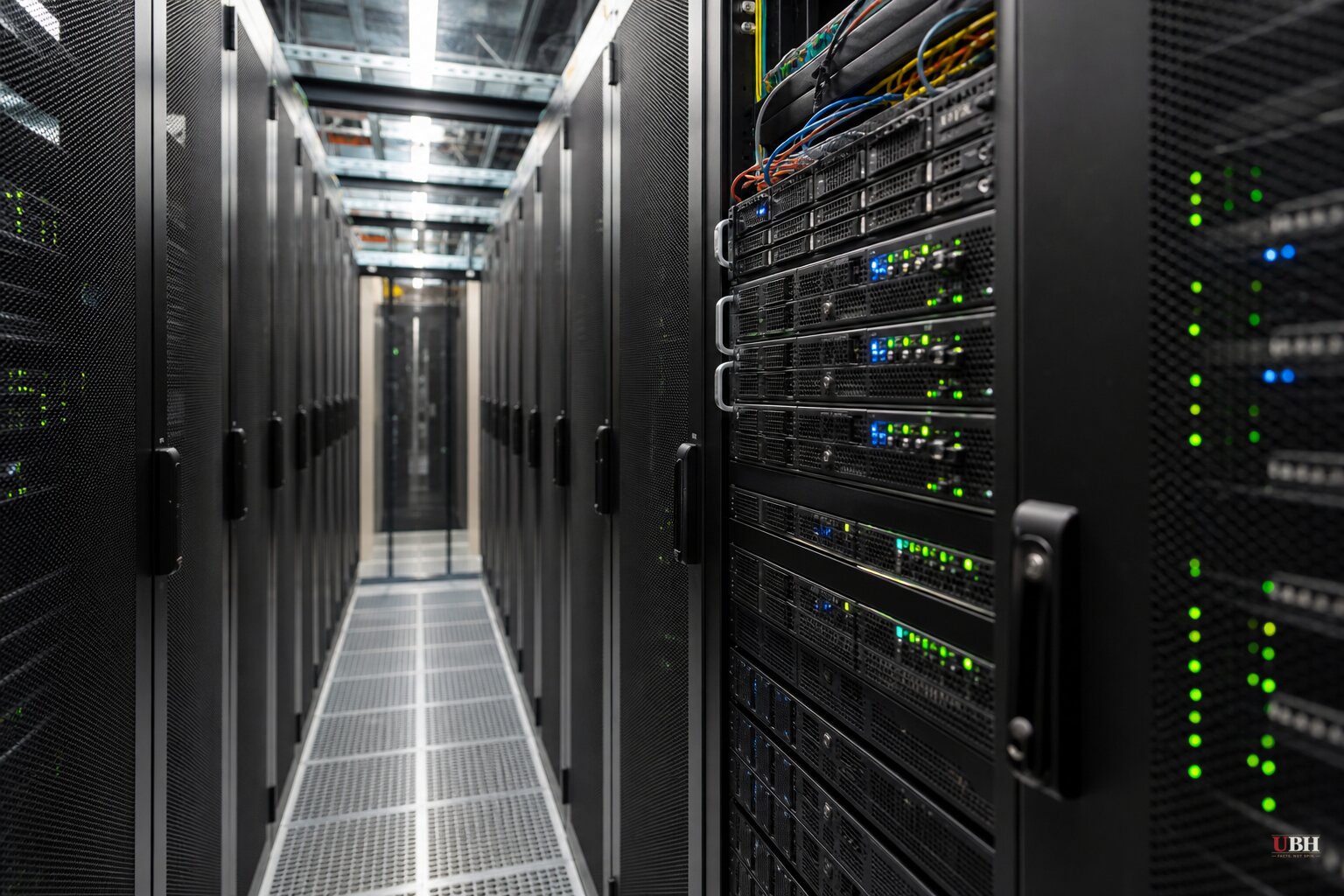
The Trump administration is drafting a ban on Chinese-made devices used inside American data centers, according to Reuters. The move targets the physical guts of the AI economy: networking switches, servers, storage systems, and the management chips that run them.
This follows a ban unveiled days earlier on new Chinese humanoid robots and power inverters, both added to a restricted list over fears they could serve as supply-chain vulnerabilities or remote-access points for a foreign adversary.
If AI is treated as a strategic national asset, the argument goes, the hardware training and running it shouldn't depend on components made by a geopolitical rival that could disrupt or spy on it.
Why data centers are next
Data centers are the physical core of the AI buildout, packed with the exact kind of gear Washington has already flagged as risky elsewhere. Networking switches, servers, and storage systems, along with the embedded management chips that control them, are the parts most likely to end up on a restricted list.
Any of that equipment could theoretically carry a hidden pathway back to a foreign vendor. That's the concern driving the administration's approach, though no specific case of compromised data-center hardware has been cited publicly in connection with this draft.
Enforcement is the hard part
Writing a ban is one thing. Enforcing it is another.
Restrictions like this get routinely undercut by resellers, relabeled parts, and shell subsidiaries that obscure where a component actually came from. Closing those loopholes is as much of the drafting effort as naming which devices are banned in the first place.
American data-center operators still rely on Chinese components in various places, and some networking and power equipment simply doesn't have non-Chinese equivalents available at the price and volume the current AI buildout demands. A ban that outruns the supply chain's ability to adapt risks raising costs for the very companies racing to build out US AI capacity.
Beijing isn't sitting still
China has already threatened retaliation over the earlier robot ban, including leverage over rare-earth minerals that Western manufacturers cannot easily source elsewhere, according to Reuters. China dominates global processing of these materials, and Western manufacturers have spent years trying and mostly failing to build alternative supply chains.
The pattern is now a rhythm: the US restricts a category of Chinese hardware, Beijing signals or threatens a countermeasure, and a global technology supply chain built over decades keeps getting unpicked piece by piece.
Washington isn't just acting alone, either. The US has been pushing allies, including Britain, to consider similar curbs, which would shrink the market for Chinese vendors far beyond what US action alone could do.
The tradeoff nobody's pretending away
There's a legitimate case for locking Chinese hardware out of American AI infrastructure. If Beijing can compromise the switches and servers running US data centers, that's a national security problem, not a trade dispute. Cutting China out of critical infrastructure has bipartisan support in Washington, and the robot and inverter bans that preceded this one moved with little public pushback.
But the administration has also been weighing restrictions on Chinese AI models themselves, a step American AI startups have specifically warned against. Their argument, according to Reuters, is that cutting off access to cheap, open-weight Chinese models would hurt American developers more than it would hurt China, since those models are often used as a low-cost foundation for US-built products.
Decoupling from Chinese hardware and software raises costs and creates friction for the American companies the policy is supposed to protect. The administration is betting that long-term security is worth the short-term price. Whether that bet pays off depends on how fast US and allied manufacturers can actually fill the gap Chinese vendors leave behind.
No final rule has been published, and Reuters reports this remains in draft form. The scope of covered devices, the timeline for enforcement, and how existing Chinese equipment already installed in US data centers would be handled are all still unresolved.
Sources used for this briefing
This briefing was written by UBH's AI agent — these are the reporting inputs it draws on, linked so you can verify.


