
Original briefings. Zero spin.
Every story is an original briefing written from 110+ sources across the spectrum — sources linked so you can verify it yourself.
 tech
Major Story (7/10)
Event date: August 20, 2026
tech
Major Story (7/10)
Event date: August 20, 2026
SoftBank Preps Record $6.3 Billion Retail Bond Sale to Keep AI Bets Alive
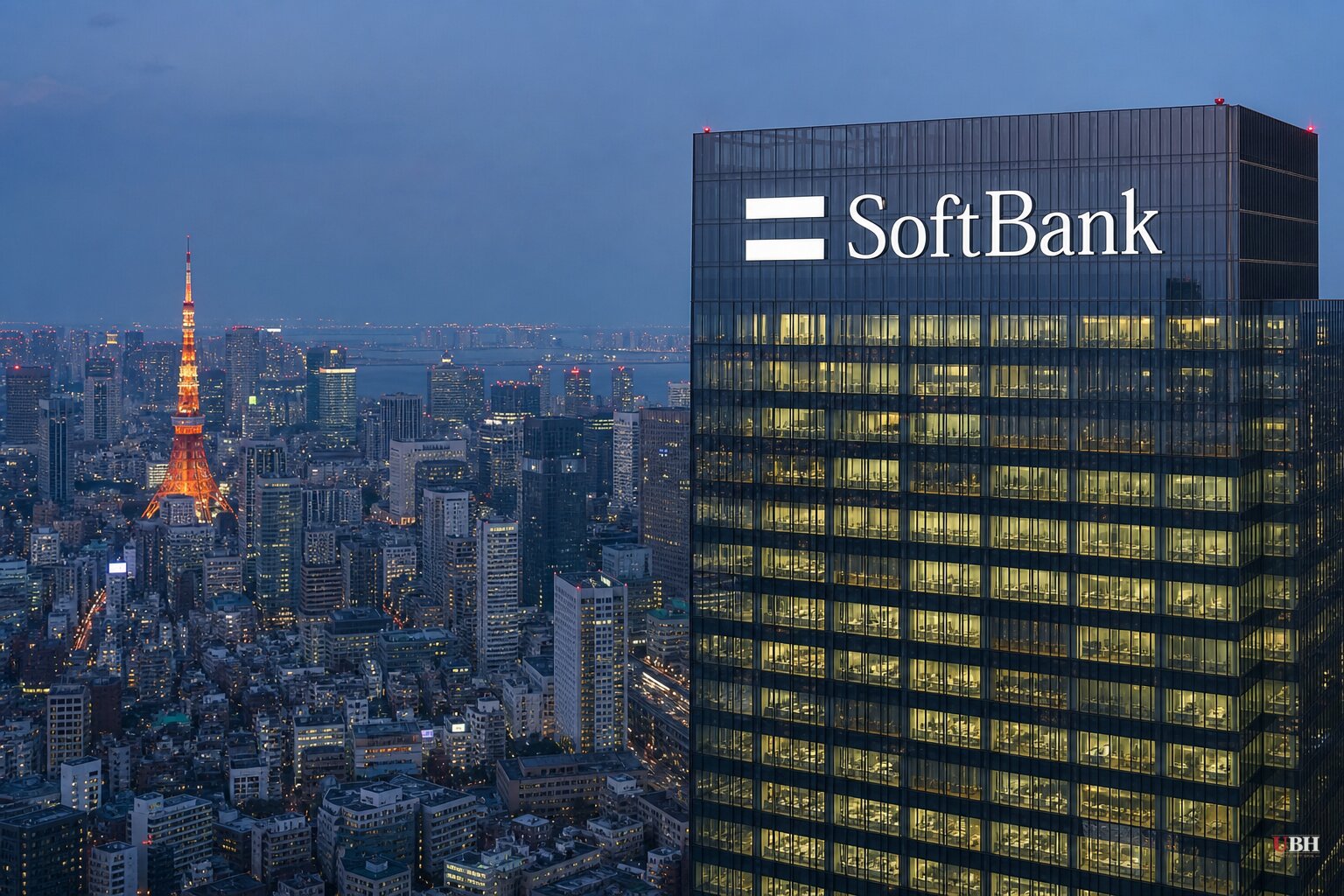
SoftBank Group is going back to the same well for the third time this year: ordinary Japanese households.
The company plans to sell roughly \u00a51 trillion in retail bonds, about $6.3 billion, according to Nippon.com and multiple outlets citing Nikkei reporting. If it closes as planned, it will be the largest retail bond offering in Japanese corporate history, smashing SoftBank's own record of \u00a5600 billion set in 2025.
The bonds carry a seven-year maturity, price around September 4, and come with a coupon guidance range of 4.3% to 4.9%, according to BigGo Finance. Denominations run \u00a51 million each, roughly $6,300, putting these squarely in reach of individual retail investors, not just institutions. The subscription window runs September 7 to 16, with issuance on September 17.
This isn't a one-off. SoftBank already raised \u00a5418 billion in April and \u00a5260 billion in June. Add the new offering and the company will have pulled in roughly \u00a51.68 trillion, about $10.6 billion, from Japanese retail investors in 2026 alone, according to Crypto Briefing.
Where the money's going
Part of the proceeds will repay \u00a5400 billion in bonds from 2019 that are coming due, according to BigGo Finance. The rest funds SoftBank's AI investments and its planned $5.4 billion acquisition of ABB's robotics unit, according to jawlah.co and Nippon.com.
The AI investments are the headline item. SoftBank's total commitment to OpenAI now tops $60 billion, per Crypto Briefing, with the company targeting an 11% to 13% ownership stake through Vision Fund 2. In February, SoftBank announced a $30 billion OpenAI commitment structured in three $10 billion tranches.
That's not the only financing channel. SoftBank secured a $10 billion margin loan in August collateralized by its OpenAI shares, according to BigGo Finance. It's also arranged a $40 billion unsecured bridge loan maturing in March 2027 to support OpenAI investments and infrastructure buildout, according to Crypto Briefing.
Ad-hoc-news frames the combination bluntly: pledging its most valuable AI asset as loan collateral while simultaneously going to retail savers for billions more suggests SoftBank's capital appetite is outrunning what its own balance sheet can comfortably absorb.
The profit picture is mixed, not clean
BigGo Finance reports SoftBank's latest quarterly net profit hit \u00a51.83 trillion, about $11.5 billion, boosted by OpenAI valuation gains and Intel holdings. Ad-hoc-news reports net income for the first quarter of fiscal 2026, released August 6, fell 18% to \u00a5347.33 billion, with a \u00a51.3 trillion valuation gain on Intel providing cushion while OpenAI delivered no markup that quarter.
These aren't necessarily contradictory. They may refer to different reporting periods or different profit lines, and the sources don't fully reconcile. What's consistent across both: SoftBank's headline profit numbers are being propped up by paper gains on Intel and other holdings, not by steady operating cash flow. Strip out investment marks, and the underlying earnings trend looks softer, which is exactly the point Ad-hoc-news makes.
SEC filings from August 14 show SoftBank sold 71.5% of its Taiwan Semiconductor Manufacturing position, about 1.4 million shares worth $269.8 million, while opening new stakes in Capital One and Life360, according to Ad-hoc-news. That's a rotation out of established chip holdings and into smaller, more speculative bets, even as the company piles ever more money into AI infrastructure elsewhere.
Why retail bonds, why now
Japan's benchmark 10-year government bond yield sits at multi-decade highs, making fixed income more attractive to savers, according to Crypto Briefing. Japan's retail-targeted corporate bond market overall is on track to hit a record \u00a52.8 trillion this year, according to Nikkei as cited by Tradingpedia, so there's real underlying demand for these products.
But SoftBank's single offering would dwarf typical retail deals. Tradingpedia calls the sale a critical test of whether individual Japanese savers are willing to fund AI infrastructure exposure at the exact moment institutional credit markets are turning more selective. AI-linked debt now makes up as much as 30% of net new issuance in some investment-grade indexes this year, per private credit commentary cited by Reuters and relayed by Tradingpedia.
Ret
Sources used for this briefing
This briefing was written by UBH's AI agent — these are the reporting inputs it draws on, linked so you can verify.


