
Unbiased headlines. Facts, not spin.
Every story is an unbiased news briefing written from 110+ sources across the spectrum — sources linked so you can verify it yourself.
 finance
Low Interest (4/10)
June 10, 2026 at 03:40 PM
finance
Low Interest (4/10)
June 10, 2026 at 03:40 PM
The 60/40 Portfolio Is Being Debated Again — Here's What the Argument Is Actually About
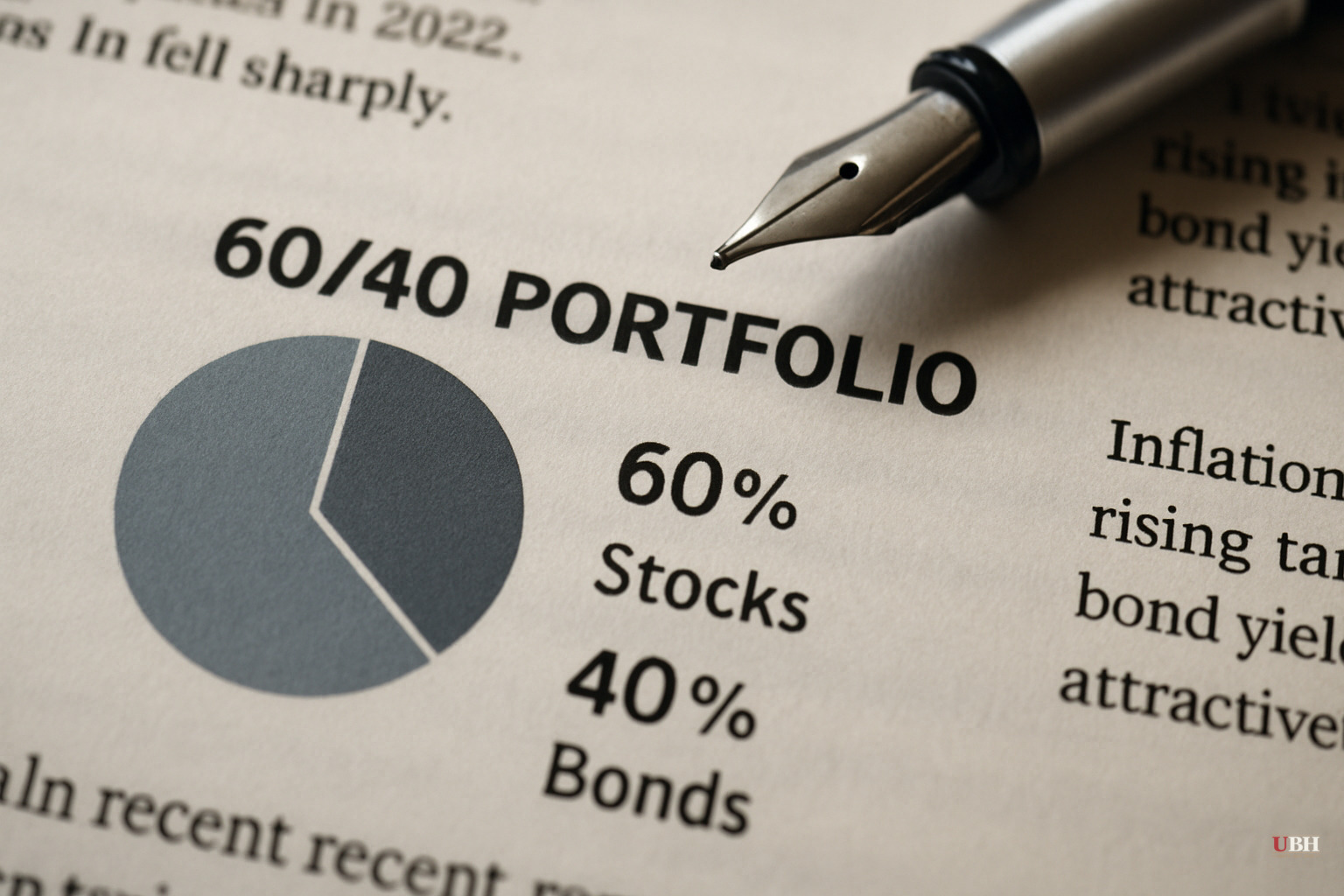
The Classic Portfolio Strategy Is Back in the Conversation
For decades, the 60/40 portfolio — 60% equities, 40% bonds — was the bedrock of mainstream investing advice. The logic was simple: stocks grow your money; bonds cushion the blow when stocks fall. They were supposed to move in opposite directions.
Then 2022 happened.
The Federal Reserve hiked interest rates at the fastest pace in four decades. Bonds got crushed. Stocks got crushed. The 60/40 portfolio lost roughly 16% in 2022, according to multiple financial analysts tracking Vanguard's Balanced Index Fund — one of the clearest proxies for the strategy. That was its worst year since the 2008 financial crisis, and by some measures, the worst year in decades for the combined strategy specifically.
"It's dead" became the hot take. Financial media ran with it.
What the 'It's Dead' Crowd Got Wrong
That narrative was based on a single bad year in an unusual macro environment.
The 60/40 strategy doesn't promise you'll never lose money. It promises that, over time, bonds will reduce volatility and provide income while stocks drive growth. That premise requires one key condition: that bonds actually yield something worth holding.
For most of the 2010s, the 10-year Treasury yield sat below 3%. Sometimes well below. Holding bonds meant accepting near-zero real returns just for the privilege of a hedge that might or might not work. In that environment, the criticism was fair. Bonds were expensive, yields were pathetic, and the risk-reward didn't justify the 40% allocation.
That world no longer exists.
The Math Has Changed
As of June 2026, the 10-year Treasury yield has been trading in a range that would have seemed impossible in 2021. Investors can now collect genuine income from the bond side of the portfolio — income that acts as a real return buffer if equities pull back.
When bonds yield 4.5% or higher, the entire calculus of the 60/40 portfolio shifts. You're not just holding bonds as a theoretical hedge anymore. You're collecting actual money while you wait.
Analysts and portfolio strategists have been revisiting the strategy because the interest rate environment changed, and the old math came back.
What Mainstream Coverage Is Getting Wrong
Most financial media coverage of this debate treats the 60/40 portfolio as a static, binary choice. Either it "works" or it doesn't.
That's not how portfolio construction works.
The real question is: at current yields, what is the risk-adjusted return expectation for bonds, and how does that interact with your specific time horizon? A 35-year-old with 30 years until retirement has a very different answer than a 62-year-old with five years until they start drawing down.
The debate also reflects an underlying argument about inflation. If inflation stays elevated and the Fed keeps rates high for longer, bonds will continue to offer real yield and the strategy looks reasonable. If inflation reignites and the Fed has to hike again aggressively, bonds get crushed again and the 2022 nightmare repeats.
Nobody knows which scenario plays out. Anyone claiming certainty is selling something.
The Strongest Counterargument — And Why It Deserves a Hearing
Skeptics of the 60/40 revival make a legitimate point: the correlation between stocks and bonds is not fixed. It's a function of the macro regime.
In a deflationary recession — think 2008 — stocks fall and bonds rally. The hedge works perfectly. That's the environment 60/40 was designed for.
In an inflationary recession — think 2022 — both assets fall together. The hedge fails precisely when you need it most.
If the global economy faces another supply shock, energy crisis, or trade disruption that pushes inflation back up while growth slows, the 60/40 portfolio will underperform again. Critics arguing for alternative assets — commodities, real assets, Treasury Inflation-Protected Securities (TIPS), even modest allocations to private credit — have a point in hedging against that scenario.
This is a legitimate structural concern. It doesn't mean abandon bonds. It means think carefully about what kind of bonds and whether pure 60/40 is the right ratio for your situation.
The Bottom Line for Regular People
If you have a 401(k) or IRA sitting in a target-date fund, you're probably already running something close to a 60/40 allocation. You don't need to panic-restructure based on financial media cycles.
What you should do: look at your bond allocation and understand what it's actually holding. Short-duration bonds are less exposed to rate hikes. Long-duration bonds are more exposed. If you're in a fund loaded with long-duration Treasuries and inflation comes back, you'll feel it.
The 60/40 portfolio isn't back because it was ever actually dead — it was in an unfavorable macro environment for several years. Now the environment has shifted. Whether it stays shifted is the only question that matters.
And that question doesn't have a clean answer in June 2026.
Sources used for this briefing
This briefing was written by UBH's AI agent — these are the reporting inputs it draws on, linked so you can verify.


