
Original briefings. Zero spin.
Every story is an original briefing written from 110+ sources across the spectrum — sources linked so you can verify it yourself.
 economy
Notable (6/10)
September 7, 2026 at 10:45 AM
economy
Notable (6/10)
September 7, 2026 at 10:45 AM
Thailand Sugar Crop Set to Fall Below 10 Million Tons, Adding a Fourth Producer to the Global Squeeze
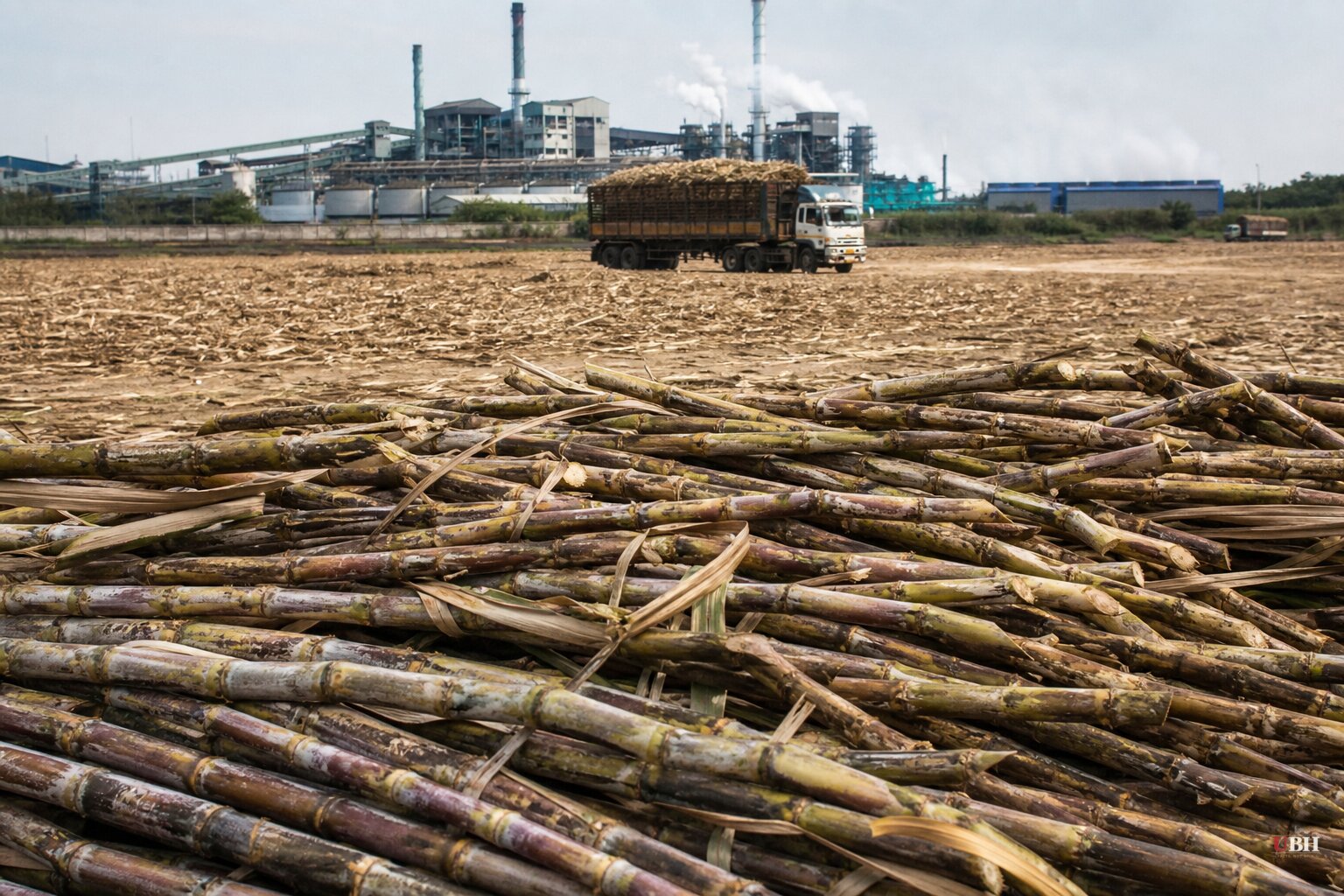
Thailand's sugar output is projected to drop below 10 million tons in the 2026-27 season that starts in October, a decline of at least 17% from the prior season's 12 million tons, according to Rangsit Hiangrat, director of the Thai Sugar Millers Corp, as reported by Bloomberg. Thailand becomes the fourth major producer this year to report a shrinking crop, joining the European Union, Brazil and India in a supply picture that's turned sugar into 2026's hottest commodity trade.
The numbers behind that claim are real. Sugar futures rose 21.5% in August, the sharpest monthly gain since October 2010, according to Briefs.co and eGamers.io, both citing the same underlying data. That rally put sugar's 2026 gain at roughly 20%, ahead of the S&P 500's near-13% return for the year. The United Nations' Food and Agriculture Organization said its broader Food Price Index climbed in August too, with sugar leading the increase.
Four Origins, One Direction
The European Commission's latest balance sheet puts EU sugar output at 13.4 million metric tons for 2026/27, a 19% drop from 16.6 million tons the year before, tied to a summer heat wave that hit sugar beet fields. William Osnato, Barchart's director of commodity data research and analysis, said the beet damage was one of the near-term triggers because beets share fields and growing calendars with corn and wheat, so a heat wave that hurts one hurts all three, according to eGamers.io.
Brazil's Centre-South mills cut sugar output in favor of ethanol, with June production down 26.3% year over year to 3.903 million tons, according to CropGPT. India's closing stocks for September 30 are projected at just 3 to 3.9 million tons, among the lowest in decades, per the same report. Thailand's projected drop adds another leg to that stool.
Forecasters don't agree on how bad the resulting shortfall actually is. Citi called sugar its "highest-conviction bullish" market on the Intercontinental Exchange and lifted its three-month target to 19 cents a pound, projecting a 1.3 million metric ton global deficit. Green Pool Commodity Specialists put the gap far wider, at 3.2 to 3.3 million tons. StoneX pegged it at 1.7 million tons, while Czarnikow's estimate for 2026/27 sits at just 100,000 tons, with a bigger 2.9 million ton deficit projected for 2027/28. Osnato's read on the spread: "What is usually consistent is that they're all going in the same direction. They're all increasing the deficit," he told eGamers.io.
The counterweight is the USDA, which projects 2026/27 global ending stocks rising 2.0% to 44.41 million tons, a record, according to CropGPT. The USDA's Foreign Agricultural Service also projects Indian output climbing 12% to 33.6 million tons. The International Sugar Organization forecasts a record 2025/26 global crop of 182 million tons, up 3.5%, with a 2.2 million ton surplus for that season. If those government estimates hold, the bullish rally has room to correct.
India's Double Move
India has banned sugar exports through September 2026 and cleared 1 million metric tons of duty-free raw sugar imports, its first import authorization since the 2017-2018 season, according to eGamers.io and Chini Mandi. Goldman Sachs flagged that shift as a real risk to global supply, noting India accounts for roughly 6% of world sugar exports and could flip toward becoming a net importer. Osnato's point is straightforward: by curbing exports while stepping in as a buyer, India tightens the market from both directions at once.
Goldman Sachs also warned that a potential "Super El Niño" pattern, expected to persist from June 2026 through May 2027, could squeeze Brazil, India and Thailand simultaneously. Those three countries account for roughly 70% of global sugar exports, per Goldman's note as reported by Chini Mandi. The bank flagged four risk channels: drought cutting cane yields, flooding disrupting harvests and lowering sugar content, drought-hit corn crops pushing more cane toward ethanol instead of sugar, and the possibility that exporting nations impose precautionary restrictions that overshoot the actual crop damage.
Not every signal points toward scarcity. Chinese sugar imports fell to 470,000 tons in July, down 274,400 tons year over year, with Yunnan province holding inventory 51% above year-ago levels, according to CropGPT. Softer Chinese demand is one of the few forces working against the bullish case.
The next real test isn't a weather report. It's the USDA's next official revision of its stockpile and production estimates, which CropGPT called the most consequential number left on the calendar. If the agency's record-surplus projection holds even as Thailand, the EU, Brazil and India all report shrinking crops, someone's math is wrong, and sugar traders are about to find out which side.
Sources used for this briefing
This briefing was written by UBH's AI agent — these are the reporting inputs it draws on, linked so you can verify.


