
Unbiased headlines. Facts, not spin.
Unbiased Headlines is an independently owned news organization. We bring you the facts, not opinions, written fresh from 110+ named sources. Sources linked so you can verify it yourself.
 health
Notable (6/10)
health
Notable (6/10)
Texas AG Paxton sues Gerber and Nestlé, alleging baby food safety claims hid heavy metal test results
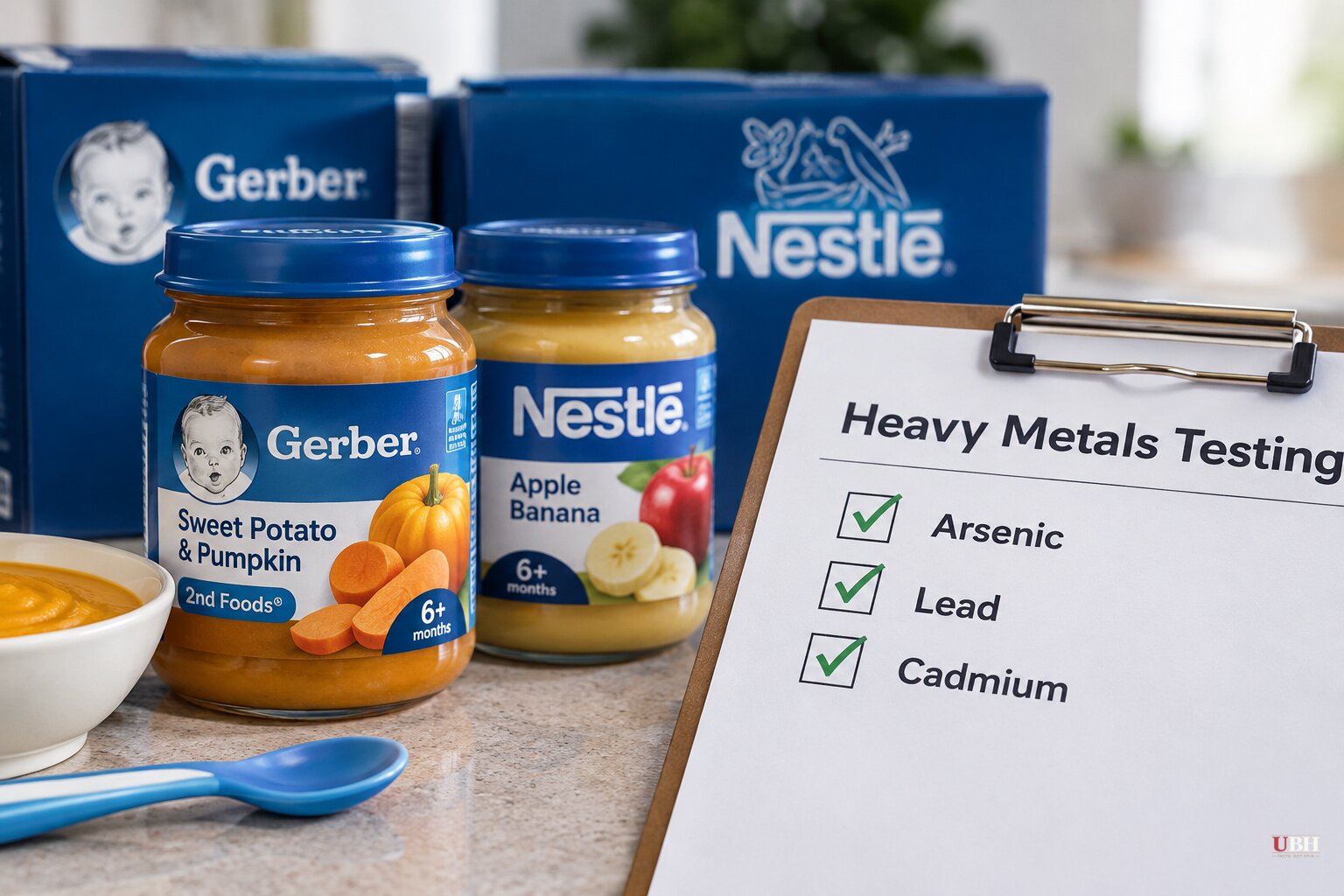
Texas Attorney General Ken Paxton is suing Gerber Products Co. and its parent, Nestlé USA Inc., accusing them of misleading parents about toxic heavy metals in Gerber baby food. His office announced the suit today, Oct. 14. The 68-page petition was filed Oct. 9 in Collin County district court.
The state is suing under the Texas Deceptive Trade Practices Act. Its core claim is that Gerber sold its food as safe, pure and rigorously tested, and recommended by medical professionals, while its own testing showed arsenic, lead and cadmium in ingredients.
"Gerber promised parents its food was safe and rigorously tested. Its own tests showed toxic metals in the food," Paxton said in a news release. "When a company makes promises about what parents feed their babies, I will hold it accountable to ensure those promises are kept."
What the petition alleges
These are the state's allegations, not findings.
- Gerber used 67 batches of rice flour between 2017 and 2019 with inorganic arsenic at more than nine times the federal limit for bottled water.
- Carrots tested at cadmium levels as high as 17 times the bottled-water limit.
- Sweet potatoes tested at lead levels approaching 10 times that limit.
- Gerber rarely tested for mercury.
- Gerber mostly tested selected ingredients, not the finished food a baby eats.
The petition also cites a 2021 episode in which an Alaska state laboratory found two samples of Gerber rice cereal above the federal arsenic limit, according to Paxton's office. Competitor Beech-Nut then recalled its infant rice cereal and pulled the product after testing showed elevated arsenic. The petition says Gerber issued no recall or warning over heavy metals. Gerber has recalled products for plastic and choking hazards, the attorney general's office said, but never for heavy metals.
Paxton's office also notes that there is no established safe level of lead or inorganic arsenic exposure for babies, and that heavy metals can affect the nervous system.
The QR code argument
Gerber began posting test results behind QR codes on its labels in 2025 to comply with California law. The petition says that doesn't fix anything. "The heavy metals in the food did not change, and neither did the safety claims on the front of the package," Paxton said. "A code on the back of the jar does not cure a false promise on the front."
Gerber's response
Gerber disputes the claims. In a written statement, a company spokesperson said: "Nothing is more important than the safety and quality of our baby food, and it remains undisputed that Gerber products meet FDA limits for heavy metals."
The company says every product goes through multiple quality checks and testing for more than 500 toxins and contaminants, and that its standards often exceed federal requirements. It says heavy metals occur naturally in the environment and are absorbed by crops in trace amounts, so they can't be eliminated from the food supply. Gerber says it works to reduce them through ingredient sourcing, supplier requirements, testing and quality controls, and that it supports the FDA's Closer to Zero Action Plan on children's exposure to contaminants.
The yardsticks differ. The petition measures against the federal bottled-water limit, while Gerber points to FDA limits for its products. Most of the cited numbers are for ingredients in 2017 through 2019, not for finished jars sold today. Whether a court treats the ingredient results as proof of deceptive marketing is the central legal question.
Money at stake
Texas seeks civil penalties of up to $10,000 per violation. The petition says the total could exceed $10 million. It also asks for restitution and other costs.
Part of a wider probe
Paxton's office sent Civil Investigative Demands to multiple baby food makers in August 2025. In an earlier settlement announced by the office, Plum Organics agreed to follow FDA guidance on lead, adopt EU guidance for cadmium and inorganic arsenic, hold an internal 10 parts per billion standard for mercury in its pouches, and keep publishing test results online. Paxton called Plum the first company to take those steps and urged others, Gerber by name, to match them.
The suit comes weeks before the November midterms, in which Paxton, the Republican nominee, faces Democratic state Rep. James Talarico for a U.S. Senate seat. No source ties the timing of the filing to the campaign.
No trial date has been announced. Gerber has not said how it will respond in court. Paxton says his office is still investigating the rest of the baby food industry, and the other companies that received demands in 2025 have not announced settlements.
Sources used for this briefing
7 links from 7 independent newsrooms (syndicated copies of the same report count once)
These are the sources it draws on, linked so you can verify.


