
Unbiased headlines. Facts, not spin.
Unbiased Headlines is an independently owned news organization. We bring you the facts, not opinions, written fresh from 110+ named sources. Sources linked so you can verify it yourself.
 health
Notable (6/10)
Event date: October 8, 2026 ·
health
Notable (6/10)
Event date: October 8, 2026 ·
CDC Director's Office Set Aside $1.6 Million for Guinea-Bissau Newborn Hepatitis B Trial, Rolling Stone Reports
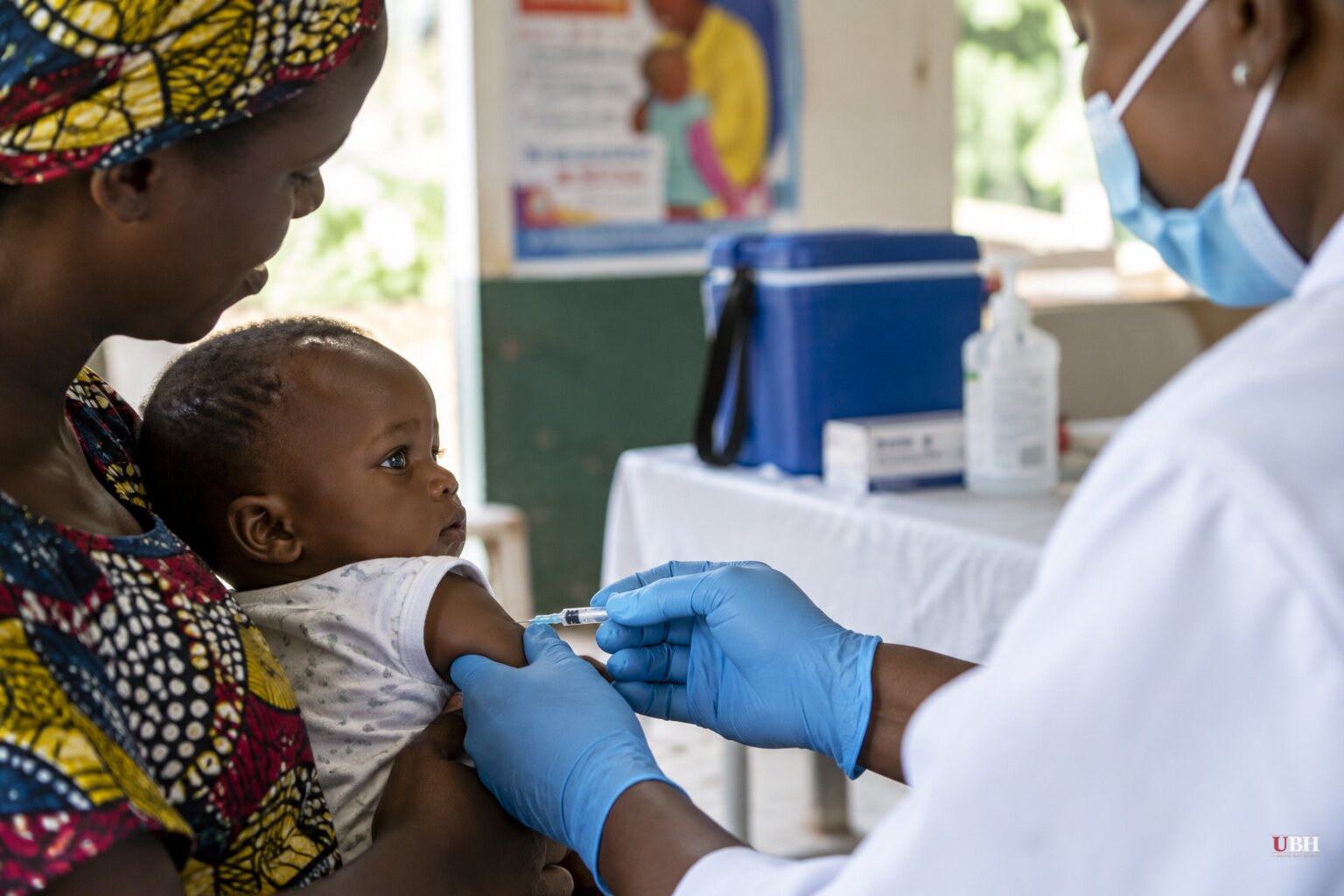
Since the hepatitis B vaccine trial in Guinea-Bissau was suspended amid an international uproar over its ethics, the study has been revised and the money to run it has now come into view. In late September, a staff member in the CDC director's office told the agency's budget office to set aside $1.6 million for the trial, according to Rolling Stone's reporting, which relies on two sources with knowledge of the study plans.
Those sources told Rolling Stone the funds come from money Congress directed to CDC global health security programs.
Where the money comes from
Rolling Stone reports it is unclear how much Dr. Erica Schwartz, confirmed by the Senate as CDC director two months ago, knew about the budget request from her office. Her appointment came amid questions about how independent she would be from Health Secretary Robert F. Kennedy Jr.
A CDC employee quoted by Rolling Stone, without being named, described the purpose of the global health security account this way: "Everyone agrees, the point of global health security is to fight [the diseases] overseas, so they don't come here."
Rolling Stone points to an Ebola outbreak in the Democratic Republic of Congo and questions about a possible lab accident in Eastern Siberia that may have released plague bacteria. Those are the kinds of threats that account is meant to address.
Rolling Stone also reports that the grant money the Danish researchers needed was about to expire in the CDC's budget. That deadline is the reason the study moved forward when it did.
What the trial would do
The study would be led by Christine Stabell Benn and Peter Aaby, married researchers at the University of Southern Denmark. It is a randomized trial of 14,000 newborns in Guinea-Bissau. Half would get the hepatitis B birth dose and half would not. The researchers want to know whether the birth dose, used for decades, has negative effects such as skin ailments or neurodevelopmental disorders.
Benn and Aaby are also facing accusations of scientific misconduct unrelated to this trial. The Danish Committee on Research Misconduct is reviewing them, according to Rolling Stone.
The researchers' defense and the critics
The researchers justified the design as matching the standard of care in Guinea-Bissau. The birth dose is not routinely given there, and it is slated to become the official recommendation by 2028. Under the protocol, every participant would receive the vaccine starting at six weeks of age, as is current practice in the country.
After the World Health Organization denounced the study, the researchers revised the protocol to add maternal screening. The revised protocol, posted on the website of the Bandim Health Project, which leads the study, states: "Babies of mothers who are known to have hepatitis B, test positive, or whose status cannot be determined will not be randomized and will be offered the birth-dose vaccine promptly."
Hepatitis B specialists say that does not fix the problem. One in five adults in Guinea-Bissau has hepatitis B. "Maternal screening alone cannot prevent transmission, and this study will leave infants vulnerable to exposure through undetected maternal infections, household contacts, or other routes of early childhood transmission," said Dr. Robert Gish, director of the Hepatitis B Foundation.
Dr. Paul Offit was blunter. "It's a wholly unethical trial, and it shouldn't be allowed," he said.
Untreated infection can lead to cirrhosis and liver cancer. About 7,000 of the enrolled infants would not receive a birth dose.
A compressed ethics review
An ethics committee at the University of Southern Denmark was added as a safeguard after irregularities surfaced in an earlier ethics review in Guinea-Bissau. Rolling Stone reports the expiring funds gave that committee only about a month to decide whether to affirm the study, and that the time pressure led it to shorten its deliberations.
Dr. Arthur Caplan, founding head of the medical ethics division at NYU Grossman School of Medicine, said the review should have been slowed down, not speeded up. "When subjects are in peril, in a dirt-poor nation, where charges of exploitation are flying, and knowing we have a treatment" that can help subjects, "that is the wrong place to hurry the review."
What is still open
The $1.6 million is a budget set-aside requested by a staffer, and the trial has not cleared every approval. The open questions are whether it will be approved and whether the CDC will actually spend federal money on it. Who in the director's office made the request is also unanswered, as is how much Schwartz knew. The Danish misconduct review of the lead researchers remains pending.
Sources used for this briefing
4 links from 3 independent newsrooms (syndicated copies of the same report count once)
These are the sources it draws on, linked so you can verify.


