
Unbiased headlines. Facts, not spin.
Unbiased Headlines is an independently owned news organization. We bring you the facts, not opinions, written fresh from 110+ named sources. Sources linked so you can verify it yourself.
 health
Notable (6/10)
health
Notable (6/10)
CDC Plans to Cut National Health Interview Survey From 490 Adult Questions to About 200 to 225 by 2028
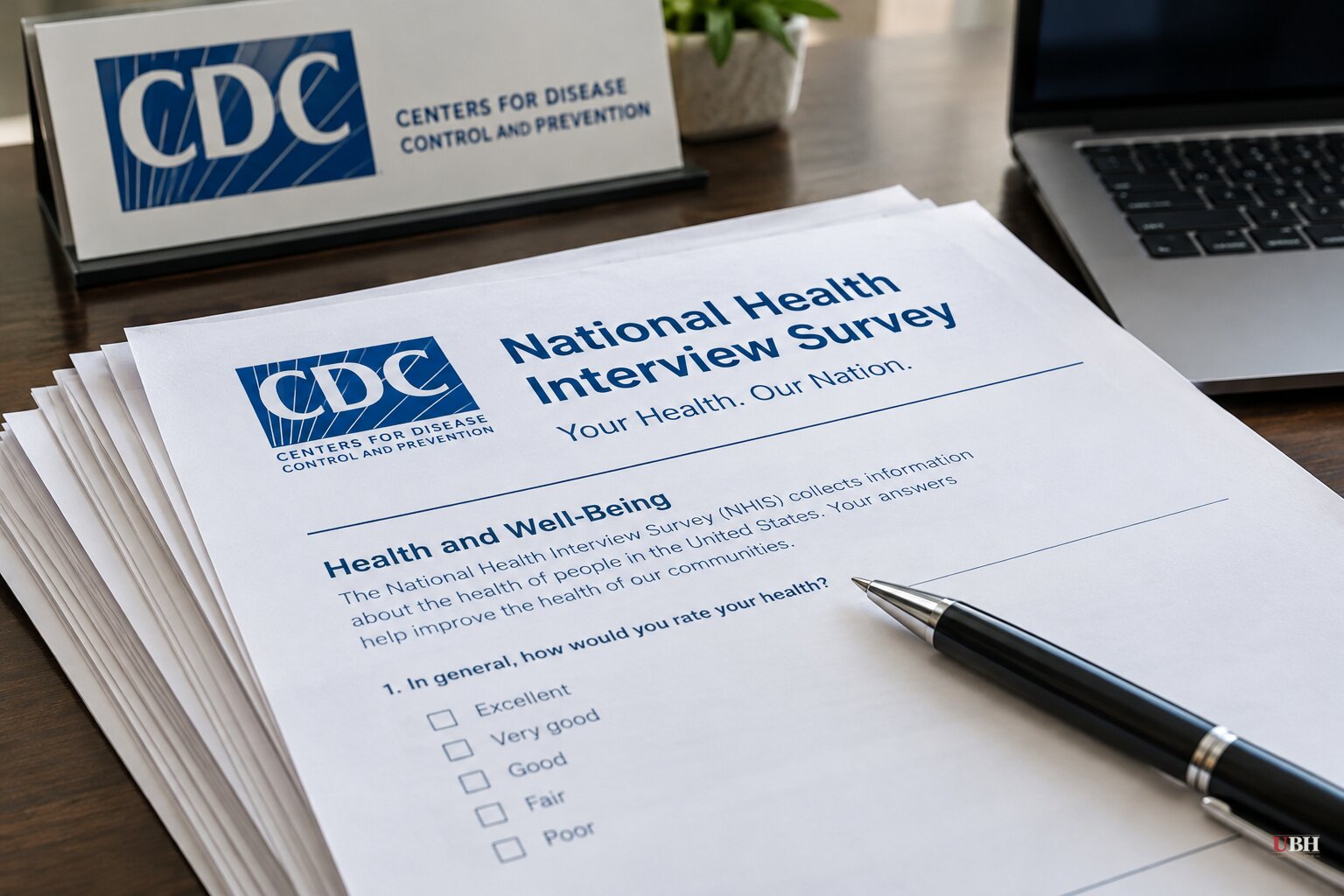
The federal government plans to dramatically shorten its most influential health survey. The Centers for Disease Control and Prevention's Stephen Blumberg, who oversees the National Health Interview Survey, said the 2028 questionnaire is expected to have about 200 to 225 adult health questions, down from 490 today.
That is a cut of more than half. The change is framed as cost-saving and as a response to a survey that has struggled for years with declining response rates.
What the survey is and what it costs
The National Health Interview Survey was first conducted in 1957. Census Bureau workers run it every year on behalf of the CDC, at a cost of $40 million annually. Roughly 30,000 households answer the questions each year.
Its results show up everywhere. They have shaped what the public knows about how common chronic fatigue syndrome is, how many people get X-rays, what share of U.S. children suffer seizures and how many Americans have health insurance. The survey is also a baseline for tracking progress or backsliding on obesity and smoking.
Why officials say it has to shrink
The problem is participation. The survey can take an hour or more and has traditionally relied on an in-person interviewer. Blumberg said the redesign should bring it down to about a half hour.
"People are busy. They're more protective of their privacy, and some don't trust the government to protect their data and use it only for statistical purposes," Blumberg said. "Fewer people see sharing information with the government as their civic duty."
Those are real constraints. A survey that fewer households are willing to complete produces weaker data no matter how many questions it asks. And a $40 million line item that takes an hour per household is a fair target for a trim.
The survey has typically been updated every 15 to 20 years. The most recent version went into the field seven years ago, which has led some advocates to ask why it is being overhauled so soon.
The disability data at risk
The questions proposed for removal cover memory, fatigue, arthritis, and difficulty walking or climbing stairs. Others ask about the use of hearing aids, canes, wheelchairs and scooters.
Some advocates and researchers say the shorter survey would undercount disability. In their estimate, as many as a quarter of wheelchair users and more than a third of people who are blind or deaf could be miscategorized as not disabled. They argue that would leave the government unable to recognize the health needs of many disabled Americans, or to measure the damage from changes to Medicaid and other health insurance programs.
"We just won't know any of that anymore," said Scott Landes, a Syracuse University sociology professor who researches people with disabilities.
Those figures are projections from advocates and researchers, not CDC findings. The agency has not published its own estimate of how many people the shorter questionnaire would misclassify.
What is still undecided
The cuts are still being worked out. Officials say the final trimming will not be as severe as what earlier proposals suggested. Blumberg said officials are still determining exactly how much will be cut.
That leaves the central question open. The 200 to 225 range is a target, and the CDC has not said which disability questions, if any, will stay in the 2028 version. The answer will determine whether the shorter survey can still identify wheelchair users and people who are blind or deaf at the rates the current one does.
The survey's own counts are the yardstick for the changes that critics worry about. If the questions that measure disability are gone, there will be no comparable national baseline to check their warnings against.
Sources used for this briefing
7 links from 6 independent newsrooms (syndicated copies of the same report count once)
These are the sources it draws on, linked so you can verify.


