
Unbiased headlines. Facts, not spin.
Unbiased Headlines is an independently owned news organization. We bring you the facts, not opinions, written fresh from 110+ named sources. Sources linked so you can verify it yourself.
 health
Major Story (8/10)
health
Major Story (8/10)
Kenya confirms second Ebola case as Congo outbreak reaches 9,144 confirmed cases
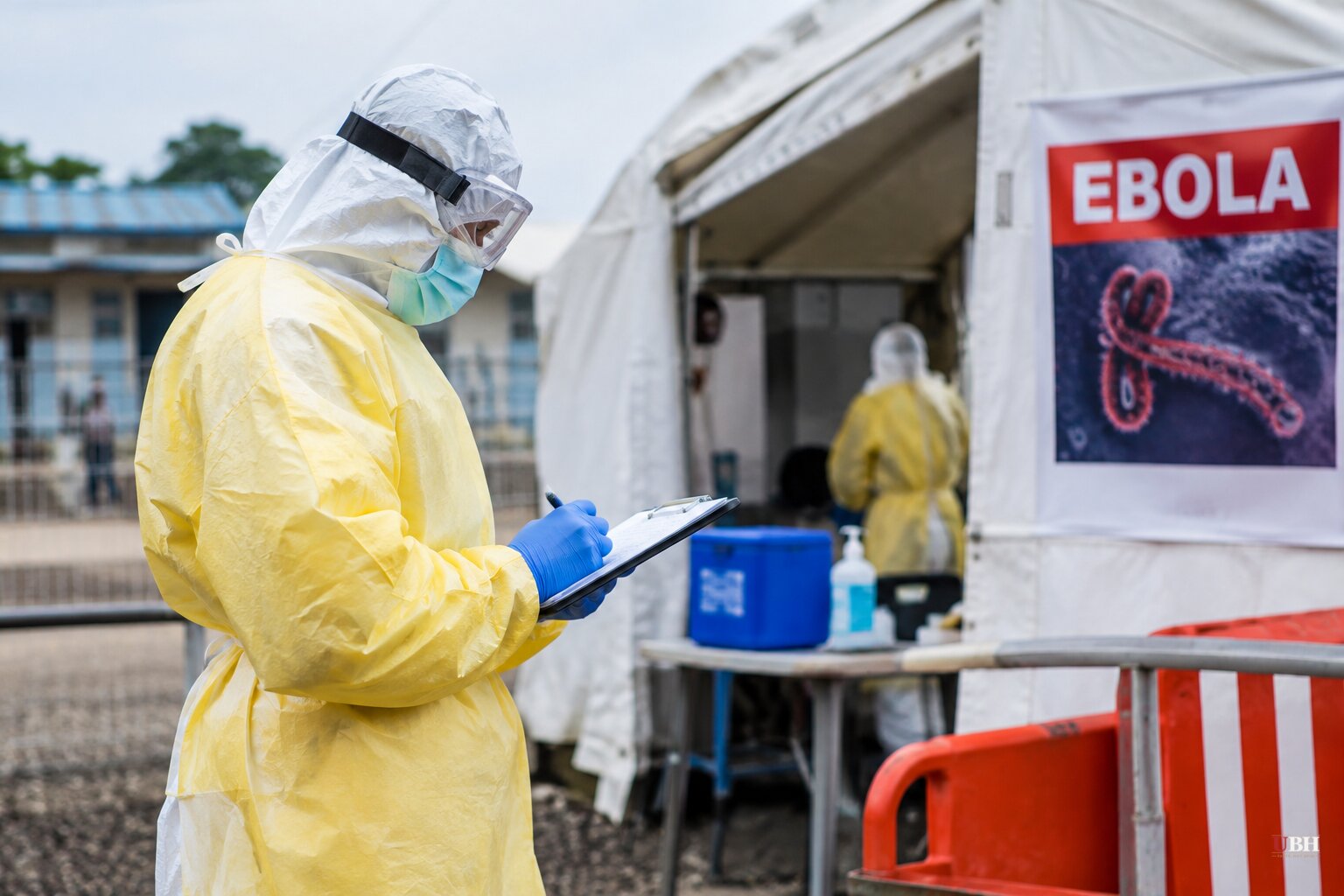
Since Kenya announced its first imported Ebola case on Oct. 6, the Democratic Republic of the Congo outbreak has produced a second infection on Kenyan soil.
Kenya's Health Ministry said in a statement today, Oct. 14, that a 39-year-old close relative of the first patient tested positive. The man developed symptoms Tuesday while already in quarantine. The ministry said the two infections are linked and that there is "no evidence of spread in the community."
The ministry also said early detection "improves his chances of recovery."
The Kenya chain
The first patient was a 40-year-old Kenyan who had been living in Congo. He fell ill there and was treated at two health facilities. He then traveled through Uganda to Kenya, was hospitalized, tested positive and died. Newsweek reported the death date as Oct. 5.
Kenyan officials have put the number of identified contacts between 122 and 128. On Oct. 11, Kenya's Cabinet Secretary for Health said 108 of the first patient's 122 listed contacts were in quarantine and symptom-free. Newsweek reported that five other contacts were outside the country and authorities there were notified.
The second patient came from that quarantined group. That means he was already being monitored when he became symptomatic, which is the outcome contact tracing is built to produce.
As of Oct. 13, 108 contacts were in quarantine and undergoing daily clinical and temperature checks for 21 days following their last potential exposure, according to reporting citing the Kenyan Ministry of Health. Authorities were still working to trace 15 additional contacts. Officials are also assessing people who interacted with the second patient after he developed symptoms, including quarantine personnel and health workers.
Where the Congo numbers stand
The European Centre for Disease Prevention and Control reports 9,144 confirmed cases and 4,410 deaths in Congo through Oct. 12. That is a case-fatality rate of about 48 percent.
On Oct. 12 alone, Congo reported 79 new confirmed cases and 11 deaths. Ituri accounted for 40 of the new cases, North Kivu for 27 and Haut-Uele for 8.
Ituri remains the center of the outbreak with 6,734 cases and 3,177 deaths across 28 of its 36 health zones. North Kivu has 1,938 cases and 1,102 deaths. Haut-Uele has 391 cases and 163 deaths.
Across seven provinces, 65 of 167 health zones are affected. The ECDC says 899 patients are hospitalized in isolation and 2,418 have recovered. It also says 77.6 percent of identified case contacts are under follow-up. That leaves nearly a quarter of contacts not being tracked.
The ECDC says Congo's data are under continuous review and harmonization, so totals can shift. The CDC's tally as of Oct. 14 lists 9,167 total confirmed cases and 4,413 confirmed deaths across all affected countries.
Why this outbreak moves fast
The CDC calls this the second-largest Ebola outbreak on record and says it is spreading substantially faster than earlier ones. It passed 1,000 confirmed cases within 40 days of the response being activated. The 2018 outbreak in Congo took about 235 days to reach the same mark.
The CDC cites limited health infrastructure, ongoing conflict, violence against health workers and shortages of protective equipment. It says the violence and the shortages are leading to health workers becoming infected while treating patients. It also warns that frequent cross-border movement raises the risk of spread to Uganda, South Sudan, Rwanda and beyond.
The Kenya case fits that warning. The first patient crossed two borders before he was hospitalized.
Kenya's reading is more reassuring. Its ministry says both infections trace to one known chain and that nothing points to transmission in the wider community. The CDC's own warning is about movement across borders, which is how the virus reached Kenya in the first place.
The WHO says there is currently no licensed vaccine or specific treatment for the Bundibugyo species involved in the outbreak, although work is underway to test potential candidates.
Other countries and the U.S. risk
Uganda reported 21 confirmed and probable cases and three deaths, according to the CDC. The ECDC says the World Health Organization declared Uganda's outbreak over on Aug. 25 after 42 days without a new confirmed case.
France reported an imported case on June 24. U.S. citizens infected in Congo were medically evacuated to Germany in May and again in July. A health worker who tested positive on Sept. 29 was evacuated to Leiden University Medical Center in the Netherlands, where the patient was admitted to high-level isolation on Oct. 1.
The CDC says no Ebola cases tied to this outbreak have been confirmed in the United States. It rates the likelihood of spread to the country as "very low" and the overall risk to Americans and travelers as low.
Newsweek said it asked the WHO, the CDC and Africa CDC for comment.
What to watch
Kenya's second patient is the test of its containment. About 108 contacts remain in quarantine, and a second case emerged from inside that group. Whether any more of them develop symptoms will decide if this stays a two-case chain.
Sources used for this briefing
4 links from 3 independent newsrooms (syndicated copies of the same report count once)
These are the sources it draws on, linked so you can verify.


