
Unbiased headlines. Facts, not spin.
Unbiased Headlines is an independently owned news organization. We bring you the facts, not opinions, written fresh from 110+ named sources. Sources linked so you can verify it yourself.
 health
Notable (6/10)
Event date: October 10, 2026 ·
health
Notable (6/10)
Event date: October 10, 2026 ·
WHO Still Has No Diagnosis for Russian Lab Worker's Death and Calls Risk Undetermined
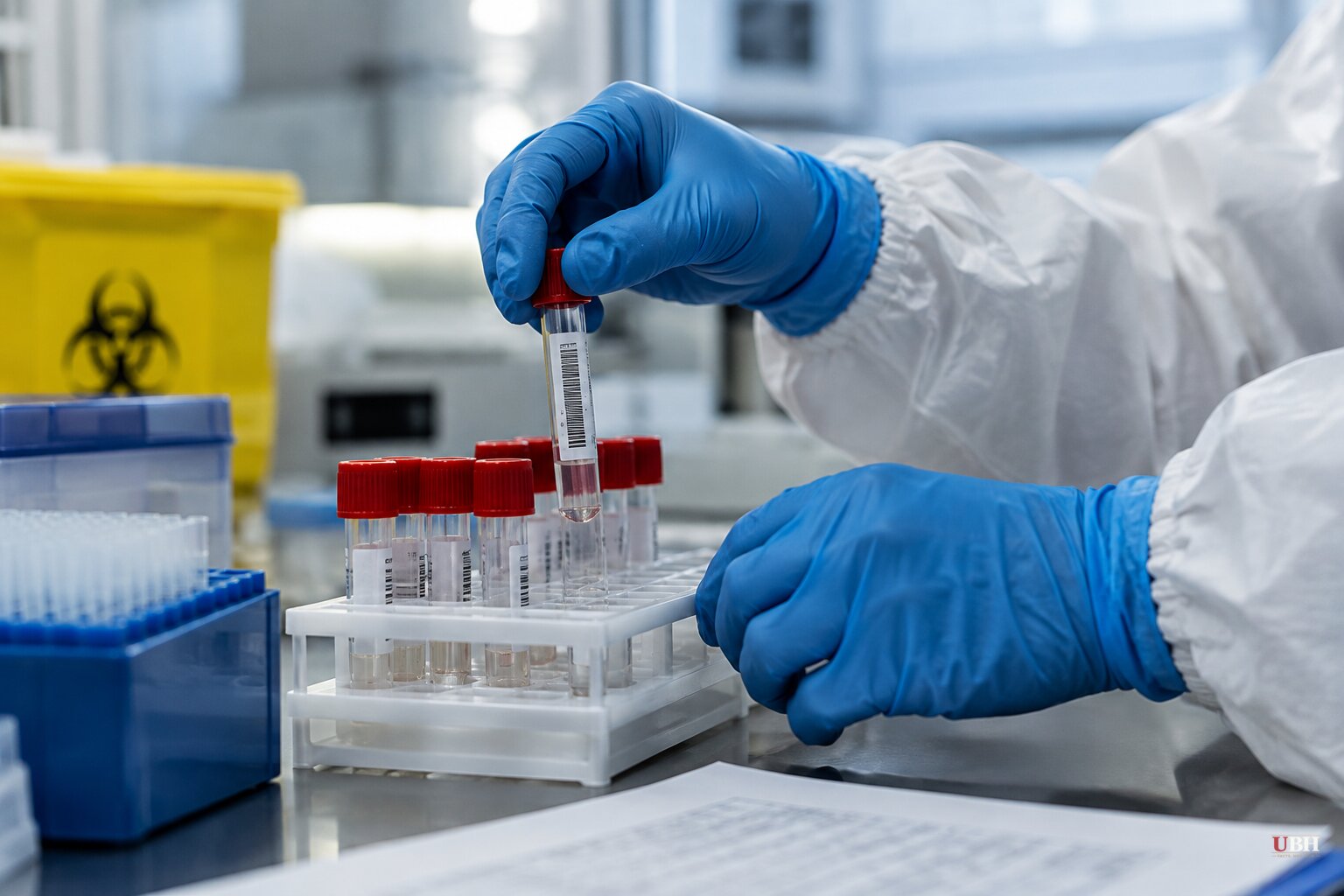
Since Darya Shipilova, 28, died on Oct. 2 at the Irkutsk Antiplague Research Institute of Siberia and the Far East, the World Health Organization has issued its first full outbreak notice on the case. It still has no diagnosis to put in it.
The WHO said in its Oct. 10 statement that no case of plague has been registered. It also said that "a key uncertainty remains the absence of a confirmed diagnosis in the deceased laboratory worker." Based on what Russian officials supplied, the agency said it "has not identified evidence of ongoing transmission associated with this event."
The WHO moves from 'low' to 'undetermined'
The WHO had initially rated the public health risk as low. That rating rested on the early assumption that she had died of pneumonic plague, a bacterial infection that can pass between people but does not spread easily. Russia says she died of pneumonia of unknown cause, so the WHO now calls the risk undetermined.
WHO Director-General Tedros Adhanom Ghebreyesus told a press conference on Wednesday, Oct. 7, that a "full risk assessment" had not been possible. He invoked the International Health Regulations, the treaty obligating countries to share health information with international implications. "Timely, complete and transparent information sharing under the international regulations is essential to clarify conflicting reports and enable an accurate assessment of potential public health risks," he said.
The WHO's Disease Outbreak News notice says "additional clinical, epidemiological and laboratory information, including confirmation of the diagnosis in the deceased laboratory worker, is required to improve confidence in the assessment."
What Russia says it has done
Russia's health regulator, Rospotrebnadzor, told the WHO that tests on the worker and her contacts were negative for the high-threat pathogens tested. It said post-mortem tests did not detect plague and that no microorganisms linked to her work were found in her body.
The agency said that as of Oct. 7, medical monitoring was complete for more than 90 percent of her contacts, with no infectious-disease symptoms detected. It put the number of lab tests at nearly 5,000. The WHO's notice cites more than 5,500 tests, also with no dangerous pathogens found.
About 200 people were initially quarantined. A local official said on Oct. 6 that 60 percent had already been released. Irkutsk Governor Igor Kobzev said in a social media post on Oct. 8 that the preventive measures had been completed and that "no incidents or accidents involving pathogenic microorganisms were identified" at the institute. Russian authorities say Shipilova was vaccinated.
Rospotrebnadzor has said there is no epidemic risk. It has also denied any second illness linked to the worker.
The second-case question
Tedros asked Russia on the night of Oct. 6 to respond to media reports of a second employee with pneumonia of undetermined cause. The WHO later told The Associated Press the reports came from two tabloid outlets, in Britain and Serbia, that cited unspecified reports in Russia. The WHO has continued to refer to a "purported second case." Russia has denied that any such case exists.
Doubts outside Russia
Some biodefense specialists are not taking Moscow's word for it. Andrew Weber, a global health security and biodefense expert, told Healthbeat on Oct. 6: "I'm not quite reassured yet by official Russian statements given the history of lying and covering up." He added, "Fingers crossed that it is true and only the young scientist was infected."
Healthbeat reported that a local news organization said FSB agents escorted ambulances carrying some of Shipilova's contacts to medical exams. Local hospitals also saw disease-control measures, which led some Irkutsk residents to question whether authorities were being transparent.
Healthbeat also found that scientific records list a D.N. Shipilova from the institute as a co-author of research earlier this year involving Yersinia pestis, the bacterium that causes plague. The institute sits in a region where plague bacteria occur naturally. Russia has not said whether her work involved plague.
President Trump has also asked for more information, according to NPR.
What is still missing
Russia says it has given the WHO everything it has. The WHO says it needs the diagnosis. Only Russian authorities hold the post-mortem and clinical records that would settle it, and they have publicly said only that the cause is pneumonia of unknown origin.
The WHO said it will keep monitoring and will reassess the risk if more information becomes available. Until Russia produces a confirmed diagnosis, the "undetermined" rating stands.
Sources used for this briefing
7 links from 7 independent newsrooms (syndicated copies of the same report count once)
These are the sources it draws on, linked so you can verify.


